Category: Papers

Digital epidemiology: what is it, and where is it going?

Digital Epidemiology is a new field that has been growing rapidly in the past few years, fueled by the increasing availability of data and computing power, as well as by breakthroughs in data analytics methods. In this short piece, I provide an outlook of where I see the field heading, and offer a broad and a narrow definition of the term.


Digital epidemiology: what is it, and where is it going?
Marcel Salathé

Life Sciences, Society and Policy
December 2018, 14:1

Source: link.springer.com

Quantitative historical analysis uncovers a single dimension of complexity that structures global variation in human social organization

Do human societies from around the world exhibit similarities in the way that they are structured and show commonalities in the ways that they have evolved? To address these long-standing questions, we constructed a database of historical and archaeological information from 30 regions around the world over the last 10,000 years. Our analyses revealed that characteristics, such as social scale, economy, features of governance, and information systems, show strong evolutionary relationships with each other and that complexity of a society across different world regions can be meaningfully measured using a single principal component of variation. Our findings highlight the power of the sciences and humanities working together to rigorously test hypotheses about general rules that may have shaped human history.


Quantitative historical analysis uncovers a single dimension of complexity that structures global variation in human social organization
Peter Turchin, Thomas E. Currie, Harvey Whitehouse, Pieter François, Kevin Feeney, Daniel Mullins, Daniel Hoyer, Christina Collins, Stephanie Grohmann, Patrick Savage, Gavin Mendel-Gleason, Edward Turner, Agathe Dupeyron, Enrico Cioni, Jenny Reddish, Jill Levine, Greine Jordan, Eva Brandl, Alice Williams, Rudolf Cesaretti, Marta Krueger, Alessandro Ceccarelli, Joe Figliulo-Rosswurm, Po-Ju Tuan, Peter Peregrine, Arkadiusz Marciniak, Johannes Preiser-Kapeller, Nikolay Kradin, Andrey Korotayev, Alessio Palmisano, David Baker, Julye Bidmead, Peter Bol, David Christian, Connie Cook, Alan Covey, Gary Feinman, Árni Daníel Júlíusson, Axel Kristinsson, John Miksic, Ruth Mostern, Cameron Petrie, Peter Rudiak-Gould, Barend ter Haar, Vesna Wallace, Victor Mair, Liye Xie, John Baines, Elizabeth Bridges, Joseph Manning, Bruce Lockhart, Amy Bogaard and Charles Spencer
PNAS 2017; published ahead of print December 21, 2017, https://doi.org/10.1073/pnas.1708800115

Source: www.pnas.org

The role of gender in social network organization

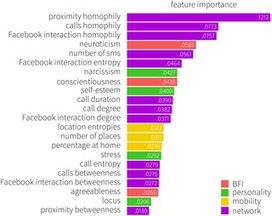
The digital traces we leave behind when engaging with the modern world offer an interesting lens through which we study behavioral patterns as expression of gender. Although gender differentiation has been observed in a number of settings, the majority of studies focus on a single data stream in isolation. Here we use a dataset of high resolution data collected using mobile phones, as well as detailed questionnaires, to study gender differences in a large cohort. We consider mobility behavior and individual personality traits among a group of more than 800 university students. We also investigate interactions among them expressed via person-to-person contacts, interactions on online social networks, and telecommunication. Thus, we are able to study the differences between male and female behavior captured through a multitude of channels for a single cohort. We find that while the two genders are similar in a number of aspects, there are robust deviations that include multiple facets of social interactions, suggesting the existence of inherent behavioral differences. Finally, we quantify how aspects of an individual’s characteristics and social behavior reveals their gender by posing it as a classification problem. We ask: How well can we distinguish between male and female study participants based on behavior alone? Which behavioral features are most predictive?


Psylla I, Sapiezynski P, Mones E, Lehmann S (2017) The role of gender in social network organization. PLoS ONE 12(12): e0189873. https://doi.org/10.1371/journal.pone.0189873

Source: journals.plos.org

Detecting reciprocity at a global scale

Reciprocity stabilizes cooperation from the level of microbes all the way up to humans interacting in small groups, but does reciprocity also underlie stable cooperation between larger human agglomerations, such as nation states? Famously, evolutionary models show that reciprocity could emerge as a widespread strategy for achieving international cooperation. However, existing studies have only detected reciprocity-driven cooperation in a small number of country pairs. We apply a new method for detecting mutual influence in dynamical systems to a new large-scale data set that records state interactions with high temporal resolution. Doing so, we detect reciprocity between many country pairs in the international system and find that these reciprocating country pairs exhibit qualitatively different cooperative dynamics when compared to nonreciprocating pairs. Consistent with evolutionary theories of cooperation, reciprocating country pairs exhibit higher levels of stable cooperation and are more likely to punish instances of noncooperation. However, countries in reciprocity-based relationships are also quicker to forgive single acts of noncooperation by eventually returning to previous levels of mutual cooperation. By contrast, nonreciprocating pairs are more likely to exploit each other’s cooperation via higher rates of defection. Together, these findings provide the strongest evidence to date that reciprocity is a widespread mechanism for achieving international cooperation.


Detecting reciprocity at a global scale
Morgan R. Frank, Nick Obradovich, Lijun Sun, Wei Lee Woon, Brad L. LeVeck and Iyad Rahwan,
Science Advances  03 Jan 2018:
Vol. 4, no. 1, eaao5348
DOI: 10.1126/sciadv.aao5348

Source: advances.sciencemag.org

Thinking Fast and Slow on Networks: Co-evolution of Cognition and Cooperation in Structured Populations

Spatial structure is one of the most studied mechanisms in evolutionary game theory. Here, we explore the consequences of spatial structure for a question which has received considerable empirical and theoretical attention in recent years, but has not yet been studied from a network perspective: whether cooperation relies on intuitive predispositions or deliberative self-control. We examine this question using a model which integrates the “dual-process” framework from cognitive science with evolutionary game theory, and considers the evolution of agents who are embedded within a social network and only interact with their neighbors. In line with past work in well-mixed populations, we find that selection favors either the intuitive defector (ID) strategy which never deliberates, or the dual-process cooperator (DC) strategy which intuitively cooperates but uses deliberation to switch to defection in Prisoner’s Dilemma games. We find that sparser networks (i.e. smaller average degree) facilitate the success of DC over ID, while also reducing the level of deliberation that DC agents engage in; and that these results generalize across different kinds of networks. These observations demonstrate the important role that spatial structure can have not just on the evolution of cooperation, but on the co-evolution of cognition and cooperation.

Source: papers.ssrn.com