Category: Papers

Serendipity and strategy in rapid innovation

Innovation is to organizations what evolution is to organisms: it is how organizations adapt to environmental change and improve. Yet despite advances in our understanding of evolution, what drives innovation remains elusive. On the one hand, organizations invest heavily in systematic strategies to accelerate innovation. On the other, historical analysis and individual experience suggest that serendipity plays a significant role. To unify these perspectives, we analysed the mathematics of innovation as a search for designs across a universe of component building blocks. We tested our insights using data from language, gastronomy and technology. By measuring the number of makeable designs as we acquire components, we observed that the relative usefulness of different components can cross over time. When these crossovers are unanticipated, they appear to be the result of serendipity. But when we can predict crossovers in advance, they offer opportunities to strategically increase the growth of the product space.


Serendipity and strategy in rapid innovation
T. M. A. Fink, M. Reeves, R. Palma & R. S. Farr
Nature Communications 8, Article number: 2002 (2017)
doi:10.1038/s41467-017-02042-w

Source: www.nature.com

Quantifying China’s regional economic complexity

China’s regional economic complexity is quantified by modeling 25 years’ public firm data.
High positive correlation between economic complexity and macroeconomic indicators is shown.
Economic complexity has explanatory power for economic development and income inequality.
Multivariate regressions suggest the robustness of these results with controlling socioeconomic factors.


Quantifying China’s regional economic complexity
Jian Gao, Tao Zhou

Physica A: Statistical Mechanics and its Applications
Volume 492, 15 February 2018, Pages 1591-1603

Source: www.sciencedirect.com

From Maps to Multi-dimensional Network Mechanisms of Mental Disorders

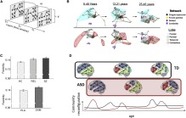
The development of advanced neuroimaging techniques and their deployment in large cohorts has enabled an assessment of functional and structural brain network architecture at an unprecedented level of detail. Across many temporal and spatial scales, network neuroscience has emerged as a central focus of intellectual efforts, seeking meaningful descriptions of brain networks and explanatory sets of network features that underlie circuit function in health and dysfunction in disease. However, the tools of network science commonly deployed provide insight into brain function at a fundamentally descriptive level, often failing to identify (patho-)physiological mechanisms that link system-level phenomena to the multiple hierarchies of brain function. Here we describe recently developed techniques stemming from advances in complex systems and network science that have the potential to overcome this limitation, thereby contributing mechanistic insights into neuroanatomy, functional dynamics, and pathology. Finally, we build on the Research Domain Criteria framework, highlighting the notion that mental illnesses can be conceptualized as dysfunctions of neural circuitry present across conventional diagnostic boundaries, to sketch how network-based methods can be combined with pharmacological, intermediate phenotype, genetic, and magnetic stimulation studies to probe mechanisms of psychopathology.


From Maps to Multi-dimensional Network Mechanisms of Mental Disorders
Urs Braun, Axel Schaefer, Richard F. Betzel, Heike Tost, Andreas Meyer-Lindenberg, Danielle S. Bassett

Neuron
Volume 97, Issue 1, 3 January 2018, Pages 14-31

Source: www.sciencedirect.com

Modelling indirect interactions during failure spreading in a project activity network

Spreading broadly refers to the notion of an entity propagating throughout a networked system via its interacting components. Evidence of its ubiquity and severity can be seen in a range of phenomena, from disease epidemics to financial systemic risk. In order to understand the dynamics of these critical phenomena, computational models map the probability of propagation as a function of direct exposure, typically in the form of pairwise interactions between components. By doing so, the important role of indirect exposure remains unexplored. In response, we develop a simple model that accounts for the effect of both direct and indirect exposure, which we deploy in the novel context of failure propagation within a real-world engineering project. We show that indirect exposure has a significant effect in key aspects, including the: (a) final spreading event size, (b) propagation rate, and (c) spreading event structure. In addition, we demonstrate the existence of hidden influentials in large-scale spreading events, and evaluate the role of direct and indirect exposure in their emergence. Given the evidence of the importance of indirect exposure, our findings offer new insight on particular aspects that need to be included when modelling network dynamics in general, and spreading processes specifically.


Modelling indirect interactions during failure spreading in a project activity network
Christos Ellinas

Source: arxiv.org