
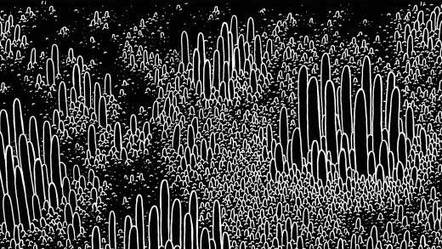
Biofilms are bacterial fortresses, but understanding how hydrodynamics and competition shape their architecture could reveal their subtle weaknesses.
Source: www.quantamagazine.org
Networking the complexity community since 1999
Category: Papers
Biofilms are bacterial fortresses, but understanding how hydrodynamics and competition shape their architecture could reveal their subtle weaknesses.
Source: www.quantamagazine.org
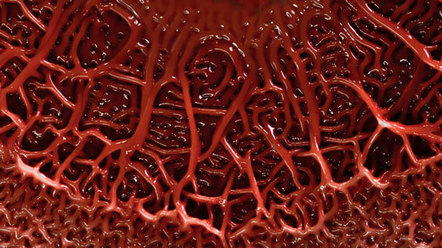
Bacterial biofilms and slime molds are more than crude patches of goo. Detailed time-lapse microscopy reveals how they sense and explore their surroundings,
Source: www.quantamagazine.org

Context: In the past three decades, the work of Varela has had an enormous impact on current developments in contemporary science. Problem: Varela’s thought was extremely complex and multifaceted, and while some aspects – notably his contributions to the autopoietic theory of living and enactivist approach to cognition – have gained widespread acclaim, others have been ignored or watered down. Method: We identify three dimensions of Varela’s thought: (i) anti-realism of the “middle way”; (ii) anti-foundationalism of the circular/recursive onto-epistemology; and (iii) ethical/social implications of the circularity/recursivity. The discussion of these dimensions is followed by a concise overview of the individual target articles in this issue and the topics they cover. Finally, we discuss in what ways the articles extend and relate to Varela’s work. We do this by means of a concrete example: the relation between “enaction” and “enactivism. Results: We show that the ignoring-cum-watering-down process of Varela’s contributions to science is at least partly linked to the three dimensions of Varela’s thought. Based on our examination we also find that the more narrow research topics are always interrelated with broader philosophical reflection. Researching into ignored and watered-down aspects of Varela’s work enables us to not only gain fresh insights into Varela’s overall philosophy and rekindle interest in the topics and themes that have been brushed aside, but also cast a fresh light on those that are currently in full bloom. Implications: Reviving interest in Varela’s work in toto could lead to fruitful research and discussion in numerous scientific fields. To illustrate this idea, we delineate, tentatively, three domains – theoretical, empirical, and existential – where Varela’s contribution to philosophy and science could instigate prolific exchange of views. Constructivist content: All three dimensions of Varela’s philosophy have strong affinities with radical constructivist critique of realism and some of its epistemological and ethical implications.
A Plea for not Watering Down the Unseemly: Reconsidering Francisco Varela’s Contribution to Science
Sebastjan Vörös & Alexander Riegler
Source: www.univie.ac.at
Purpose: This target article explicates mathematical themes in the work of Varela that remain of current interest in present-day second-order cybernetics. Problem: Varela’s approach extended biological autonomy to mathematical models of autonomy using reflexivity, category theory and eigenform. I will show specific ways that this mathematical modeling can contribute further to both biology and cybernetics. Method: The method of this article is to use elementary mathematics based in distinctions (and some excursions into category theory and other constructions that are also based in distinctions) to consistently make all constructions and thereby show how the observer is involved in the models that are so produced. Results: By following the line of mathematics constructed through the imagination of distinctions, we find direct access and construction for the autonomy postulated by Varela in his book Principles of Biological Autonomy. We do not need to impose autonomy at the base of the structure, but rather can construct it in the context of a reflexive domain. This sheds new light on the original approach to autonomy by Varela, who also constructed autonomous states but took them as axiomatic in his calculus for self-reference. Implications: The subject of the relationship of mathematical models, eigenforms and reflexivity should be reexamined in relation to biology, biology of cognition and cybernetics. The approach of Maturana to use only linguistic and philosophical approaches should now be reexamined and combined with Varela’s more mathematical approach and its present-day extensions.
Mathematical Work of Francisco Varela
Louis H. Kauffman
Source: www.univie.ac.at
Context: The notion of “enaction,” as originally expounded by Varela and his colleagues, was introduced into cognitive science as part of a broad philosophical framework combining science, phenomenology, and Buddhist philosophy. Its intention was to help the researchers in the field avoid falling prey to various dichotomies (mind/body, self/world, self/other) bedeviling modern philosophy and science, and serve as a “conceptual evocation” of “non-duality” or “groundlessness: an ongoing and irreducible circulation between the flux of lived experience (being) and the search of reason for conceptual invariants (knowing. Problem: It seems that, within the burgeoning field of “enactivism,” these far-reaching dimensions of the original proposal are often either dismissed or simply ignored. For this reason, the article tries to answer the following questions: Does the move away from the original exposition of enaction matter? What, if anything, has been lost along the way? What are the implications of the elements that have been discarded? Method: By drawing on some of the less well-known works of Varela, we spell out and elucidate some of the more radical aspects of the notion of enaction and the broader philosophical framework into which it was originally embedded. Results: We argue that this broader philosophical framework is of utmost importance, as it shows that enaction is only one part of the multi-layered “change in the context” that Varela felt was needed to successfully instantiate a move towards the non-dual. This “change of context” involves not only a change in the way we think about dualities, but also a change in the way we experience them. The role of new scientific metaphors, such as enaction (but also autopoiesis, embodiment, etc.), is to function as conceptual evocations of this back-and-forth exchange between knowing and being. However, if this overall framework is discarded, as is often the case in contemporary accounts, enaction loses its radical impetus and becomes mellowed down to yet another version of naturalized epistemology. Implications: Taking the notion of enaction seriously implies a radical shift in our conceptions of science and knowledge, as it encompasses a theoretical and existential move away from a detached observer to embedded and engaged cognizer. Thus, our manner of thinking can no longer be considered in isolation from our manner of being, which indicates a deep interconnection between epistemology and ethics, and may entail profound changes in the definition of the aims, methods, and values of the research community: self-transformation as a consequence of, and condition for, understanding. Constructivist content: The target article advocates a critical approach to realist presuppositions in contemporary science and philosophy, and emphasizes a deep interrelation between being and knowing, between ethics and epistemology.
Enacting Enaction: A Dialectic Between Knowing and Being
Sebastjan Vörös & Michel Bitbol
Source: www.univie.ac.at

