

Machines seem to be getting smarter and smarter and much better at human jobs, yet true AI is utterly implausible. Why?
Source: aeon.co
Networking the complexity community since 1999
Category: Papers
Machines seem to be getting smarter and smarter and much better at human jobs, yet true AI is utterly implausible. Why?
Source: aeon.co
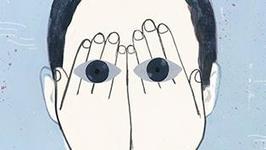
Sometimes it seems surprising that science functions at all. In 2005, medical science was shaken by a paper with the provocative title “Why most published research findings are false.” Written by John Ioannidis, a professor of medicine at Stanford University, it didn’t actually show that any particular result was wrong. Instead, it showed that the statistics of reported positive findings was not consistent with how often one should expect to find them. As Ioannidis concluded more recently, “many published research findings are false or exaggerated, and an estimated 85 percent of research resources are wasted.”
Source: nautil.us

Even the genocidal machines at the violent end of the spectrum may carry a heartening lesson. They emerged from the depths of a circuit board, simulated on a supercomputer in Texas. They had no biological excuse to fall back on. Maybe we, too, shouldn’t make excuses: If a behavior is so common as to emerge in the simplest simulations, perhaps we ought neither to fear it, nor to idolize it, but to treat it, the same way we do cancer, or the flu.
What if we saw tribalism as a natural malfunction of any cognitive system, silicon or carbon? As neither a universal truth or unavoidable sin, but something to be overcome?
Source: nautil.us
Understanding and modeling the mobility of individuals is of paramount importance for public health. In particular, mobility characterization is key to predict the spatial and temporal diffusion of human-transmitted infections. However, the mobility behavior of a person can also reveal relevant information about her/his health conditions. In this paper, we study the impact of people mobility behaviors for predicting the future presence of flu-like and cold symptoms (i.e. fever, sore throat, cough, shortness of breath, headache, muscle pain, malaise, and cold). To this end, we use the mobility traces from mobile phones and the daily self-reported flu-like and cold symptoms of 29 individuals from February 20, 2013 to March 21, 2013. First of all, we demonstrate that daily symptoms of an individual can be predicted by using his/her mobility trace characteristics (e.g. total displacement, radius of gyration, number of unique visited places, etc.). Then, we present and validate models that are able to successfully predict the future presence of symptoms by analyzing the mobility patterns of our individuals. The proposed methodology could have a societal impact opening the way to customized mobile phone applications, which may detect and suggest to the user specific actions in order to prevent disease spreading and minimize the risk of contagion.
Are you getting sick? Predicting influenza-like symptoms using human mobility behaviors
Gianni Barlacchi, Christos Perentis, Abhinav Mehrotra, Mirco Musolesi and Bruno Lepri
EPJ Data Science20176:27
https://doi.org/10.1140/epjds/s13688-017-0124-6
Source: epjdatascience.springeropen.com
Empowerment, a concept inspired in part by cybernetics and psychology, describes an agent’s intrinsic motivation to both persist within and operate upon its environment. “Like an organism, it wants to survive. It wants to be able to affect the world,” Salge explained. A Roomba programmed to seek its charging station when its batteries are getting low could be said to have an extremely rudimentary form of empowerment: To continue acting on the world, it must take action to preserve its own survival by maintaining a charge.
Source: www.quantamagazine.org

