
Category: Papers

Teams vs. Crowds: A Field Test of the Relative Contribution of Incentives, Member Ability, and Collaboration to Crowd-Based Problem Solving Performance

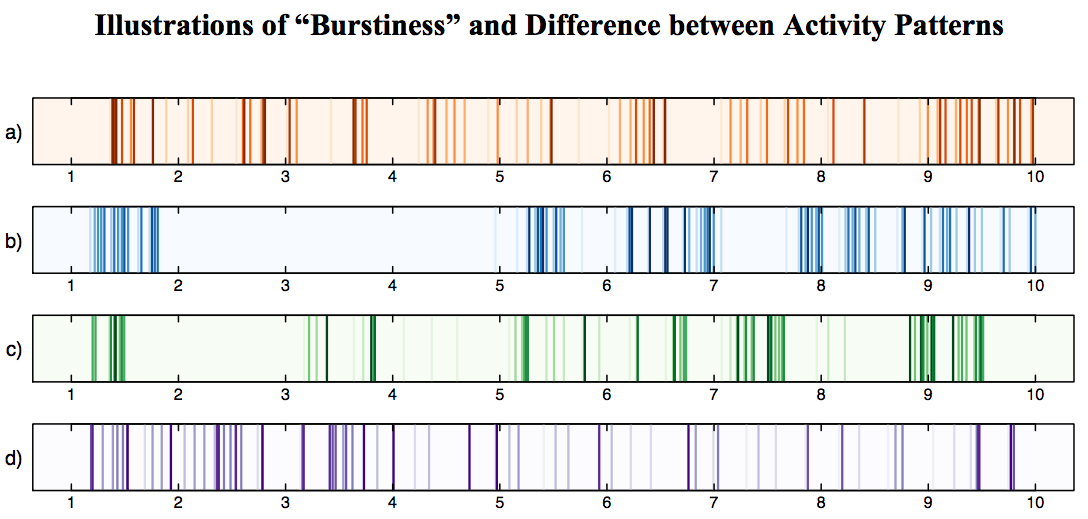
Organizations are increasingly turning to crowdsourcing to solve difficult problems. This is often driven by the desire to find the best subject matter experts, strongly incentivize them, and engage them with as little coordination cost as possible. A growing number of authors, however, are calling for increased collaboration in crowdsourcing settings, hoping to draw upon the advantages of teamwork observed in traditional settings. The question is how to effectively incorporate team-based collaboration in a setting that has traditionally been individual-based. We report on a large field experiment of team collaboration on an online platform, in which incentives and team membership were randomly assigned, to evaluate the influence of exogenous inputs (member skills and incentives) and emergent collaboration processes on performance of crowd-based teams. Building on advances in machine learning and complex systems theory, we leverage new measurement techniques to examine the content and timing of team collaboration. We find that temporal “burstiness” of team activity and the diversity of information exchanged among team members are strong predictors of performance, even when inputs such as incentives and member skills are controlled. We discuss implications for research on crowdsourcing and team collaboration.


Preprint at SSRN.

Source: amd.aom.org

Updating Darwin: Information and entropy drive the evolution of life

The evolution of species, according to Darwin, is driven by struggle – by competition between variant autonomous individuals for survival of the fittest and reproductive advantage; the outcome of this struggle for survival is natural selection. The Neo-Darwinians reframed natural selection in terms of DNA: inherited genotypes directly encode expressed phenotypes; a fit phenotype means a fit genotype – thus the evolution of species is the evolution of selfish, reproducing individual genotypes.

Four general characteristics of advanced forms of life are not easily explained by this Neo-Darwinian paradigm: 1) Dependence on cooperation rather than on struggle, manifested by the microbiome, ecosystems and altruism; 2) The pursuit of diversity rather than optimal fitness, manifested by sexual reproduction; 3) Life’s investment in programmed death, rather then in open-ended survival; and 4) The acceleration of complexity, despite its intrinsic fragility.

Here I discuss two mechanisms that can resolve these paradoxical features; both mechanisms arise from viewing life as the evolution of information. Information has two inevitable outcomes; it increases by autocatalyis and it is destroyed by entropy. On the one hand, the autocalalysis of information inexorably drives the evolution of complexity, irrespective of its fragility. On the other hand, only those strategic arrangements that accommodate the destructive forces of entropy survive – cooperation, diversification, and programmed death result from the entropic selection of evolving species. Physical principles of information and entropy thus fashion the evolution of life.


Updating Darwin: Information and entropy drive the evolution of life
Irun R. Cohen

Version 1. F1000Res. 2016; 5: 2808.
Published online 2016 Dec 1. doi:  10.12688/f1000research.10289.1

Source: www.ncbi.nlm.nih.gov

The multiplex network of human diseases

Untangling the complex interplay between phenotype and genotype is crucial to the effective characterization and subtyping of diseases. Here we build and analyze the multiplex network of 779 human diseases, which consists of a genotype-based layer and a phenotype-based layer. We show that diseases with common genetic constituents tend to share symptoms, and uncover how phenotype information helps boost genotype information. Moreover, we offer a flexible classification of diseases that considers their molecular underpinnings alongside their clinical manifestations. We detect cohesive groups of diseases that have high intra-group similarity at both the molecular and the phenotypic level. Inspecting these disease classes, we demonstrate the underlying pathways that connect diseases mechanistically. We observe monogenic disorders grouped together with complex diseases for which they increase the risk factor. We propose potentially new disease associations that arise as a unique feature of the information flow within and across the two layers.


The multiplex network of human diseases
Arda Halu, Manlio De Domenico, Alex Arenas, Amitabh Sharma
doi: https://doi.org/10.1101/100370

Source: biorxiv.org

Association of Facebook Use With Compromised Well-Being: A Longitudinal Study

Face-to-face social interactions enhance well-being. With the ubiquity of social media, important questions have arisen about the impact of online social interactions. In the present study, we assessed the associations of both online and offline social networks with several subjective measures of well-being. We used 3 waves (2013, 2014, and 2015) of data from 5,208 subjects in the nationally representative Gallup Panel Social Network Study survey, including social network measures, in combination with objective measures of Facebook use. We investigated the associations of Facebook activity and real-world social network activity with self-reported physical health, self-reported mental health, self-reported life satisfaction, and body mass index. Our results showed that overall, the use of Facebook was negatively associated with well-being. For example, a 1-standard-deviation increase in “likes clicked” (clicking “like” on someone else’s content), “links clicked” (clicking a link to another site or article), or “status updates” (updating one’s own Facebook status) was associated with a decrease of 5%-8% of a standard deviation in self-reported mental health. These associations were robust to multivariate cross-sectional analyses, as well as to 2-wave prospective analyses. The negative associations of Facebook use were comparable to or greater in magnitude than the positive impact of offline interactions, which suggests a possible tradeoff between offline and online relationships.


Association of Facebook Use With Compromised Well-Being: A Longitudinal Study.
Shakya HB, Christakis NA. Am J Epidemiol. 2017 Jan 16. doi: 10.1093/aje/kww189

Source: www.ncbi.nlm.nih.gov