
Category: Papers

Fecal Transplants: What Is Being Transferred?

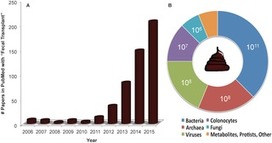
Fecal transplants are increasingly utilized for treatment of recurrent infections (i.e., Clostridium difficile) in the human gut and as a general research tool for gain-of-function experiments (i.e., gavage of fecal pellets) in animal models. Changes observed in the recipient’s biology are routinely attributed to bacterial cells in the donor feces (~10^11 per gram of human wet stool). Here, we examine the literature and summarize findings on the composition of fecal matter in order to raise cautiously the profile of its multipart nature. In addition to viable bacteria, which may make up a small fraction of total fecal matter, other components in unprocessed human feces include colonocytes (~10^7 per gram of wet stool), archaea (~10^8 per gram of wet stool), viruses (~10^8 per gram of wet stool), fungi (~10^6 per gram of wet stool), protists, and metabolites. Thus, while speculative at this point and contingent on the transplant procedure and study system, nonbacterial matter could contribute to changes in the recipient’s biology. There is a cautious need for continued reductionism to separate out the effects and interactions of each component.


Bojanova DP, Bordenstein SR (2016) Fecal Transplants: What Is Being Transferred? PLoS Biol 14(7): e1002503. doi:10.1371/journal.pbio.1002503

Source: journals.plos.org

Haploid-Diploid Algorithms

This short paper uses the recently presented idea that the fundamental haploid-diploid lifecycle of all eukaryote organisms exploits a rudimentary form of the Baldwin effect. The general approach presented here differs from all previous known work using diploid representations within evolutionary computation. The role of recombination is also changed from that previously considered in both natural and artificial evolution under the new theory. Using the NK model of fitness landscapes and the RBNK model of gene regulatory networks it is here shown that varying landscape ruggedness varies the benefit of a haploid-diploid approach in comparison to the traditional haploid representation in both cases.


Haploid-Diploid Algorithms
Larry Bull

http://arxiv.org/abs/1608.05578

Source: arxiv.org

Ten Simple Rules for Taking Advantage of Git and GitHub

Rule 1: Use GitHub to Track Your Projects
Rule 2: GitHub for Single Users, Teams, and Organizations
Rule 3: Developing and Collaborating on New Features: Branching and Forking
Rule 4: Naming Branches and Commits: Tags and Semantic Versions
Rule 5: Let GitHub Do Some Tasks for You: Integrate
Rule 6: Let GitHub Do More Tasks for You: Automate
Rule 7: Use GitHub to Openly and Collaboratively Discuss, Address, and Close Issues
Rule 8: Make Your Code Easily Citable, and Cite Source Code!
Rule 9: Promote and Discuss Your Projects: Web Page and More
Rule 10: Use GitHub to Be Social: Follow and Watch


Perez-Riverol Y, Gatto L, Wang R, Sachsenberg T, Uszkoreit J, Leprevost FdV, et al. (2016) Ten Simple Rules for Taking Advantage of Git and GitHub. PLoS Comput Biol 12(7): e1004947. doi:10.1371/journal.pcbi.1004947

Source: journals.plos.org

A First Look at User Activity on Tinder

Mobile dating apps have become a popular means to meet potential partners. Although several exist, one recent addition stands out amongst all others. Tinder presents its users with pictures of people geographically nearby, whom they can either like or dislike based on first impressions. If two users like each other, they are allowed to initiate a conversation via the chat feature. In this paper we use a set of curated profiles to explore the behaviour of men and women in Tinder. We reveal differences between the way men and women interact with the app, highlighting the strategies employed. Women attain large numbers of matches rapidly, whilst men only slowly accumulate matches. To expand on our findings, we collect survey data to understand user intentions on Tinder. Most notably, our results indicate that a little effort in grooming profiles, especially for male users, goes a long way in attracting attention.


A First Look at User Activity on Tinder
Gareth Tyson, Vasile C. Perta, Hamed Haddadi, Michael C. Seto

http://arxiv.org/abs/1607.01952

Source: arxiv.org

Seem very similar to other primate mating strategies.

Simon’s fundamental rich-gets-richer model entails a dominant first-mover advantage

Herbert Simon’s classic rich-gets-richer model is one of the simplest empirically supported mechanisms capable of generating heavy-tail size distributions for complex systems. Simon argued analytically that a population of flavored elements growing by either adding a novel element or randomly replicating an existing one would afford a distribution of group sizes with a power-law tail. Here, we show that, in fact, Simon’s model does not produce a simple power law size distribution as the initial element has a dominant first-mover advantage, and will be overrepresented by a factor proportional to the inverse of the innovation probability. The first group’s size discrepancy cannot be explained away as a transient of the model, and may therefore be many orders of magnitude greater than expected. We demonstrate how Simon’s analysis was correct but incomplete, and expand our alternate analysis to quantify the variability of long term rankings for all groups. We find that the expected time for a first replication is infinite, and show how an incipient group must break the mechanism to improve their odds of success. Our findings call for a reexamination of preceding work invoking Simon’s model and provide a revised understanding going forward.


Simon’s fundamental rich-gets-richer model entails a dominant first-mover advantage
Peter Sheridan Dodds, David Rushing Dewhurst, Fletcher F. Hazlehurst, Colin M. Van Oort, Lewis Mitchell, Andrew J. Reagan, Jake Ryland Williams, Christopher M. Danforth

http://arxiv.org/abs/1608.06313

Source: arxiv.org