
Stability of Modules as the Law of Their Existence

Zyri Bajrami
Matter, energy, and information, on the one hand, and the interplay between natural selection and self-organization, on the other, have given rise to modules, which constitute the fundamental units of interaction, organization, and function, as well as the primary targets of natural selection throughout chemical, biological, and cultural evolution. Based on the forms of structural information that enable their emergence, modules can be classified into huit types: (a) chemical modules (l) genetic and epigenetic modules, (c) cell, (d) neural, (f) mental modules, (g) moduloma (m) and affordance modules (n). Through interactions among modules and between modules and their environment, semantic (meaningful) modular information emerges. It is this semantic information that enables modules to acquire and maintain stability as both physical and abstract entities. The emergence and persistence of both material and immaterial (abstract) modules occur only at a specific point in time, when structural information is matched with the corresponding energy. This relationship is described by the law of modular stability. Modules acquire and preserve stability when the structural information responsible for establishing the relationships among the elements of their structure, considered as systems, corresponds to the energy required to maintain those relationships, while semantic modular information reaches its maximum value. One of the principal implications of this law is that the creative role of natural selection and modular stability is expressed primarily during the first stage of module formation, when the module is established as a replicator, rather than during the second stage, when it functions as an interactor and its fitness is determined.

Read the full article at: www.preprints.org
Complexity Postdoctoral Fellowship – Santa Fe Institute

We are now accepting applications for the 2027 cohort until September 30, 2026.

The Santa Fe Institute Complexity Postdoctoral Fellowships, comprising the Omidyar Fellowships, are unique among postdoctoral appointments. The Fellowships offer early-career scholars the opportunity to undertake their own independent research within a collaborative research community that nurtures creative, transdisciplinary thought in pursuit of key insights about the complex systems that matter most for science and society. The Institute rejects compartmentalized thought common in academia. Instead, SFI scientists transcend boundaries between fields, freely synthesizing ideas spanning many disciplines – from math, physics, computer science and biology to the social sciences and the humanities – in pursuit of creative insights that advance our scientific frontiers.

Read the full article at: apply-sfi.smapply.org

CSMA-2027 | International Conference on Complex Systems Modeling, Analysis & Applications

26 – 27 February 2027

CSMA 2027 aims to create a new international venue that can unite scholars, practitioners and students from diverse fields to address various real-world challenges and opportunities using methodologies of complex systems modeling and analysis. The conference will showcase cutting-edge modeling/analysis methods, interdisciplinary applications, and innovative solutions, fostering collaboration and sparking new ideas. Its 2027 edition will have a particular focus on the applications to education and society. By integrating insights from systems science, mathematics, computer science, engineering, economics, social sciences, psychology, healthcare, education, and many others, we seek to advance understanding and application in these crucial areas. Join us to explore how multidisciplinary approaches can drive improvements in our society!
Organized in Hybrid Mode by CHRIST University, Pune Lavasa, India & Binghamton University, State University of New York, USA

More at: csma.christuniversity.in

CompleNet 2027 — 18th International Conference on Complex Networks

March 9-12, 2027
University of Rochester, New York, USA

CompleNet is an annual international conference that unites researchers and practitioners from diverse scientific disciplines who share a deep interest in understanding the structure, dynamics, and applications of complex networks.

Since its founding in 2009 in Catania, Italy, CompleNet has grown into an established interdisciplinary venue fostering exchange across physics, computer science, biology, social science, economics, and engineering — united by the common language of network science.

More at: complenet.github.io

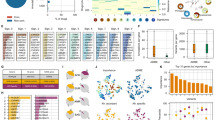
Network-driven discovery of repurposable drugs targeting hallmarks of aging

Bnaya Gross, Joseph Ehlert, Vadim N. Gladyshev, Joseph Loscalzo & Albert-László Barabási 
Nature Aging volume 6, pages1516–1531 (2026)

Despite the thousands of genes implicated in age-related phenotypes, effective interventions for aging remain elusive, due to the multifactorial nature of longevity and the interconnectedness of molecular components involved. Here we introduce a network medicine framework to map 2,358 longevity-associated genes onto the human interactome to identify drug-repurposing candidates capable of modulating specific hallmarks of aging. We find that genes associated with each hallmark form a connected subgraph, or hallmark module, allowing us to measure the network proximity of 6,442 compounds to each hallmark. We then introduce a transcription-based metric, pAGE, which evaluates whether drug-induced expression shifts reinforce or counteract known age-related expression changes within each hallmark module. By integrating network proximity and pAGE, we identify drug-repurposing candidates targeting specific hallmarks and provide a falsifiable framework to leverage genomic discoveries for accelerating drug repurposing in longevity. Our findings are interpretable, revealing molecular mechanisms through which drugs modulate hallmarks.

Read the full article at: www.nature.com