
The theory of percolation on hypergraphs

Ginestra Bianconi, Sergey N. Dorogovtsev

Hypergraphs are able to capture interactions between two or more nodes and for this reason they are raising significant attention in the context of opinion dynamics, epidemic spreading, synchronization and game theory. However hypergraph robustness to random damage is not yet widely explored. While the hypegraph structure can be always encoded in a factor graph, i.e. a bipartite network between nodes and hyperedges, here we reveal that percolation on hypegraphs is distinct from percolation on their corresponding factor graphs when nodes are randomly damaged. Notably, we show that the node percolation threshold on hypergraphs exceeds node percolation threshold on factor graphs. Furthermore we show that differently from what happens in ordinary graphs, containing only edges of cardinality 2, on hypergraphs the node percolation threshold and hyperedge percolation threshold do not coincide, with the node percolation threshold exceeding the hyperedge percolation threshold. These results are obtained within a message-passing theory valid in the locally tree-like approximation of the factor graph. In the same approximation we analytically predict the phase diagram and the critical properties of hypegraph percolation on random hypergraphs and on multiplex hypergraphs. We compare the results obtained for hypergraph percolation with the ones for percolation on factor graphs and we validate our results with Monte Carlo simulations and message-passing predictions on random hypergraphs and on the real hypergraph of US Senate committees.

Read the full article at: arxiv.org
Bioelectric networks: the cognitive glue enabling evolutionary scaling from physiology to mind

Michael Levin
Animal Cognition (2023)

Each of us made the remarkable journey from mere matter to mind: starting life as a quiescent oocyte (“just chemistry and physics”), and slowly, gradually, becoming an adult human with complex metacognitive processes, hopes, and dreams. In addition, even though we feel ourselves to be a unified, single Self, distinct from the emergent dynamics of termite mounds and other swarms, the reality is that all intelligence is collective intelligence: each of us consists of a huge number of cells working together to generate a coherent cognitive being with goals, preferences, and memories that belong to the whole and not to its parts. Basal cognition is the quest to understand how Mind scales—how large numbers of competent subunits can work together to become intelligences that expand the scale of their possible goals. Crucially, the remarkable trick of turning homeostatic, cell-level physiological competencies into large-scale behavioral intelligences is not limited to the electrical dynamics of the brain. Evolution was using bioelectric signaling long before neurons and muscles appeared, to solve the problem of creating and repairing complex bodies. In this Perspective, I review the deep symmetry between the intelligence of developmental morphogenesis and that of classical behavior. I describe the highly conserved mechanisms that enable the collective intelligence of cells to implement regulative embryogenesis, regeneration, and cancer suppression. I sketch the story of an evolutionary pivot that repurposed the algorithms and cellular machinery that enable navigation of morphospace into the behavioral navigation of the 3D world which we so readily recognize as intelligence. Understanding the bioelectric dynamics that underlie construction of complex bodies and brains provides an essential path to understanding the natural evolution, and bioengineered design, of diverse intelligences within and beyond the phylogenetic history of Earth.

Read the full article at: link.springer.com

The promise and pitfalls of the metaverse for science

Diego Gómez-Zará, Peter Schiffer & Dashun Wang 

Nature Human Behaviour (2023)

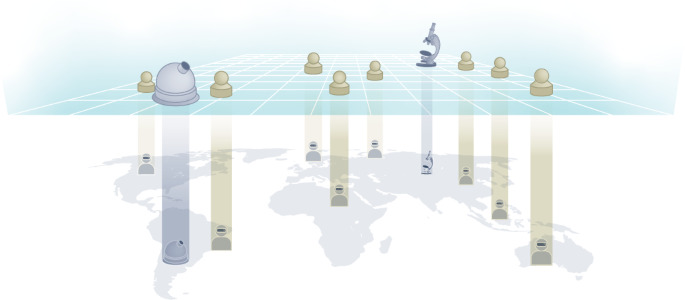
The metaverse can improve the accessibility of scientific laboratories and meetings, aid in reproducibility efforts and provide new opportunities for experimental design. But researchers and research institutions must plan ahead and be ready to mitigate potential harms.

Read the full article at: www.nature.com

Behaviour and the Origin of Organisms

Matthew Egbert, Martin M. Hanczyc, Inman Harvey, Nathaniel Virgo, Emily C. Parke, Tom Froese, Hiroki Sayama, Alexandra S. Penn & Stuart Bartlett 

Origins of Life and Evolution of Biospheres

It is common in origins of life research to view the first stages of life as the passive result of particular environmental conditions. This paper considers the alternative possibility: that the antecedents of life were already actively regulating their environment to maintain the conditions necessary for their own persistence. In support of this proposal, we describe ‘viability-based behaviour’: a way that simple entities can adaptively regulate their environment in response to their health, and in so doing, increase the likelihood of their survival. Drawing on empirical investigations of simple self-preserving abiological systems, we argue that these viability-based behaviours are simple enough to precede neo-Darwinian evolution. We also explain how their operation can reduce the demanding requirements that mainstream theories place upon the environment(s) in which life emerged.

Read the full article at: link.springer.com

Democracy by Design: Perspectives for digitally assisted, participatory upgrades of society

Dirk Helbing, Sachit Mahajan, Regula Hänggli Fricker, Andrea Musso, Carina I. Hausladen, Cesare Carissimo, Dino Carpentras, Elisabeth Stockinger, Javier Argota Sanchez-Vaquerizo, Joshua C. Yang, Mark C. Ballandies, Marcin Korecki, Rohit K. Dubey, Evangelos Pournaras

Journal of Computational Science

The technological revolution, particularly the availability of more data and more powerful computational tools, has led to the emergence of a new scientific field called “Computational Diplomacy”. Our work tries to define its scope and focuses on a popular subarea of it, namely “Digital Democracy”. In recent years, there has been a surge of interest in using digital technologies to promote more participatory forms of democracy. While there are numerous potential benefits to using digital tools to enhance democracy, significant challenges must be addressed. It is essential to ensure that digital technologies are used in an accessible, equitable, and fair manner rather than reinforcing existing power imbalances. This paper investigates how digital tools can be used to help design more democratic societies by investigating three key research areas: (1) the role of digital technologies for facilitating civic engagement in collective decision-making; (2) the use of digital tools to improve transparency and accountability in governance; and (3) the potential for digital technologies to enable the formation of more inclusive and representative democracies. We argue that more research on how digital technologies can be used to support democracy upgrade is needed. Along these lines, we lay out a research agenda for the future.

Read the full article at: www.sciencedirect.com