Courses: Complex Systems Summer School | Santa Fe Institute

June 11 – July 7, 2023.

Complex Systems Summer School (CSSS) offers an intensive four-week introduction to complex behavior in mathematical, physical, living, and social systems. CSSS brings together graduate students, postdoctoral fellows, and professionals to transcend disciplinary boundaries, take intellectual risks, and ask big questions about complex systems. The residential program comprises a series of lectures and workshops devoted to theory and tools, applications-focused seminars, and discussions with faculty and fellow participants. CSSS participants put what they learn from these didactic sessions into practice through group research projects, conducted throughout the program and often extending into manuscripts and longer-term collaborations. CSSS provides an unparalleled opportunity for early-career researchers to expand their professional networks, produce a novel research product, and gain valuable experience working in transdisciplinary teams.

More at: www.santafe.edu
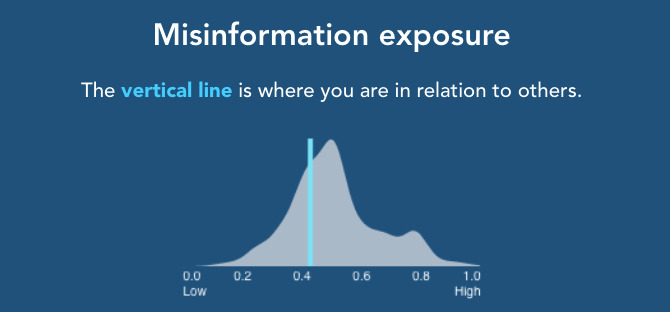
Misinformation exposure

How much misinformation you are exposed to?

As part of our new paper in Nature Communications, we have build a web app and an API to measure misinformation from political elites on Twitter.
Give it a try! misinfoexpose.com

Find out how much misinformation you are exposed to.

Understanding the impact of physicality on network structure

Márton Pósfai, Balázs Szegedy, Iva Bačić, Luka Blagojević, Miklós Abért, János Kertész, László Lovász, Albert-László Barabási
The emergence of detailed maps of physical networks, like the brain connectome, vascular networks, or composite networks in metamaterials, whose nodes and links are physical entities, have demonstrated the limits of the current network science toolset. Indeed, link physicality imposes a non-crossing condition that affects both the evolution and the structure of a network, in a way that is not captured by the adjacency matrix alone, the starting point of all graph-based approaches. Here we introduce a meta-graph that helps us discover an exact mapping between linear physical networks and independent sets, a central concept in graph theory. The mapping allows us to analytically derive both the onset of physical effects and the emergence of a jamming transition, and show that physicality impacts the network structure even when the total volume of the links is negligible. Finally, we construct the meta-graphs of several real physical networks, allowing us to predict functional features, like synapse formation in the brain connectome, in agreement with the empirical data. Overall, we find that once present, physicality fundamentally alters the structure of a network, changes that must be quantified to understand the underlying systems.

Read the full article at: arxiv.org

Extending the Predictive Mind

Andy Clark

Australasian Journal of Philosophy

How do intelligent agents spawn and exploit integrated processing regimes spanning brain, body, and world? The answer may lie in the ability of the biological brain to select actions and policies in the light of counterfactual predictions—predictions about what kinds of futures will result if such-and-such actions are launched. Appeals to the minimization of ‘counterfactual prediction errors’ (the ones that would result under various scenarios) already play a leading role in attempts to apply the basic toolkit of the neurocomputational theory known as ‘predictive processing’ to higher cognitive functions such as policy selection and planning. In this paper, I show that this also leads naturally to the discovery and use of extended processing regimes defined across heterogeneous mixtures of biological and non-biological resources. This solves a long-standing puzzle concerning the ‘recruitment’ of the right non-neural processing resources at the right time. It reveals how (and why) human brains spawn and maintain extended human minds.

Read the full article at: www.tandfonline.com