The Emergence of Higher-Order Structure in Scientific and Technological Knowledge Networks

Thomas Gebhart, Russell J. Funk

The growth of science and technology is a recombinative process, wherein new discoveries and inventions are built from prior knowledge. Yet relatively little is known about the manner in which scientific and technological knowledge develop and coalesce into larger structures that enable or constrain future breakthroughs. Network science has recently emerged as a framework for measuring the structure and dynamics of knowledge. While helpful, existing approaches struggle to capture the global properties of the underlying networks, leading to conflicting observations about the nature of scientific and technological progress. We bridge this methodological gap using tools from algebraic topology to characterize the higher-order structure of knowledge networks in science and technology across scale. We observe rapid growth in the higher-order structure of knowledge in many scientific and technological fields. This growth is not observable using traditional network measures. We further demonstrate that the emergence of higher-order structure coincides with decline in lower-order structure, and has historically far outpaced the corresponding emergence of higher-order structure in scientific and technological collaboration networks. Up to a point, increases in higher-order structure are associated with better outcomes, as measured by the novelty and impact of papers and patents. However, the nature of science and technology produced under higher-order regimes also appears to be qualitatively different from that produced under lower-order ones, with the former exhibiting greater linguistic abstractness and greater tendencies for building upon prior streams of knowledge.

Read the full article at: arxiv.org

Information Length Analysis of Linear Autonomous Stochastic Processes

Adrian-Josue Guel-Cortez and Eun-jin Kim

Entropy 2020, 22(11), 1265;

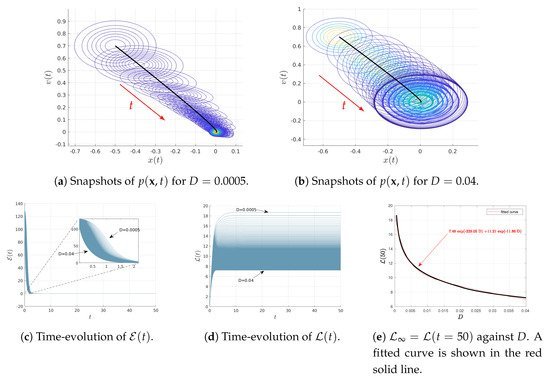
When studying the behaviour of complex dynamical systems, a statistical formulation can provide useful insights. In particular, information geometry is a promising tool for this purpose. In this paper, we investigate the information length for n-dimensional linear autonomous stochastic processes, providing a basic theoretical framework that can be applied to a large set of problems in engineering and physics. A specific application is made to a harmonically bound particle system with the natural oscillation frequency ω, subject to a damping γ and a Gaussian white-noise. We explore how the information length depends on ω and γ, elucidating the role of critical damping γ=2ω in information geometry. Furthermore, in the long time limit, we show that the information length reflects the linear geometry associated with the Gaussian statistics in a linear stochastic process.

Read the full article at: www.mdpi.com

Recovery Coupling in Multilayer Networks

Michael M. Danziger, Albert-László Barabási

The increased complexity of infrastructure systems has resulted in critical interdependencies between multiple networks—communication systems require electricity, while the normal functioning of the power grid relies on communication systems. These interdependencies have inspired an extensive literature on coupled multilayer networks, assuming that a component failure in one network causes failures in the other network, a hard interdependence that results in a cascade of failures across multiple systems. While empirical evidence of such hard coupling is limited, the repair and recovery of a network requires resources typically supplied by other networks, resulting in well documented interdependencies induced by the recovery process. If the support networks are not functional, recovery will be slowed. Here we collected data on the recovery time of millions of power grid failures, finding evidence of universal nonlinear behavior in recovery following large perturbations. We develop a theoretical framework to address recovery coupling, predicting quantitative signatures different from the multilayer cascading failures. We then rely on controlled natural experiments to separate the role of recovery coupling from other effects like resource limitations, offering direct evidence of how recovery coupling affects a system’s functionality. The resulting insights have implications beyond infrastructure systems, offering insights on the fragility and senescence of biological systems.

Read the full article at: arxiv.org

To Regulate or Not: A Social Dynamics Analysis of an Idealised AI Race

The Anh Han, Luis Moniz Pereira, Francisco C. Santos, Tom Lenaerts

Journal of Artificial Intelligence Research

Rapid technological advancements in Artificial Intelligence (AI), as well as the growing deployment of intelligent technologies in new application domains, have generated serious anxiety and a fear of missing out among different stake-holders, fostering a racing narrative. Whether real or not, the belief in such a race for domain supremacy through AI, can make it real simply from its consequences, as put forward by the Thomas theorem. These consequences may be negative, as racing for technological supremacy creates a complex ecology of choices that could push stake-holders to underestimate or even ignore ethical and safety procedures. As a consequence, different actors are urging to consider both the normative and social impact of these technological advancements, contemplating the use of the precautionary principle in AI innovation and research. Yet, given the breadth and depth of AI and its advances, it is difficult to assess which technology needs regulation and when. As there is no easy access to data describing this alleged AI race, theoretical models are necessary to understand its potential dynamics, allowing for the identification of when procedures need to be put in place to favour outcomes beneficial for all. We show that, next to the risks of setbacks and being reprimanded for unsafe behaviour, the time-scale in which domain supremacy can be achieved plays a crucial role. When this can be achieved in a short term, those who completely ignore the safety precautions are bound to win the race but at a cost to society, apparently requiring regulatory actions. Our analysis reveals that imposing regulations for all risk and timing conditions may not have the anticipated effect as only for specific conditions a dilemma arises between what is individually preferred and globally beneficial. Similar observations can be made for the long-term development case. Yet different from the short-term situation, conditions can be identified that require the promotion of risk-taking as opposed to compliance with safety regulations in order to improve social welfare. These results remain robust both when two or several actors are involved in the race and when collective rather than individual setbacks are produced by risk-taking behaviour. When defining codes of conduct and regulatory policies for applications of AI, a clear understanding of the time-scale of the race is thus required, as this may induce important non-trivial effects.

Read the full article at: jair.org