Robots are not immune to bias and injustice

Ayanna Howard and Monroe Kennedy III
Science Robotics 18 Nov 2020:
Vol. 5, Issue 48, eabf1364
DOI: 10.1126/scirobotics.abf1364

Human-human social constructs drive human-robot interactions; robotics is thus intertwined with issues surrounding inequity and racial injustices.

Read the full article at: robotics.sciencemag.org

NERCCS 2021: Fourth Northeast Regional Conference on Complex Systems

NERCCS 2021: The Fourth Northeast Regional Conference on Complex Systems will follow the success of the previous NERCCS conferences to promote the emerging venue of interdisciplinary scholarly exchange for complex systems researchers in the Northeast U.S. region (and beyond) to share their research outcomes through presentations and online publications, network with their peers, and promote interdisciplinary collaboration and the growth of the research community.

NERCCS will particularly focus on facilitating the professional growth of early career faculty, postdocs, and students in the region who will likely play a leading role in the field of complex systems science and engineering in the coming years.

The 2021 conference will be held fully online via Zoom.

More at: nerccs2021.github.io

Urban sensing as a random search process

Kevin O’Keeffe, Paolo Santi, Brandon Wang, CarloRatti

Physica A: Statistical Mechanics and its Applications
Volume 562, 15 January 2021, 125307

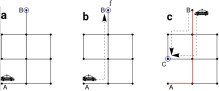
We study a new random search process: the taxi drive. The motivation for this process comes from urban sensing in which sensors are mounted on moving vehicles such as taxis, allowing urban environments to be opportunistically monitored. Inspired by the movements of real taxis, the taxi drive is composed of both random and regular parts: passengers are brought to randomly chosen locations via deterministic (i.e. shortest paths) routes. We show through a numerical study that this hybrid motion endows the taxi drive with advantageous spreading properties. In particular, on certain graph topologies it offers reduced cover times compared to random walks and persistent random walks.

Read the full article at: www.sciencedirect.com

Adapting to the challenges of warming | Science

Steven C. Sherwood
Science 13 Nov 2020:
Vol. 370, Issue 6518, pp. 782-783

Heat extremes on Earth have reached a disturbing new level in recent years. The July 2020 temperatures soared across Siberia and reached a record-breaking 38°C inside the Arctic Circle, continuing a line of record heat events globally. “Event attribution” calculations, which are an endeavor to apportion blame for extreme events through quantitative modeling, suggest that some events would have been nearly impossible without human-induced global warming. This includes the recent Siberian summer and the 2018 heat wave in Japan, which killed more than a thousand people (1, 2). Rising heat is creating new challenges for humanity that will require new adaptation and protection measures. Smart implementation requires careful calculation of how further global temperature rises will translate into short-term regional heat events and how these will translate into impacts on human health and activities, food supply, infrastructure, and ecosystems.

Read the full article at: science.sciencemag.org