Thermodynamics 2.0 | International Conference

June 22-24, 2020


The International Conference on Thermodynamics 2.0, ICT2.0 in short, is all about coevolution of sciences – identifying and connecting dots of scientific revolutions in natural and social sciences.

ICT2.0 aims to empower science, engineering and humanity. A short-term objective of ICT2.0 is a blueprint of bridge between two cultures commonly referred to as natural science and social science.

Source: iaisae.org

Population flow drives spatio-temporal distribution of COVID-19 in China

Sudden, large-scale, and diffuse human migration can amplify localized outbreaks into widespread epidemics.1–4 Rapid and accurate tracking of aggregate population flows may therefore be epidemiologically informative. Here, we use mobile-phone-data-based counts of 11,478,484 people egressing or transiting through the prefecture of Wuhan between 1 January and 24 January 2020 as they moved to 296 prefectures throughout China. First, we document the efficacy of quarantine in ceasing movement. Second, we show that the distribution of population outflow from Wuhan accurately predicts the relative frequency and geographic distribution of COVID-19 infections through February 19, 2020, across all of China. Third, we develop a spatio-temporal “risk source” model that leverages population flow data (which operationalizes risk emanating from epidemic epicenters) to not only forecast confirmed cases, but also to identify high-transmission-risk locales at an early stage. Fourth, we use this risk source model to statistically derive the geographic spread of COVID-19 and the growth pattern based on the population outflow from Wuhan; the model yields a benchmark trend and an index for assessing COVID-19 community transmission risk over time for different locations. This approach can be used by policy-makers in any nation with available data to make rapid and accurate risk assessments and to plan allocation of limited resources ahead of ongoing outbreaks.


Jayson S. Jia, Xin Lu, Yun Yuan, Ge Xu, Jianmin Jia & Nicholas A. Christakis 
Nature (2020)

Source: www.nature.com

Pandemics, Modelling, and Policy – Massive Open Online Course

Discover the role forecasts and computer models play in understanding pandemics

With the world in the grip of the coronavirus pandemic, there has been a surge of interest in scientific modelling of the outbreak.

On this course, you’ll explore the social, economic, and political factors in the spread of a pandemic such as COVID-19, examining how scientists try to forecast the spread and severity of epidemics, and what we can and can’t know.

You’ll use interactive graphical programs to explore the dynamics of epidemics, learning how to critique the underlying models, and how science and computer models can support policymakers in times of pandemic crisis.

Source: www.futurelearn.com

Tenth International Conference on Complex Systems — ICCS 2020 will be an online event.

Due to the ongoing COVID-19 outbreak, the Executive Committee has made the decision to move ICCS 2020 to an online-only event.

While the outlook for the unprecedented challenges we are facing from COVID-19 remain uncertain, our values are clearer than ever. The health and safety of our communities—academic, local, and business—are of the utmost priority. Further, we know as complex systems scientists that we must play our part by endeavoring to fragment our physical contact networks, yet strengthen our virtual social networks. We also remain committed to the pursuit of creating and sharing knowledge, and wish to honor our promise to provide a rich forum in which to do this. It is with these tenets in mind that we made the decision to make ICCS 2020 a 100% online-only event.

What you need to know:

  • The dates remain the same: July 26th – July 31st 2020

  • Registration has reopened, but If you have already registered for the live event, we will soon be contacting you directly with more details and information on refunds

  • We encourage you to continue submitting abstracts or papers on EasyChair

  • …especially if your work relates to COVID-19.

We are excited to rise to the occasion of conducting a large conference virtually and look forward to “seeing” you all in July! If you have any questions, we encourage you to get in touch: programs@necsi.edu

To see what NECSI is doing to combat the outbreak and to learn more about how you can protect yourself, your family and your community, go to: endcoronavirus.org

Source: necsi.edu

Controlling the Multifractal Generating Measures of Complex Networks

Ruochen Yang & Paul Bogdan
Scientific Reports volume 10, Article number: 5541 (2020)


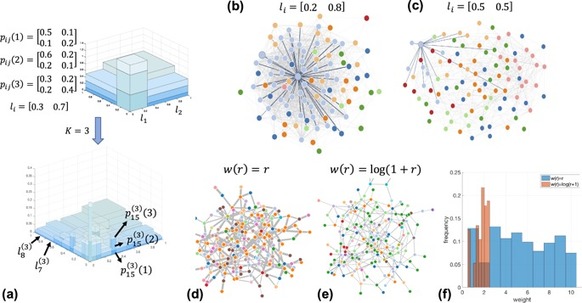
Mathematical modelling of real complex networks aims to characterize their architecture and decipher their underlying principles. Self-repeating patterns and multifractality exist in many real-world complex systems such as brain, genetic, geoscience, and social networks. To better comprehend the multifractal behavior in the real networks, we propose the weighted multifractal graph model to characterize the spatiotemporal complexity and heterogeneity encoded in the interaction weights. We provide analytical tools to verify the multifractal properties of the proposed model. By varying the parameters in the initial unit square, the model can reproduce a diverse range of multifractal spectrums with different degrees of symmetry, locations, support and shapes. We estimate and investigate the weighted multifractal graph model corresponding to two real-world complex systems, namely (i) the chromosome interactions of yeast cells in quiescence and in exponential growth, and (ii) the brain networks of cognitively healthy people and patients exhibiting late mild cognitive impairment leading to Alzheimer disease. The analysis of recovered models show that the proposed random graph model provides a novel way to understand the self-similar structure of complex networks and to discriminate different network structures. Additionally, by mapping real complex networks onto multifractal generating measures, it allows us to develop new network design and control strategies, such as the minimal control of multifractal measures of real systems under different functioning conditions or states.

Source: www.nature.com