
The International Conference on Complex Networks and their Applications aims at bringing together researchers from different scientific communities working on areas related to complex networks.
Source: www.complexnetworks.org
Networking the complexity community since 1999
The International Conference on Complex Networks and their Applications aims at bringing together researchers from different scientific communities working on areas related to complex networks.
Source: www.complexnetworks.org
Explaining the origins of cumulative culture, and how it is maintained over long timescales, constitutes a challenge for theories of cultural evolution. Previous theoretical work has emphasized two fundamental causal processes: cultural adaptation (where technologies are refined towards a functional objective) and cultural exaptation (the repurposing of existing technologies towards a new functional goal). Yet, despite the prominence of cultural exaptation in theoretical explanations, this process is often absent from models and experiments of cumulative culture. Using an agent-based model, where agents attempt to solve problems in a high-dimensional problem space, the current paper investigates the relationship between cultural adaptation and cultural exaptation and produces three major findings. First, cultural dynamics often end up in optimization traps: here, the process of optimization causes the dynamics of change to cease, with populations entering a state of equilibrium. Second, escaping these optimization traps requires cultural dynamics to explore the problem space rapidly enough to create a moving target for optimization. This results in a positive feedback loop of open-ended growth in both the diversity and complexity of cultural solutions. Finally, the results helped delineate the roles played by social and asocial mechanisms: asocial mechanisms of innovation drive the emergence of cumulative culture and social mechanisms of within-group transmission help maintain these dynamics over long timescales.
Escaping optimization traps: the role of cultural adaptation and cultural exaptation in facilitating open-ended cumulative dynamics
James Winters
Palgrave Communications volume 5, Article number: 149 (2019)
Source: www.nature.com

Politicians, economists and even some natural scientists have tended to assume that tipping points in the Earth system — such as the loss of the Amazon rainforest or the West Antarctic ice sheet — are of low probability and little understood. Yet evidence is mounting that these events could be more likely than was thought, have high impacts and are interconnected across different biophysical systems, potentially committing the world to long-term irreversible changes.
Here we summarize evidence on the threat of exceeding tipping points, identify knowledge gaps and suggest how these should be plugged. We explore the effects of such large-scale changes, how quickly they might unfold and whether we still have any control over them.
In our view, the consideration of tipping points helps to define that we are in a climate emergency and strengthens this year’s chorus of calls for urgent climate action — from schoolchildren to scientists, cities and countries.
Source: www.nature.com
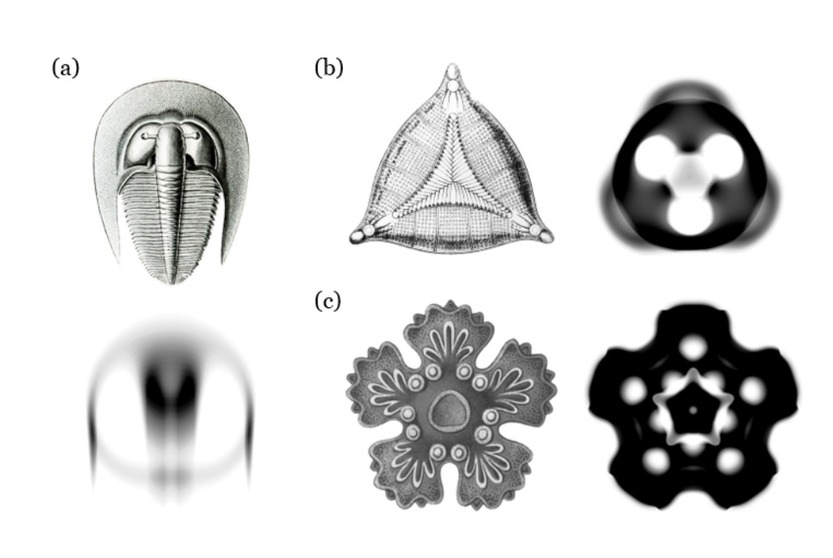
Artificial Life, often shortened as ALife. What is your first thought when reading those words? A brand of T-shirts? A Greg Egan novel?
For me and hundreds of ALifers, ALife is the bottom-up scientific study of the fundamental principles of life. Just as Artificial Intelligence researchers ponder the nature of intelligence by trying to build intelligent systems from scratch, ALife researchers investigate the nature of “life” by trying to build living systems from scratch.
Source: thegradient.pub
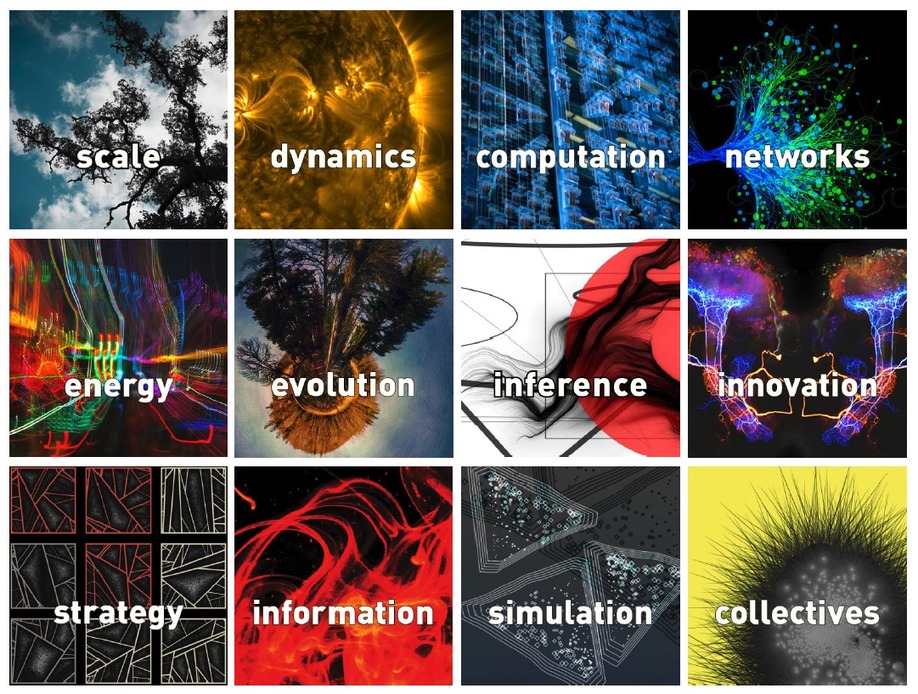
The SFI Complex Systems Summer School (CSSS) offers an intensive 4-week introduction to complex behavior in mathematical, physical, living, and social systems. Lectures are taught by the faculty of the Santa Fe Institute (SFI) and other leading educators and scholars. The school is for graduate students, postdoctoral fellows, and professionals seeking to transcend traditional disciplinary boundaries, take intellectual risks, and ask big questions about complex systems.
The program consists of an intensive series of lectures, labs, and discussions focusing on foundational concepts, tools, and current topics in complexity science. These include nonlinear dynamics, scaling theory, information theory, adaptation and evolution, networks, machine learning, agent-based models, and other topical areas and case studies. Participants collaborate in developing novel research projects throughout the four weeks of the program that culminate in final presentations and papers.
June 14 – July 10, 2020
Source: santafe.edu
 Complexity Digest