Complexity Measures: Open Questions and Novel Opportunities in the Automatic Design and Analysis of Robot Swarms

Complexity measures and information theory metrics in general have recently been attracting the interest of multi-agent and robotics communities, owing to their capability of capturing relevant features of robot behaviors, while abstracting from implementation details. We believe that theories and tools from complex systems science and information theory may be fruitfully applied in the near future to support the automatic design of robot swarms and the analysis of their dynamics. In this paper we discuss opportunities and open questions in this scenario.


Complexity Measures: Open Questions and Novel Opportunities in the Automatic Design and Analysis of Robot Swarms
Andrea Roli1, Antoine Ligot and Mauro Birattari

Front. Robot. AI, 26 November 2019


Source: www.frontiersin.org
Hidden complexity in Life-like rules

An alternative way to study the rules of life-like cellular automata is presented. The proposed perspective studies some multifractal and informational properties of Boolean functions behind these rules. Results from this approach challenge the traditional argument about the simplicity of Lifelike rules.


Hidden complexity in Life-like rules

Miguel Melgarejo, Marco Alzate, and Nelson Obregon
Phys. Rev. E 100, 052133

Source: journals.aps.org

The social physics collective

More than two centuries ago Henri de Saint-Simon envisaged physical laws to describe human societies. Driven by advances in statistical physics, network science, data analysis, and information technology, this vision is becoming a reality. Many of the grandest challenges of our time are of a societal nature, and methods of physics are increasingly playing a central role in improving our understanding of these challenges, and helping us to find innovative solutions. The Social physics Collection at Scientific Reports is dedicated to this research.


The social physics collective

Matjaž Perc
Scientific Reports volume 9, Article number: 16549 (2019)

Source: www.nature.com

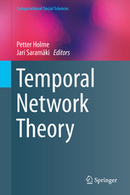
Temporal Network Theory

This book focuses on the theoretical side of temporal network research and gives an overview of the state of the art in the field. Curated by two pioneers in the field who have helped to shape it, the book contains contributions from many leading researchers. Temporal networks fill the border area between network science and time-series analysis and are relevant for the modeling of epidemics, optimization of transportation and logistics, as well as understanding biological phenomena.

Network theory has proven, over the past 20 years to be one of the most powerful tools for the study and analysis of complex systems. Temporal network theory is perhaps the most recent significant development in the field in recent years, with direct applications to many of the "big data" sets. This monograph will appeal to students, researchers and professionals alike interested in theory and temporal networks, a field that has grown tremendously over the last decade.


Temporal Network Theory
Editors: Holme, Petter, Saramäki, Jari 

Source: www.springer.com

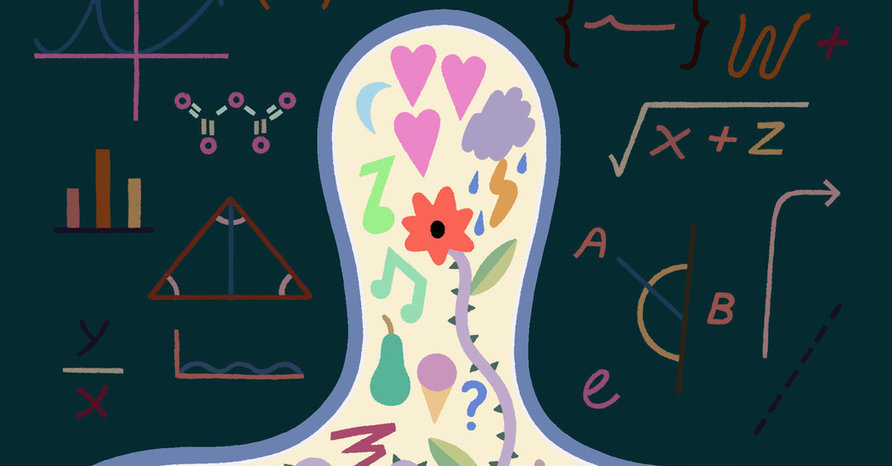
We Shouldn’t be Scared by ‘Superintelligent A.I.’

Intelligent machines catastrophically misinterpreting human desires is a frequent trope in science fiction, perhaps used most memorably in Isaac Asimov’s stories of robots that misconstrue the famous “three laws of robotics.” The idea of artificial intelligence going awry resonates with human fears about technology. But current discussions of superhuman A.I. are plagued by flawed intuitions about the nature of intelligence.

Source: www.nytimes.com