Author: cxdig

Critical drift in a neuro-inspired adaptive network

Silja Sormunen, Thilo Gross, Jari Saramäki
It has been postulated that the brain operates in a self-organized critical state that brings multiple benefits, such as optimal sensitivity to input. Thus far, self-organized criticality has typically been depicted as a one-dimensional process, where one parameter is tuned to a critical value. However, the number of adjustable parameters in the brain is vast, and hence critical states can be expected to occupy a high-dimensional manifold inside a high-dimensional parameter space. Here, we show that adaptation rules inspired by homeostatic plasticity drive a neuro-inspired network to drift on a critical manifold, where the system is poised between inactivity and persistent activity. During the drift, global network parameters continue to change while the system remains at criticality.

Read the full article at: arxiv.org
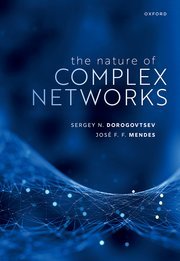
The Nature of Complex Networks – Sergey N. Dorogovtsev, José F. F. Mendes – Oxford University Press

Sergey N. Dorogovtsev and José F. F. Mendes
Provides a systematic account of the statistical mechanics of complex networks
Covers recent trends, concepts, and theoretical techniques, and emphasises interdisciplinary strands
Broad appeal to researchers in complex systems including theoretical physicists and applied mathematicians as well as epidemiologists
Extensive bibliography and appendices offer excellent reference source for students and researchers

More at: global.oup.com

[3C] Cells, Computers & Clinics. Oeiras, Portugal. 26 – 28 Oct 2022

The global pandemic showed the critical importance of integrating fundamental , computational and clinical research to promote systemic understanding of a global threat to humankind. Global epidemiological assessments informing national and regional policy-making around the world were only made possible due to fundamental mechanistic knowledge of coronavirus biology dating back decades, large-scale data on human mobility patterns enabled by recent technologies, as well as massive onsite and dynamic clinical reporting from health institutions.

It is now clear that complex human diseases can only be tackled by transdisciplinary efforts that integrate fundamental, computational, and clinical research. This is not, however, an easily achievable feat, as fundamental laboratory discoveries are often not directly transferable into clinical settings, with controlled experiments not necessarily reflecting organismic and societal complexity. Only with synergy between fundamental researchers, clinicians, and data scientists can we hope to gain the depth of understanding required to address the physiological mechanisms behind some of the most challenging human diseases at the interface between hosts and pathogens.

The goal of the [3C] Cells, Computers & Clinics Symposium is to do exactly that, to bridge fundamental, computational, and clinical research in the scope of complex diseases, particularly those related to host-pathogen interactions.

More at: gulbenkian.pt

Dynamics of cross-platform attention to retracted papers

Hao Peng, Daniel M. Romero, and Emőke-Ágnes Horvát

PNAS June 14, 2022 119 (25) e2119086119

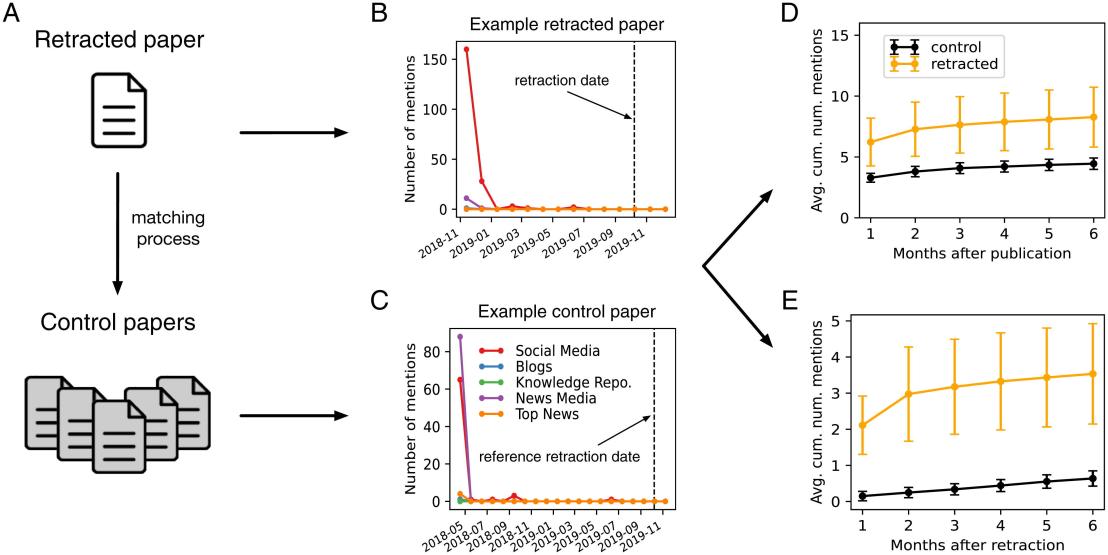
Scientific retraction has been on the rise recently. Retracted papers are frequently discussed online, enabling the broad dissemination of potentially flawed findings. Our analysis spans a nearly 10-y period and reveals that most papers exhaust their attention by the time they get retracted, meaning that retractions cannot curb the online spread of problematic papers. This is striking as we also find that retracted papers are pervasive across mediums, receiving more attention after publication than nonretracted papers even on curated platforms, such as news outlets and knowledge repositories. Interestingly, discussions on social media express more criticism toward subsequently retracted results and may thus contain early signals related to unreliable work.

Read the full article at: www.pnas.org

A Ubiquitous Collective Tragedy in Transport

Rafael Prieto Curiel, Humberto González Ramírez, and Steven Bishop

Front. Phys., 16 June 2022

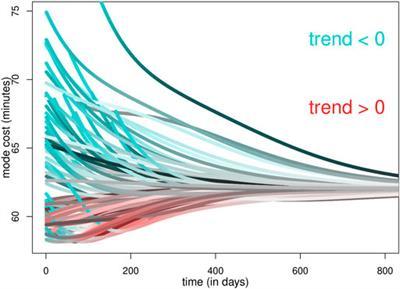
A tragedy of the commons is said to occur when individuals act only in their own interest but, in so doing, create a collective state of a group that is less than optimal due to uncoordinated action. Here, we explore the individual decision-making processes of commuters using various forms of transport within a city, forming a modal share which is then built into a dynamical model using travel time as the key variable. From a randomised start in the distribution of the modal share, assuming that some individuals change their commuting method, favouring lower travel times, we show that a stable modal share is reached corresponding to an equilibrium in the model. Considering the average travel time for all commuters within the city, we show that an optimal result is achieved only if the direct and induced factors and the number of users are equal for all transport modes. For asymmetric factors, the equilibrium reached is always sub-optimal, leading to city travel trajectories being “tragic”, meaning that individuals choose a faster commuting time but create a slower urban mobility as a collective result. Hence, the city evolves, producing longer average commuting times. It is also shown that if a new mode of transport has a small baseline commuting time but has a high induced impact for other users, then introducing it might result in a counter-intuitive result producing more congestion, rather than less.

Read the full article at: www.frontiersin.org