Author: cxdig

Molecular Diversity Required for the Formation of Autocatalytic Sets

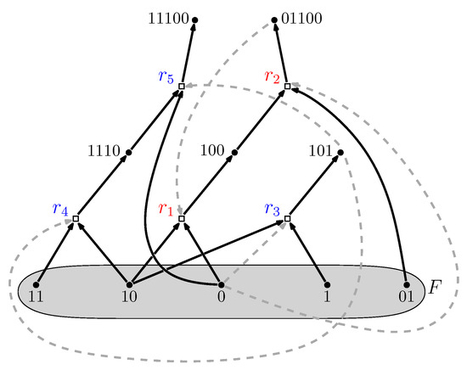
Systems chemistry deals with the design and study of complex chemical systems. However, such systems are often difficult to investigate experimentally. We provide an example of how theoretical and simulation-based studies can provide useful insights into the properties and dynamics of complex chemical systems, in particular of autocatalytic sets. We investigate the issue of the required molecular diversity for autocatalytic sets to exist in random polymer libraries. Given a fixed probability that an arbitrary polymer catalyzes the formation of other polymers, we calculate this required molecular diversity theoretically for two particular models of chemical reaction systems, and then verify these calculations by computer simulations. We also argue that these results could be relevant to an origin of life scenario proposed recently by Damer and Deamer.


Life 2019, 9(1), 23; https://doi.org/10.3390/life9010023
Molecular Diversity Required for the Formation of Autocatalytic Sets
Wim Hordijk, Mike Steel and Stuart A. Kauffman

Source: www.mdpi.com

Evolution of Complex Life – May 15-17, 2019 @GeorgiaTech

The evolution of complex life is an inherently multidisciplinary problem encompassing a wide range of topics, including:

How do new levels of the biological hierarchy evolve?
How do interactions between individual organisms contribute to complex phenotypes and behaviors?
How do social behaviors evolve?
How do evolutionary novelties emerge and evolve?
How do organisms drive geochemical cycles and how do geochemical changes influence evolution?
At this conference we will bring together scientists from different backgrounds to discuss these and other important topics about one of the most salient aspects of life: the evolution of complexity.

Source: eclife.biosci.gatech.edu

A Self-Organizing Grouping Approach for Ship Traffic Scheduling in Restricted One-Way Waterway

Ship scheduling optimization is one of the most effective ways to eliminate the bottlenecks of waterway transportation, especially in restricted one-way waterways. In this study, a novel scheduling model called self-organizing grouping is proposed to minimize two types of delay time, which are the waiting time and the extra navigation time caused by speed reduction. The proposed model schedules ships in an iterative way based on the distributed scheduling mode. To alleviate the impact of local scheduling on the overall traffic efficiency, a grouping method is proposed, in which the ships are divided into different groups based on their arrival time interval. Moreover, the ships in the same group are scheduled to minimize the interferences among them by incorporating a grouping improvement strategy. The strategy is used to deal with the influence of ships with very small speed. Experiments are carried out by comparing the proposed model with the first-come-first-serve model and the ship self-organizing cooperation model. Simulation results show that the delay time is reduced by 25%‐30% and approximately by 5% compared with that from the two models, respectively. Such advantage also exists for different combinations of ship traffic parameters. In addition, long-distance sailing with limited speed can be avoided using the proposed method, which is beneficial to relieve waterway traffic congestion.


A Self-Organizing Grouping Approach for Ship Traffic Scheduling in Restricted One-Way Waterway
Authors: Xin, Xuri; Liu, Kezhong; Zhang, Jinfen; Chen, Shuzhe; Wang, Hongbo; Cheng, Zhiyou
Source: Marine Technology Society Journal, Volume 53, Number 1, January/February 2019, pp. 83-96(14)
DOI: https://doi.org/10.4031/MTSJ.53.1.9

Source: www.ingentaconnect.com

Emergence: How Complex Wholes Emerge From Simple Parts

Throughout nature, throngs of relatively simple elements can self-organize into behaviors that seem unexpectedly complex. Scientists are beginning to understand why and how these phenomena emerge without a central organizing entity.

Source: www.quantamagazine.org

The Human Generosity Project

The Human Generosity Project is the first large-scale transdisciplinary research project to investigate the interrelationship between biological and cultural influences on human generosity. We use multiple methodologies to understand the nature and evolution of human generosity including fieldwork, laboratory experiments and computational modeling.

Source: www.humangenerosity.org