
Author: cxdig

Communication in Online Social Networks Fosters Cultural Isolation

Online social networks play an increasingly important role in communication between friends, colleagues, business partners, and family members. This development sparked public and scholarly debate about how these new platforms affect dynamics of cultural diversity. Formal models of cultural dissemination are powerful tools to study dynamics of cultural diversity but they are based on assumptions that represent traditional dyadic, face-to-face communication, rather than communication in online social networks. Unlike in models of face-to-face communication, where actors update their cultural traits after being influenced by one of their network contacts, communication in online social networks is often characterized by a one-to-many structure, in that users emit messages directly to a large number of network contacts. Using analytical tools and agent-based simulation, we show that this seemingly subtle difference can have profound implications for emergent dynamics of cultural dissemination. In particular, we show that within the framework of our model online communication fosters cultural diversity to a larger degree than offline communication and it increases chances that individuals and subgroups become culturally isolated from their network contacts.


Communication in Online Social Networks Fosters Cultural Isolation
Marijn A. Keijzer, Michael Mäs, and Andreas Flache

Complexity
Volume 2018, Article ID 9502872, 18 pages
https://doi.org/10.1155/2018/9502872

Source: www.hindawi.com
Negative Representation and Instability in Democratic Elections

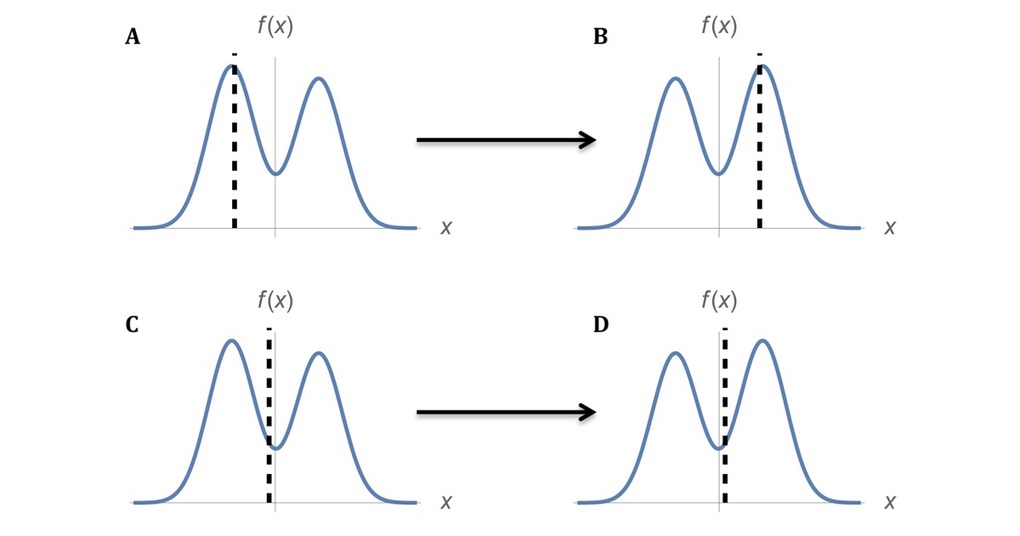
Motivated by the troubling rise of political extremism and instability throughout the democratic world, we present a novel mathematical characterization of the nature of political representation in democratic elections. We define the concepts of negative representation, in which a shift in electorate opinions produces a shift in the election outcome in the opposite direction, and electoral instability, in which an arbitrarily small change in opinion causes a large change in election outcome. Under very general conditions, we prove that unstable elections necessarily contain negatively represented opinions. Furthermore, increasing polarization of the electorate can drive elections through a transition from a stable to an unstable regime, analogous to the phase transition by which some materials become ferromagnetic below their critical temperatures. In this unstable regime, a large fraction of political opinions are negatively represented. Empirical data suggest that United States presidential elections underwent such a phase transition in the 1970s and have since become increasingly unstable.


Alexander Siegenfeld, Yaneer Bar-Yam, Negative representation and instability in democratic elections, arXiv:1810.11489 (October 29, 2018).

Source: www.necsi.edu

See also video: http://www.necsi.edu/research/social/negative-representation-video 

Linguistic Bodies

A novel theoretical framework for an embodied, non-representational approach to language that extends and deepens enactive theory, bridging the gap between sensorimotor skills and language.

Linguistic Bodies offers a fully embodied and fully social treatment of human language without positing mental representations. The authors present the first coherent, overarching theory that connects dynamical explanations of action and perception with language. Arguing from the assumption of a deep continuity between life and mind, they show that this continuity extends to language. Expanding and deepening enactive theory, they offer a constitutive account of language and the co-emergent phenomena of personhood, reflexivity, social normativity, and ideality. Language, they argue, is not something we add to a range of existing cognitive capacities but a new way of being embodied. Each of us is a linguistic body in a community of other linguistic bodies. The book describes three distinct yet entangled kinds of human embodiment, organic, sensorimotor, and intersubjective; it traces the emergence of linguistic sensitivities and introduces the novel concept of linguistic bodies; and it explores the implications of living as linguistic bodies in perpetual becoming, applying the concept of linguistic bodies to questions of language acquisition, parenting, autism, grammar, symbol, narrative, and gesture, and to such ethical concerns as microaggression, institutional speech, and pedagogy.


Linguistic Bodies
The Continuity between Life and Language
By Ezequiel A. Di Paolo, Elena Clare Cuffari and Hanne De Jaegher

Source: mitpress.mit.edu

Semantic information, agency, & physics

Shannon information theory provides various measures of so-called syntactic information, which reflect the amount of statistical correlation between systems. By contrast, the concept of ‘semantic information’ refers to those correlations which carry significance or ‘meaning’ for a given system. Semantic information plays an important role in many fields, including biology, cognitive science and philosophy, and there has been a long-standing interest in formulating a broadly applicable and formal theory of semantic information. In this paper, we introduce such a theory. We define semantic information as the syntactic information that a physical system has about its environment which is causally necessary for the system to maintain its own existence. ‘Causal necessity’ is defined in terms of counter-factual interventions which scramble correlations between the system and its environment, while ‘maintaining existence’ is defined in terms of the system’s ability to keep itself in a low entropy state. We also use recent results in non-equilibrium statistical physics to analyse semantic information from a thermodynamic point of view. Our framework is grounded in the intrinsic dynamics of a system coupled to an environment, and is applicable to any physical system, living or otherwise. It leads to formal definitions of several concepts that have been intuitively understood to be related to semantic information, including ‘value of information’, ‘semantic content’ and ‘agency’.


Semantic information, autonomous agency and non-equilibrium statistical physics
Artemy Kolchinsky, David H. Wolpert

Interface Focus
Published 19 October 2018.DOI: 10.1098/rsfs.2018.0041

Source: rsfs.royalsocietypublishing.org