Author: cxdig

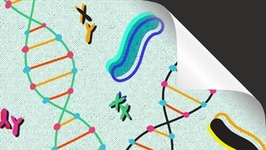
Inheritance Is Moving Beyond Genetics and Epigenetics

The idea that genes encode all the heritable features of living things has been a fundamental tenet of genetics and evolutionary biology for many years, but this assumption has always coexisted uncomfortably with the messy findings of empirical research. The complications have multiplied exponentially in recent years under the weight of new discoveries.

Source: nautil.us

Information theory and complex life

Despite the obvious advantage of simple life forms capable of fast replication, different levels of cognitive complexity have been achieved by living systems in terms of their potential to cope with environmental uncertainty. Against the inevitable cost associated with detecting environmental cues and responding to them in adaptive ways, we conjecture that the potential for predicting the environment can overcome the expenses associated with maintaining costly, complex structures. We present a minimal formal model grounded in information theory and selection, in which successive generations of agents are mapped into transmitters and receivers of a coded message. Our agents are guessing machines and their capacity to deal with environments of different complexity defines the conditions to sustain more complex agents.


Information theory, predictability and the emergence of complex life
Luís F. Seoane, Ricard V. Solé
Published 21 February 2018.DOI: 10.1098/rsos.172221

Source: rsos.royalsocietypublishing.org

Who holds the power?

What was the cause of Donald Trump’s stunning victory over Hillary Clinton in the 2016 U.S. presidential election? Was it the peculiarities of the electoral college? Voter resistance to three-term rule by a single party? Anxiety about illegal immigration? As Niall Ferguson explains in The Square and the Tower, the answer lies largely in one word: networks.


Who holds the power?
Sean P. Cornelius
The Square and the Tower: Networks and Power, from the Freemasons to Facebook Niall Ferguson Penguin Press, 2018. 607 pp.
Science  09 Mar 2018:
Vol. 359, Issue 6380, pp. 1109
DOI: 10.1126/science.aar8692

Source: science.sciencemag.org

Autonomous agents modelling other agents: A comprehensive survey and open problems

Much research in artificial intelligence is concerned with the development of autonomous agents that can interact effectively with other agents. An important aspect of such agents is the ability to reason about the behaviours of other agents, by constructing models which make predictions about various properties of interest (such as actions, goals, beliefs) of the modelled agents. A variety of modelling approaches now exist which vary widely in their methodology and underlying assumptions, catering to the needs of the different sub-communities within which they were developed and reflecting the different practical uses for which they are intended. The purpose of the present article is to provide a comprehensive survey of the salient modelling methods which can be found in the literature. The article concludes with a discussion of open problems which may form the basis for fruitful future research.


Autonomous agents modelling other agents: A comprehensive survey and open problems
Stefano V.Albrecht, PeterStone

Artificial Intelligence
Volume 258, May 2018, Pages 66-95

Source: www.sciencedirect.com

Exploring Artificial Intelligence with Melanie Mitchell

What is artificial intelligence? Could unintended consequences arise from increased use of this technology? How will the role of humans change with AI? How will AI evolve in the next 10 years?

In this episode, Haley interviews leading Complex Systems Scientist, Professor of Computer Science at Portland State University, and external professor at the Santa Fe Institute, Melanie Mitchell. Professor Mitchell answers many profound questions about the field of artificial intelligence and gives specific examples of how this technology is being used today. She also provides some insights to help us navigate our relationship with AI as it becomes more popular in the coming years.

Source: www.human-current.com