Author: cxdig

Brains, Minds & Machines Summer Course 2018

The basis of intelligence – how the brain produces intelligent behavior and how we may be able to replicate intelligence in machines – is arguably the greatest problem in science and technology. To solve it, we will need to understand how human intelligence emerges from computations in neural circuits, with rigor sufficient to reproduce similar intelligent behavior in machines. Success in this endeavor ultimately will enable us to understand ourselves better, to produce smarter machines, and perhaps even to make ourselves smarter. Today’s AI technologies, such as Watson and Siri, are impressive, but their domain specificity and reliance on vast numbers of labeled examples are obvious limitations; few view this as brain-like or human intelligence. The synergistic combination of cognitive science, neurobiology, engineering, mathematics, and computer science holds the promise to build much more robust and sophisticated algorithms implemented in intelligent machines. The goal of this course is to help produce a community of leaders that is equally knowledgeable in neuroscience, cognitive science, and computer science and will lead the development of true biologically inspired AI.


Brains, Minds and Machines
Directors: Gabriel Kreiman, Children’s Hospital, Harvard Medical School; Boris Katz, Massachusetts Institute of Technology; and Tomaso Poggio, Massachusetts Institute of Technology
Location: Marine Biological Laboratory, in Woods Hole, MA.
Course Dates: Aug. 9th – Aug. 30th, 2018
Application deadline: April 9, 2018

Source: cbmm.mit.edu
GEFENOL Summer School 2018

The VIII Summer School on Statistical Physics of
Complex Systems promoted by the Topical Group on Statistical and Nonlinear
Physics (GEFENOL) of the Spanish Physical Society. The School follows the
previous successful editions which took place in Palma de Mallorca (2011,
2013, 2014, 2017), Benasque (2012), Barcelona (2015) and Pamplona (2016).

The school, oriented to Master and PhD students and young postdocs worldwide
will take place at IFISC (CSIC-UIB) in Palma de Mallorca, Spain, on July 2-13, 2018
and will include six courses:

* Stochastic delay systems, by Tobias Galla, The University of Manchester.
* Bayesian inference in complex networks, by Marta Sales-Pardo, Universitat Rovira i Virgili.
* Deep learning from a statistical physics perspective, by Raúl Vicente, Univerty of Tartu
* Spreading phenomena in networks, by Claudio Castellano, Istituto dei Sistemi Complessi (ISC-CNR).
* Geometric frustration in soft matter systems, by Pietro Tierno, Universitat de Barcelona.
* Transport in nanosystems, by David Sánchez, IFISC (CSIC-UIB).

Source: school2018.gefenol.es

Network Medicine ’18

Network science is having a huge impact in various aspects of health-related research. The advent of more comprehensive personalized data has fostered the emergence of precision medicine: an approach that considers individual genetic and physiological characteristics, lifestyle and environment in devising personalized therapies. Such an approach benefits greatly from big data and network approaches at multiple levels. First, integrating different molecular “interactomic” datasets from a single patient, from subcellular to organ-level, is a fundamental step towards understanding the mechanistic underpinnings of personalized health states. Moreover, there has been a continued improvement in the availability of health-related data, such as electronic health records detailing patient histories and providing accurate diseases statistics.


Network Medicine ’18
Personalized Medicine in the Era of Big Data

Source: sharmalab.bwh.harvard.edu

Science of science

Identifying fundamental drivers of science and developing predictive models to capture its evolution are instrumental for the design of policies that can improve the scientific enterprise—for example, through enhanced career paths for scientists, better performance evaluation for organizations hosting research, discovery of novel effective funding vehicles, and even identification of promising regions along the scientific frontier. The science of science uses large-scale data on the production of science to search for universal and domain-specific patterns. Here, we review recent developments in this transdisciplinary field.

Science of science
Santo Fortunato, Carl T. Bergstrom, Katy Börner, James A. Evans, Dirk Helbing, Staša Milojević, Alexander M. Petersen, Filippo Radicchi, Roberta Sinatra, Brian Uzzi, Alessandro Vespignani, Ludo Waltman, Dashun Wang, Albert-László Barabási
Science 02 Mar 2018:
Vol. 359, Issue 6379, eaao0185
DOI: 10.1126/science.aao0185

Source: science.sciencemag.org

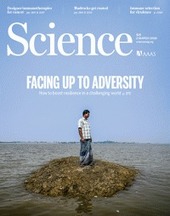
The roots of resilience

Resilience is on many people’s minds these days. Hurricanes and fires regularly wallop communities. The risks of climate change loom large, and the horrors of war and the refugee crises they’ve spawned show no signs of abating. Bitter political divisions have yielded to acrimony and gloom. But although hardship cripples some, others rebound. What can science can teach us about how we might adapt and gird for future challenges? In this series of stories, we examine ways of coping with natural disasters, war and displacement, and climate change—not to mention resilience tactics in nature. One psychologist coined the term ordinary magic to describe the mix of features that brews resilience. From our stories, we learned that no clear-cut recipe exists. And yet despite long odds, scientists are parsing answers to key questions. Some carry policy prescriptions; others require an uncomfortable rethinking of adaptations needed to survive. Perhaps most important, we found that this research cultivates something that’s in short supply these days: It breeds hope.

The roots of resilience
Jennifer Couzin-Frankel

Science  02 Mar 2018:
Vol. 359, Issue 6379, pp. 970-971
DOI: 10.1126/science.359.6379.970

Source: science.sciencemag.org