
Author: cxdig

The 2017 Nobel Prize in Physics

On 14 September 2015, the universe’s gravitational waves were observed for the very first time. The waves, which were predicted by Albert Einstein a hundred years ago, came from a collision between two black holes. It took 1.3 billion years for the waves to arrive at the LIGO detector in the USA.

The signal was extremely weak when it reached Earth, but is already promising a revolution in astrophysics. Gravitational waves are an entirely new way of observing the most violent events in space and testing the limits of our knowledge.

LIGO, the Laser Interferometer Gravitational-Wave Observatory, is a collaborative project with over one thousand researchers from more than twenty countries. Together, they have realised a vision that is almost fifty years old. The 2017 Nobel Laureates have, with their enthusiasm and determination, each been invaluable to the success of LIGO. Pioneers Rainer Weiss and Kip S. Thorne, together with Barry C. Barish, the scientist and leader who brought the project to completion, ensured that four decades of effort led to gravitational waves finally being observed.

In the mid-1970s, Rainer Weiss had already analysed possible sources of background noise that would disturb measurements, and had also designed a detector, a laser-based interferometer, which would overcome this noise. Early on, both Kip Thorne and Rainer Weiss were firmly convinced that gravitational waves could be detected and bring about a revolution in our knowledge of the universe.

Gravitational waves spread at the speed of light, filling the universe, as Albert Einstein described in his general theory of relativity. They are always created when a mass accelerates, like when an ice-skater pirouettes or a pair of black holes rotate around each other. Einstein was convinced it would never be possible to measure them. The LIGO project’s achievement was using a pair of gigantic laser interferometers to measure a change thousands of times smaller than an atomic nucleus, as the gravitational wave passed the Earth.

So far all sorts of electromagnetic radiation and particles, such as cosmic rays or neutrinos, have been used to explore the universe. However, gravitational waves are direct testimony to disruptions in spacetime itself. This is something completely new and different, opening up unseen worlds. A wealth of discoveries awaits those who succeed in capturing the waves and interpreting their message.

Source: www.nobelprize.org
Algorithmically probable mutations reproduce aspects of evolution such as convergence rate, genetic memory, modularity, diversity explosions, and mass extinction

We show that if evolution is algorithmic in any form and can thus be considered a program in software space, the emergence of a natural algorithmic probability distribution has the potential to become an accelerating mechanism. We simulate the application of algorithmic mutations to binary matrices based on numerical approximations to algorithmic probability, comparing the evolutionary speed to the alternative hypothesis of uniformly distributed mutations for a series of matrices of varying complexity. When the algorithmic mutation produces unfit organisms—because mutations may lead to, for example, syntactically useless evolutionary programs—massive extinctions may occur. We show that modularity provides an evolutionary advantage also evolving a genetic memory. We demonstrate that such regular structures are preserved and carried on when they first occur and can also lead to an accelerated production of diversity and extinction, possibly explaining natural phenomena such as periods of accelerated growth of the number of species (e.g. the Cambrian explosion) and the occurrence of massive extinctions (e.g. the End Triassic) whose causes are a matter of considerable debate. The approach introduced here appears to be a better approximation to actual biological evolution than models based upon the application of mutation from uniform probability distributions, and because evolution by algorithmic probability converges faster to regular structures (both artificial and natural, as tested on a small biological network), it also approaches a formal version of open-ended evolution based on previous results. The results validate the motivations and results of Chaitin’s Metabiology programme. We also show that the procedure has the potential to significantly accelerate solving optimization problems in the context of artificial evolutionary algorithms.


Algorithmically probable mutations reproduce aspects of evolution such as convergence rate, genetic memory, modularity, diversity explosions, and mass extinction

Santiago Hernández-Orozco, Hector Zenil, Narsis A. Kiani

Click here to edit the content

Source: arxiv.org

The 2017 Nobel Prize in Physiology or Medicine

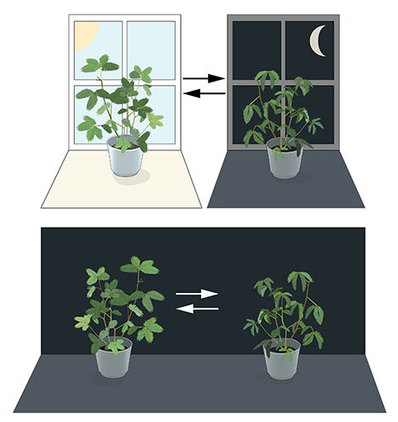
Life on Earth is adapted to the rotation of our planet. For many years we have known that living organisms, including humans, have an internal, biological clock that helps them anticipate and adapt to the regular rhythm of the day. But how does this clock actually work? Jeffrey C. Hall, Michael Rosbash and Michael W. Young were able to peek inside our biological clock and elucidate its inner workings. Their discoveries explain how plants, animals and humans adapt their biological rhythm so that it is synchronized with the Earth’s revolutions.

Using fruit flies as a model organism, this year’s Nobel laureates isolated a gene that controls the normal daily biological rhythm. They showed that this gene encodes a protein that accumulates in the cell during the night, and is then degraded during the day. Subsequently, they identified additional protein components of this machinery, exposing the mechanism governing the self-sustaining clockwork inside the cell. We now recognize that biological clocks function by the same principles in cells of other multicellular organisms, including humans.

With exquisite precision, our inner clock adapts our physiology to the dramatically different phases of the day. The clock regulates critical functions such as behavior, hormone levels, sleep, body temperature and metabolism. Our wellbeing is affected when there is a temporary mismatch between our external environment and this internal biological clock, for example when we travel across several time zones and experience “jet lag”. There are also indications that chronic misalignment between our lifestyle and the rhythm dictated by our inner timekeeper is associated with increased risk for various diseases.

Source: www.nobelprize.org

Postdoctoral Position in Network Dynamics at Northwestern University

The group of Prof. Adilson E. Motter at Northwestern University has an opening for postdoctoral researchers interested in dynamical aspects of complex network systems. To apply, candidates should e-mail a CV and a brief research statement to Prof. Motter at motter@northwestern.edu. The application deadline is November 15, 2017. For more information, please visit: http://dyn.phys.northwestern.edu.

Source: dyn.phys.northwestern.edu

It’s Complicated…The Relationship of Complexity Theory to Normative Discourse in Science, Society, and Beyond

Place & Date: 9am – 4:30pm, Nov 14th, 2017 at Clark Center S360, Stanford University.

Registration link: https://goo.gl/forms/rfb9S4jNQmsuKetf1

There will be three focusing questions for the Symposium:

What is “Complexity Science”?
How is Complexity Science integrated into various disciplines?
How does Complexity Science affect how we solve scientific, social, or philosophical problems?
All proceedings of the Symposium will be professionally video recorded and uploaded to our Youtube account, https://www.youtube.com/user/StanfordComplexity

Source: complexity.stanford.edu