
Category: Papers

Stability of Modules as the Law of Their Existence

Zyri Bajrami
Matter, energy, and information, on the one hand, and the interplay between natural selection and self-organization, on the other, have given rise to modules, which constitute the fundamental units of interaction, organization, and function, as well as the primary targets of natural selection throughout chemical, biological, and cultural evolution. Based on the forms of structural information that enable their emergence, modules can be classified into huit types: (a) chemical modules (l) genetic and epigenetic modules, (c) cell, (d) neural, (f) mental modules, (g) moduloma (m) and affordance modules (n). Through interactions among modules and between modules and their environment, semantic (meaningful) modular information emerges. It is this semantic information that enables modules to acquire and maintain stability as both physical and abstract entities. The emergence and persistence of both material and immaterial (abstract) modules occur only at a specific point in time, when structural information is matched with the corresponding energy. This relationship is described by the law of modular stability. Modules acquire and preserve stability when the structural information responsible for establishing the relationships among the elements of their structure, considered as systems, corresponds to the energy required to maintain those relationships, while semantic modular information reaches its maximum value. One of the principal implications of this law is that the creative role of natural selection and modular stability is expressed primarily during the first stage of module formation, when the module is established as a replicator, rather than during the second stage, when it functions as an interactor and its fitness is determined.

Read the full article at: www.preprints.org
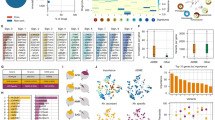
Network-driven discovery of repurposable drugs targeting hallmarks of aging

Bnaya Gross, Joseph Ehlert, Vadim N. Gladyshev, Joseph Loscalzo & Albert-László Barabási 
Nature Aging volume 6, pages1516–1531 (2026)

Despite the thousands of genes implicated in age-related phenotypes, effective interventions for aging remain elusive, due to the multifactorial nature of longevity and the interconnectedness of molecular components involved. Here we introduce a network medicine framework to map 2,358 longevity-associated genes onto the human interactome to identify drug-repurposing candidates capable of modulating specific hallmarks of aging. We find that genes associated with each hallmark form a connected subgraph, or hallmark module, allowing us to measure the network proximity of 6,442 compounds to each hallmark. We then introduce a transcription-based metric, pAGE, which evaluates whether drug-induced expression shifts reinforce or counteract known age-related expression changes within each hallmark module. By integrating network proximity and pAGE, we identify drug-repurposing candidates targeting specific hallmarks and provide a falsifiable framework to leverage genomic discoveries for accelerating drug repurposing in longevity. Our findings are interpretable, revealing molecular mechanisms through which drugs modulate hallmarks.

Read the full article at: www.nature.com

Structural and functional robustness in public transportation networks of Latin American cities

Tomás Cicchini, Ollin D. Langle-Chimal, Marta C. González, Ines Caridi & Leonardo Ermann

Discover Cities

Volume 3, article number 139 (2026)

Public transportation systems are vital for urban mobility, yet their robustness against disruptions remains underexplored, particularly in Latin American cities. This study quantifies the structural and functional robustness of public transport networks in Mexico City, Rio de Janeiro, and Buenos Aires, revealing that Rio de Janeiro exhibits the highest resilience due to its structural redundancy, while also establishing a strong correlation between structural connectivity and trip feasibility across the cities.

Read the full article at: link.springer.com

Teleonomy and synergy: How living systems have shaped biological evolution

Peter A. Corning

BioSystems
Volume 266, August 2026, 105845

Charles Darwin’s theory of evolution was seriously deficient. Although his concept of natural selection was an important contribution – highlighting the fundamental fact that life on Earth is a contingent, always at-risk enterprise – he failed to acknowledge the fact that all living systems – from the smallest single-celled bacteria to humankind – are also shaped by their evolved purposiveness (teleonomy). Their initiatives and activities – their “agency” – has exercised an important influence over the trajectory of life on Earth, as one of Darwin’s predecessors, Jean-Baptiste de Lamarck, appreciated. Lamarck proposed that changes in an animal’s “habits”, stimulated by environmental changes, have been a primary source of evolutionary change over time. Darwin also portrayed evolution as a fundamentally competitive process (the “struggle for existence” in Darwin’s term), as did many of his contemporaries. Today we know that life has also been a multi-faceted cooperative (synergistic) enterprise and that this has been of overriding importance in the evolution of complexity over time. Teleonomy and cooperative functional effects (synergy) have shaped natural selection in many different ways. Indeed, we now know that there have been many influences in evolution. My proposed Inclusive Synthesis is also open-ended, because it is expected that still more has yet to be learned about biological evolution; it is an ongoing work-in-progress rather than a completed theoretical edifice. “Teleonomic Selection” (after Corning) and “Synergistic Selection” (after John Maynard Smith) have played important parts in evolution. It’s time for a more inclusive theory.

Read the full article at: www.sciencedirect.com

Infodynamics of consciousness and empathy

Klaus Jaffe

Infodynamics explores how the interactions between information and energy generates useful work, offering a framework for understanding cognition. It views consciousness as an adaptive mechanism that enables an entity, biological or artificial, to construct an internal map of itself and integrate it into its environmental models (Weltanschauung). When these models incorporate the perceived internal states of others, empathy emerges. Empathy in turn allows to secure synergistic social cooperation to build robust new social structures. By focusing on the utility of information, infodynamics uncovers how consciousness and empathy serve as evolutionary tools to enhance survival odds and stabilize social structures. This approach provides an actionable methodology for detecting consciousness in living or artificial entities, that allows optimizing the design of advanced artificial intelligence, and of future educational systems. Both will drive cultural and eventually biological evolution.

Read the full article at: papers.ssrn.com