Category: Papers

Thinking—Fast, Slow, and Artificial: How AI is Reshaping Human Reasoning and the Rise of Cognitive Surrende

Steven D Shaw, Gideon Nave

People increasingly consult generative artificial intelligence (AI) while reasoning. As AI becomes embedded in daily thought, what becomes of human judgment? We introduce Tri-System Theory, extending dual-process accounts of reasoning by positing System 3: artificial cognition that operates outside the brain. System 3 can supplement or supplant internal processes, introducing novel cognitive pathways. A key prediction of the theory is “cognitive surrender”-adopting AI outputs with minimal scrutiny, overriding intuition (System 1) and deliberation (System 2). Across three preregistered experiments using an adapted Cognitive Reflection Test (N = 1,372; 9,593 trials), we randomized AI accuracy via hidden seed prompts. Participants chose to consult an AI assistant on a majority of trials (>50%). Relative to baseline (no System 3 access), accuracy significantly rose when AI was accurate and fell when it erred (+25/-15 percentage points; Study 1), the behavioral signature of cognitive surrender (AI-Accurate vs. AI-Faulty contrast; Cohen’s h = 0.81). Engaging System 3 also increased confidence, even following errors. Time pressure (Study 2) and per-item incentives and feedback (Study 3) shifted baseline performance but did not eliminate this pattern: when accurate, AI buffered time-pressure costs and amplified incentive gains; when faulty, it consistently reduced accuracy regardless of situational moderators. Across studies, participants with higher trust in AI and lower need for cognition and fluid intelligence showed greater surrender to System 3. Tri-System Theory thus characterizes a triadic cognitive ecology, revealing how System 3 reframes human reasoning and may reshape autonomy and accountability in the age of AI.

Read the full article at: papers.ssrn.com

Directional information transfer between interacting Brownian particles

Tenta Tani
We theoretically investigate how information flows when two particles interact with each other. Understanding the physical mechanisms of directional information flow is crucial for advancing information thermodynamics and stochastic computing. However, the fundamental connection between mechanical motion and causal information transfer remains elusive. To focus only on essential effects of physical dynamics, we examine two interacting Brownian particles confined in a one-dimensional potential. By simulating their Langevin dynamics, we quantify the causal information exchange using transfer entropy. We demonstrate that a mass asymmetry inherently breaks the symmetry of information flow, inducing a net directional transfer from the heavier to the lighter particle. Physically, the heavier particle, possessing larger inertia and higher active information storage, retains the memory of its trajectory longer against thermal fluctuations, thereby acting as a source of information. We analytically clarify that this net transfer is governed by a competition between the difference in memory capacity and the predictability of the particle trajectories. Furthermore, we reveal that the net information flow scales logarithmically with the mass ratio. These findings provide essential insights into the physical significance of transfer entropy and the nature of information flow in general physical systems.

Read the full article at: arxiv.org
From description to design: Automated engineering of complex systems with desirable emergent properties

Thomas F. Varley, Josh Bongard
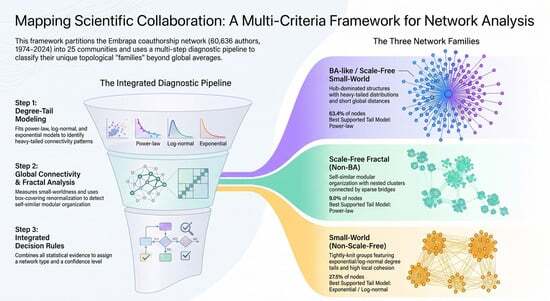
The study of complex systems has produced a huge library of different descriptive statistics that scientists can use to describe the various emergent patterns that characterize complex systems. The problem of engineering systems to display those patterns from first principles is a much harder one, however, as a hallmark of complexity is that macro-scale emergent properties are often difficult to predict from micro-scale features. Here, we propose a general optimization-based pipeline to automate the difficult problem of engineering emergent features by re-purposing descriptive statistics as loss functions, and letting a gradient descent optimizer do the hard work of designing the relevant micro-scale features and interactions. Using Kuramoto systems of coupled oscillators as a test bed, we show that our approach can reliably produce systems with non-trivial global properties, including higher-order synergistic information, multi-attractor metastability, and meso-scale structures such as modules and integrated information. We further show that this pipeline can also account for and accommodate constraints on the system properties, such as the costs of connections, or topological restrictions. This work is a step forward on the path moving complex systems science from a field predicated largely on description and post-hoc storytelling towards one capable of engineering real-world systems with desirable emergent meso-scale and macro-scale properties.

Read the full article at: arxiv.org

Antifragility: A Cross-Cutting Concept for Understanding Ecological Responses to Variability

Jonas Wickman, Christopher A. Klausmeier, and Elena Litchman

The American Naturalist

Environmental variability, in the form of either temporal fluctuations or intermittent perturbations, affects virtually all ecological systems. However, while temporal variability is widely recognized to play an important role across many ecological and evolutionary subdisciplines, there is no high-level cross-cutting concept that describes how species, communities, and ecosystems respond to variability. In this article we propose that “antifragility” could serve well as such a concept. Initially used in economics, antifragility denotes that a property or metric of performance increases with variability. To showcase the breadth of applicability and utility of the concept, we examine two mathematical models for antifragility in ecosystem services and competition. We also demonstrate some of the nuances and possible misapplications of the concept. Under global change, the variability of environmental conditions is expected to change. We believe that antifragility could serve as a useful concept in coordinating research efforts toward understanding the effects of these changes.

Read the full article at: www.journals.uchicago.edu

Scaling laws for function diversity and specialization across socioeconomic and biological complex systems

Vicky Chuqiao Yang, James Holehouse, Hyejin Youn, José Ignacio Arroyo, Sidney Redner, Geoffrey B. West, and Christopher P. Kempes

PNAS 123 (7) e2509729123

Diversification and specialization are central to complex adaptive systems, yet overarching principles across domains remain elusive. We introduce a general theory that unifies diversity and specialization across disparate systems, including microbes, federal agencies, companies, universities, and cities, characterized by two key parameters. We show from extensive data that function diversity scales with system size as a sublinear power law-resembling Heaps’ law-in all but cities, where it is logarithmic. Our theory explains both behaviors and suggests that function creation depends on system goals and structure: federal agencies tend to ensure functional coverage; cities slow new function growth as old ones expand, and cells occupy an intermediate position. Once functions are introduced, their growth follows a remarkably universal pattern across all systems.

Read the full article at: www.pnas.org