Category: Papers

AI agents are ‘aeroplanes for the mind’: five ways to ensure that scientists are responsible pilots

Dashun Wang

As artificial-intelligence systems take on more of the scientific workflow, the central goal should not be complete automation, but designing platforms that preserve creativity, responsibility and surprise.

Read the full article at: www.nature.com

What is emergence, after all?

Abbas K Rizi

PNAS Nexus, Volume 5, Issue 2, February 2026, pgag010,

The term emergence is increasingly used across scientific disciplines to describe phenomena that arise from interactions among a system’s components but cannot be readily inferred by examining those components in isolation. While often invoked to explain higher-level behaviors—such as flocking, synchronization, or collective intelligence—the term is frequently used without precision, sometimes giving rise to ambiguity or even mystique. In this perspective paper, I clarify the scientific meaning of emergence as a measurable and physically grounded phenomenon. Through concrete examples—such as temperature, magnetism, and herd immunity in social networks—I review how collective behavior can arise from local interactions that are constrained by global boundaries. By refining the concept of emergence, it is possible to gain a clearer and more grounded understanding of complex systems. My goal is to show that emergence, when properly framed, offers not mysticism, but rather insight.

Read the full article at: academic.oup.com

On the equivalence between nonlinear graph-based dynamics and linear dynamics on higher-order networks

Lucas Lacasa
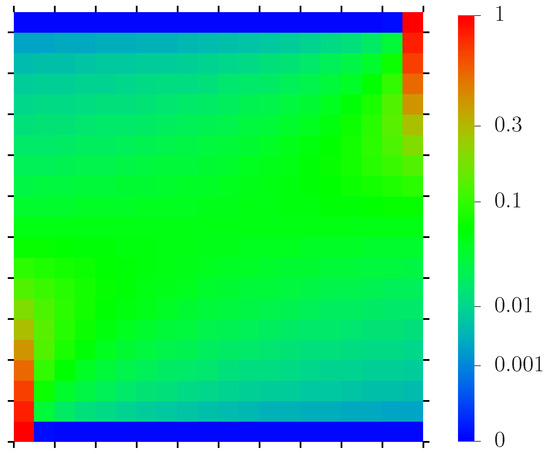
In network science, collective dynamics of complex systems are typically modelled as (nonlinear, often including many-body) vertex-level update rules evolving over a graph interaction structure. In recent years, frameworks that explicitly model such higher-order interactions in the interaction backbone (i.e. hypergraphs) have been advanced, somehow shifting the imputation of the effective nonlinearity from the dynamics to the interaction structure. In this work we discuss such structural–dynamical representation duality, and investigate how and when a nonlinear dynamics defined on the vertex set of a graph allows an equivalent representation in terms of a linear dynamics defined on the state space of a sufficiently richer, higher-order interaction structure. Using Carleman linearisation arguments, we show that finite polynomial dynamics defined in the |V| vertices of a graph admit an exact representation as linear dynamics on the state space of an hb-graph of order |V|, a combinatorial structure that extends hypergraphs by allowing vertex multiplicity, where the specific shape of the nonlinearity indicates whether the hb-graph is either finite or infinite (in terms of the number of hb-edges). For more general analytic nonlinearities, exact linear representation always require an hb-graph of infinite size, and its finite-size truncation provides an approximate representation of the original nonlinear graph-based dynamics.

Read the full article at: arxiv.org

Metrology of Complexity and Implications for the Study of the Emergence of Life

Sara Imari Walker
One of the longest standing open problems in science is how life arises from non-living matter. If it is possible to measure this transition in the lab, then it might be possible to understand the physical mechanisms by which the emergence of life occurs, which so far have evaded scientific understanding. A significant hurdle is the lack of standards or a framework for cross comparison across different experimental contexts and planetary environments. In this essay, I review current challenges in experimental approaches to origin of life chemistry, focusing on those associated with quantifying experimental selectivity versus de novo generation of molecular complexity, and I highlight new methods using molecular assembly theory to measure molecular complexity. This metrology-centered approach can enable rigorous testing of hypotheses about the cascade of major transitions in molecular order marking the emergence of life, while potentially bridging traditional divides between metabolism-first and genetics-first scenarios. Grounding the study of life’s origins in measurable complexity has significant implications for the search for life beyond Earth, suggesting paths toward theory-driven detection of biological complexity in diverse planetary contexts. As the field moves forward, standardized measurements of molecular complexity may help unify currently disparate approaches to understanding how matter transforms to life. Much remains to be done in this exciting frontier.

Read the full article at: arxiv.org

IS ALL THAT GLITTERS A NETWORK? SEARCHING FOR THE BOUNDARIES OF THE NETWORK APPROACH

ONERVA KORHONEN

Advances in Complex Systems Vol. 28, No. 08, 2530001 (2025)

Network analysis has become a powerful tool in various fields. However, the increasing popularity comes with potential problems. Unfamiliarity with the characteristics of the systems under investigation complicates network model construction and interpretation of analysis outcomes. While these issues require special attention in studies that apply the increasingly complex higher-order connectivity models, similar problems are associated with all, even the most simple, network models. Alongside technical issues, network scientists face a philosophical question: can the network approach discover the fundamental nature of a system, on the one hand, and produce useful information, on the other hand. In this perspective, I review the potential problems of the network approach and propose two solutions to address them: active evaluation of the potential and limitations of the network framework before applying a network model and a transition toward an interdisciplinary research practice to interpret analysis outcomes in their right context.

Read the full article at: www.worldscientific.com