

Category: Papers

How an information perspective helps overcome the challenge of biology to physics

Keith D.Farnsworth

Biosystems
Volume 217, July 2022, 104683

Living systems have long been a puzzle to physics, leading some to claim that new laws of physics are needed to explain them. Separating physical reality into the general (laws) and the particular (location of particles in space and time), it is possible to see that the combination of these amounts to efficient causation, whereby forces are constrained by patterns that constitute embodied information which acts as formal cause. Embodied information can only be produced by correlation with existing patterns, but sets of patterns can be arranged to form reflexive relations in which constraints on force are themselves formed by the pattern that results from action of those same constrained forces. This inevitably produces a higher level of pattern which reflexively reinforces itself. From this, multi-level hierarchies and downward causation by information are seen to be patterns of patterns that constrain forces. Such patterns, when causally cyclical, are closed to efficient causation. But to be autonomous, a system must also have its formative information accumulated by repeated cycles of selection until sufficient is obtained to represent the information content of the whole (which is the essential purpose of information oligomers such as DNA). Living systems are the result of that process and therefore cannot exist unless they are both closed to efficient causation and capable of embodying an independent supply of information sufficient to constitute their causal structure. Understanding this is not beyond the scope of standard physics, but it does recognise the far greater importance of information accumulation in living than in non-living systems and, as a corollary, emphasises the dependence of biological systems on the whole history of life, leading up to the present state of any and all organisms.

Read the full article at: www.sciencedirect.com
Disentangling material, social, and cognitive determinants of human behavior and beliefs

Denis TverskoiAndrea GuidoGiulia AndrighettoAngel SánchezSergey Gavrilets

In social interactions, human decision-making, attitudes, and beliefs about others coevolve. Their dynamics are affected by cost-benefit considerations, cognitive processes (such as cognitive dissonance, social projecting, and logic constraints), and social influences by peers (via descriptive and injunctive social norms) and by authorities (e.g., educational, cultural, religious, political, administrative, individual or group, real or fictitious). Here we attempt to disentangle some of this complexity by using an integrative mathematical modeling and a 35-day online behavioral experiment. We utilize data from a Common Pool Resources experiment with or without messaging promoting a group-beneficial level of resource extraction. We first show that our model provides a better fit than a wide variety of alternative models. Then we directly estimate the weights of different factors in decision-making and beliefs dynamics. We show that material payoffs accounted only for about 20\% of decision-making. The remaining 80\% was due to different cognitive and social forces which we evaluated quantitatively. Without messaging, personal norms (and cognitive dissonance) have the largest weight in decision-making. Messaging greatly influences personal norms and normative expectations. Between-individual variation is present in all measured characteristics and notably impacts observed group behavior. At the same time, gender differences are not significant. We argue that one can hardly understand social behavior without understanding the dynamics of personal beliefs and beliefs about others and that cognitive, social, and material factors all play important roles in these processes. Our results have implications for understanding and predicting social processes triggered by certain shocks (e.g., social unrest, a pandemic, or a natural disaster) and for designing policy interventions aiming to change behavior (e.g. actions aimed at environment protection or climate change mitigation).

Read the full article at: osf.io

Sustainability and Goal Fitness Index for the Analysis of Sustainable Development Goals: A Methodological Proposal

Sanny González, Gabriel Pereira, and Arturo González

The Sustainable Development Goals (SDGs) were adopted in September 2015 by the 193 member states of the United Nations (UN), which include 17 goals, 169 targets and 244 indicators, as an attempt to radically change the approach of the Millennium Development Goals (MDGs). Since the adoption of the 2030 Agenda, the scientific community has increased its interest in the evaluation, analysis, and evaluation of the interrelationships between the SDGs, proposing different approaches and using a diversity of methodological tools for the interactions of the SDGs. This research proposes a methodology that takes advantage of the concepts of Economic Fitness for the creation of a Sustainability Fitness Index (SFI) for the countries and a Goal Fitness Index (GFI) for each SDG. These indices are intended to provide a tool to analyze the interrelationships between the Sustainable Development Goals in such a way that they offer a new approach to address the capacities of the countries and the fulfillment of the SDGs. The results of the SFI are a first attempt to identify development priorities aligned with the SDGs in each country, based on their available productive capacities, which could help make more efficient use of their limited resources and increase the achievement of the SDGs.

Read the full article at: www.scitepress.org

Universality out of order

Petter Holme 

Nature Communications volume 13, Article number: 2355 (2022)

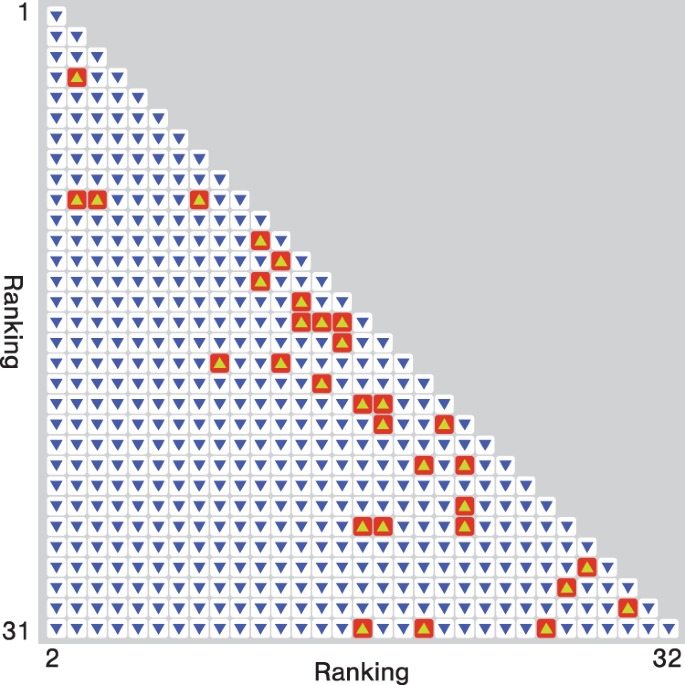
Orders, rankings, and hierarchies on one side, universal statistical laws on the other—it is rare that these core concepts of complex systems science meet. This Comment sets the scene for some recent discoveries in this too seldomly visited border zone.

Read the full article at: www.nature.com

The universality in urban commuting across and within cities

Lei Dong, Paolo Santi, Yu Liu, Siqi Zheng, Carlo Ratti
Commuting is a key mechanism that governs the dynamics of cities. Despite its importance, very little is known of the properties and mechanisms underlying this crucial urban process. Here, we capitalize on ∼ 50 million individuals’ smartphone data from 234 Chinese cities to show that urban commuting obeys remarkable regularities. These regularities can be generalized as two laws: (i) the scale-invariance of the average commuting distance across cities, which is a long-awaited validation of Marchetti’s constant conjecture, and (ii) a universal inverted U-shape of the commuting distance as a function of the distance from the city centre within cities, indicating that the city centre’s attraction is bounded. Motivated by such empirical findings, we develop a simple urban growth model that connects individual-level mobility choices with macroscopic urban spatial structure and faithfully explains both commuting laws. Our results further show that the scale-invariants of human mobility will ultimately lead to the polycentric transition in cities, which could be used to better inform urban development strategies.

Read the full article at: arxiv.org