Category: Papers

The future of work after COVID-19

The COVID-19 pandemic accelerated existing future of work trends, with 25% more workers than previously estimated potentially needing to switch occupations.

This report on the future of work after COVID-19 is the first of three MGI reports that examine aspects of the postpandemic economy. The others look at the pandemic’s long-term influence on consumption and the potential for a broad recovery led by enhanced productivity and innovation. Here, we assess the lasting impact of the pandemic on labor demand, the mix of occupations, and the workforce skills required in eight countries with diverse economic and labor market models: China, France, Germany, India, Japan, Spain, the United Kingdom, and the United States. Together, these eight countries account for almost half the global population and 62 percent of GDP.

Read the full article at: www.mckinsey.com

Asymmetry underlies stability in power grids

Ferenc Molnar, Takashi Nishikawa & Adilson E. Motter
Nature Communications 12, 1457 (2021)

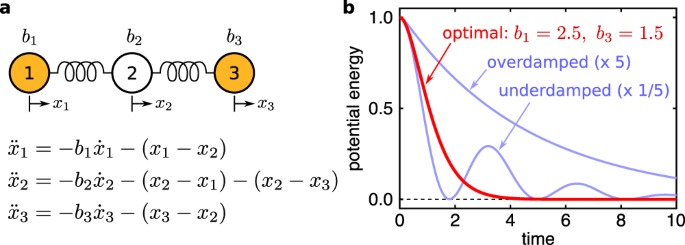
Abstract: Behavioral homogeneity is often critical for the functioning of network systems of interacting entities. In power grids, whose stable operation requires generator frequencies to be synchronized—and thus homogeneous—across the network, previous work suggests that the stability of synchronous states can be improved by making the generators homogeneous. Here, we show that a substantial additional improvement is possible by instead making the generators suitably heterogeneous. We develop a general method for attributing this counterintuitive effect to converse symmetry breaking, a recently established phenomenon in which the system must be asymmetric to maintain a stable symmetric state. These findings constitute the first demonstration of converse symmetry breaking in real-world systems, and our method promises to enable identification of this phenomenon in other networks whose functions rely on behavioral homogeneity.

Read the full article at: www.nature.com

Informational architecture across non-living and living collectives

Hyunju Kim, Gabriele Valentini, Jake Hanson & Sara Imari Walker
Theory in Biosciences (2021)

Collective behavior is widely regarded as a hallmark property of living and intelligent systems. Yet, many examples are known of simple physical systems that are not alive, which nonetheless display collective behavior too, prompting simple physical models to often be adopted to explain living collective behaviors. To understand collective behavior as it occurs in living examples, it is important to determine whether or not there exist fundamental differences in how non-living and living systems act collectively, as well as the limits of the intuition that can be built from simpler, physical examples in explaining biological phenomenon. Here, we propose a framework for comparing non-living and living collectives as a continuum based on their information architecture: that is, how information is stored and processed across different degrees of freedom. We review diverse examples of collective phenomena, characterized from an information-theoretic perspective, and offer views on future directions for quantifying living collective behaviors based on their informational structure.

Read the full article at: link.springer.com

The Waiting-Time Paradox ·

Masuda N and Porter M (2021) The Waiting-Time Paradox. Front. Young Minds. 9:582433. doi: 10.3389/frym.2020.582433

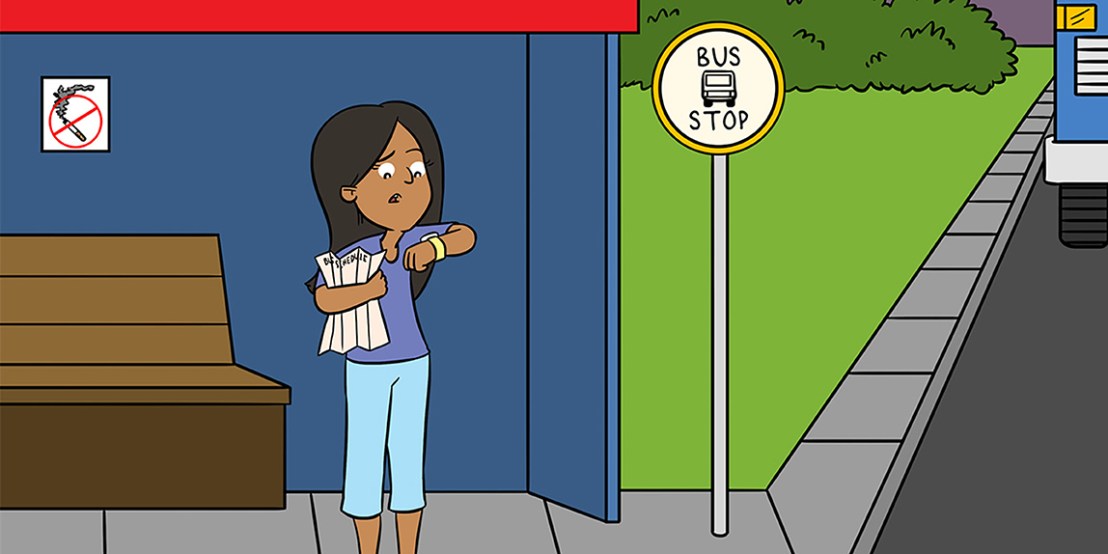
Suppose that you are going to school and arrive at a bus stop. How long do you have to wait before the next bus arrives? Surprisingly, it is longer—possibly much longer—than what you might guess from looking at a bus schedule. This phenomenon, which is called the waiting-time paradox, has a purely mathematical origin. In this article, we explore the waiting-time paradox, explain why it occurs, and discuss some of its implications (beyond the possibility of being late for school).

Read the full article at: kids.frontiersin.org

The heartbeat of the city

Prieto Curiel R, Patino JE, Duque JC, O’Clery N (2021) The heartbeat of the city. PLoS ONE 16(2): e0246714. https://doi.org/10.1371/journal.pone.0246714 

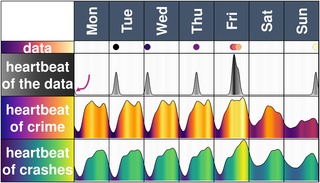
Human activity is organised around daily and weekly cycles, which should, in turn, dominate all types of social interactions, such as transactions, communications, gatherings and so on. Yet, despite their strategic importance for policing and security, cyclical weekly patterns in crime and road incidents have been unexplored at the city and neighbourhood level. Here we construct a novel method to capture the weekly trace, or “heartbeat” of events and use geotagged data capturing the time and location of more than 200,000 violent crimes and nearly one million crashes in Mexico City. On aggregate, our findings show that the heartbeats of crime and crashes follow a similar pattern. We observe valleys during the night and peaks in the evening, where the intensity during a peak is 7.5 times the intensity of valleys in terms of crime and 12.3 times in terms of road accidents. Although distinct types of events, crimes and crashes reach their respective intensity peak on Friday night and valley on Tuesday morning, the result of a hyper-synchronised society. Next, heartbeats are computed for city neighbourhood ‘tiles’, a division of space within the city based on the distance to Metro and other public transport stations. We find that heartbeats are spatially heterogeneous with some diffusion, so that nearby tiles have similar heartbeats. Tiles are then clustered based on the shape of their heartbeat, e.g., tiles within groups suffer peaks and valleys of crime or crashes at similar times during the week. The clusters found are similar to those based on economic activities. This enables us to anticipate temporal traces of crime and crashes based on local amenities.

Read the full article at: journals.plos.org