Category: Papers

Right and left, partisanship predicts (asymmetric) vulnerability to misinformation

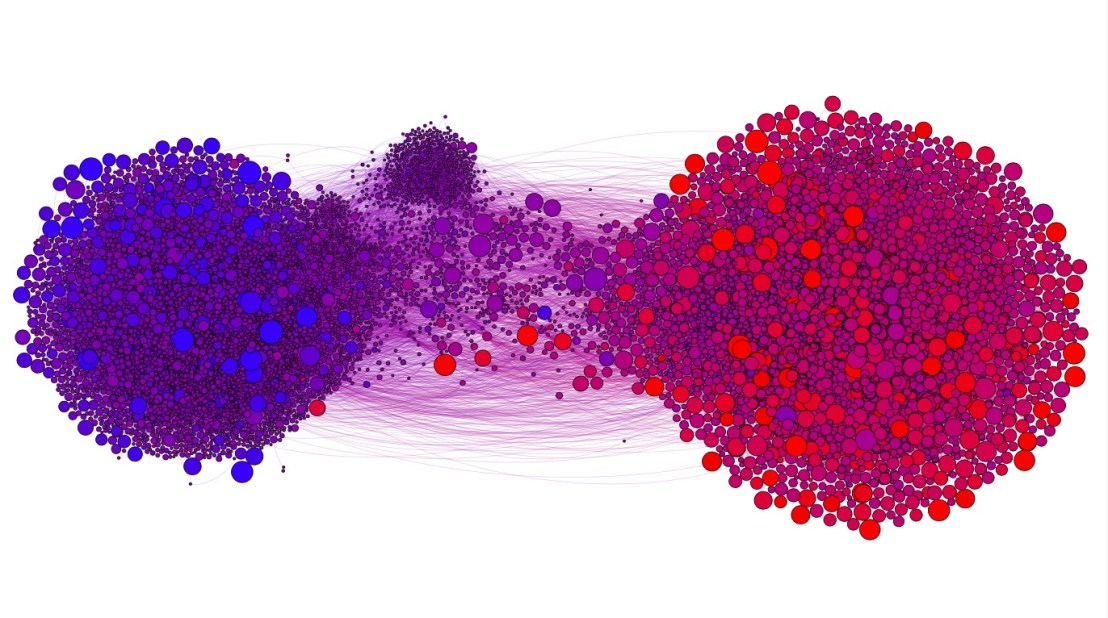
We analyze the relationship between partisanship, echo chambers, and vulnerability to online misinformation by studying news sharing behavior on Twitter. While our results confirm prior findings that online misinformation sharing is strongly correlated with right-leaning partisanship, we also uncover a similar, though weaker, trend among left-leaning users. Because of the correlation between a user’s partisanship and their position within a partisan echo chamber, these types of influence are confounded. To disentangle their effects, we performed a regression analysis and found that vulnerability to misinformation is most strongly influenced by partisanship for both left- and right-leaning users.

Read the full article at: misinforeview.hks.harvard.edu
Cognitive reflection correlates with behavior on Twitter

Mohsen Mosleh, Gordon Pennycook, Antonio A. Arechar & David G. Rand
Nature Communications volume 12, Article number: 921 (2021)

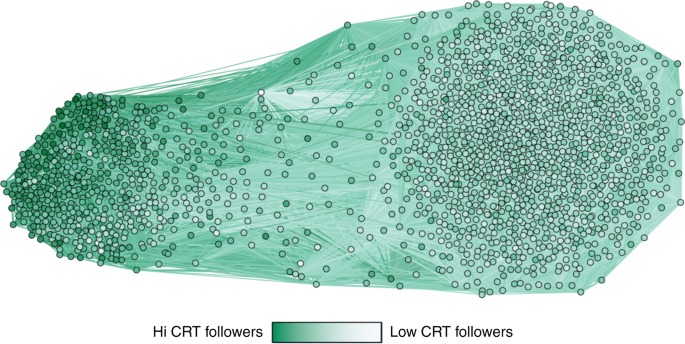
We investigate the relationship between individual differences in cognitive reflection and behavior on the social media platform Twitter, using a convenience sample of N = 1,901 individuals from Prolific. We find that people who score higher on the Cognitive Reflection Test—a widely used measure of reflective thinking—were more discerning in their social media use, as evidenced by the types and number of accounts followed, and by the reliability of the news sources they shared. Furthermore, a network analysis indicates that the phenomenon of echo chambers, in which discourse is more likely with like-minded others, is not limited to politics: people who scored lower in cognitive reflection tended to follow a set of accounts which are avoided by people who scored higher in cognitive reflection. Our results help to illuminate the drivers of behavior on social media platforms and challenge intuitionist notions that reflective thinking is unimportant for everyday judgment and decision-making. Performance on a cognitive reflection test correlates with a wide range of behaviours in survey studies. Here the authors investigate the relationship between cognitive reflection and some aspects of actual behaviour on social media.

Read the full article at: www.nature.com

Unmasking the mask studies: why the effectiveness of surgical masks in preventing respiratory infections has been underestimated

Pratyush K. Kollepara, Alexander F. Siegenfeld, Nassim N. Taleb, Yaneer Bar-Yam
Face masks have been widely used as a protective measure against COVID-19. However, pre-pandemic experimental studies have produced mixed results regarding their effectiveness against respiratory viruses, leading to confusion over whether masks protect the wearer, or only those with whom the wearer interacts. Such confusion may have contributed to organizations such as the WHO and CDC initially not recommending that the general public wear masks. Here, we show that studies that did not find surgical masks to be effective were under-powered to such an extent that even if masks were 100% effective, the studies in question would still have been unlikely to find a statistically significant effect. Thus, such studies should not be interpreted as providing evidence against masks. We also provide a framework for understanding the effect of masks on the probability of infection for single and repeated exposures. The framework demonstrates that the impact of wearing a mask more frequently compounds super-linearly, as can the impact of both the susceptible and infected individual wearing a mask. This work shows that current research is consistent with recommendations for using masks at a population level in regions in which there is transmission of COVID-19, and that nonlinear effects and statistical considerations regarding the percentage of exposures for which the mask is worn must be taken into account when designing empirical studies and interpreting their results.

Read the full article at: arxiv.org