Category: Papers

New Quantum Algorithms Finally Crack Nonlinear Equations

Sometimes, it’s easy for a computer to predict the future. Simple phenomena, such as how sap flows down a tree trunk, are straightforward and can be captured in a few lines of code using what mathematicians call linear differential equations. But in nonlinear systems, interactions can affect themselves: When air streams past a jet’s wings, the air flow alters molecular interactions, which alter the air flow, and so on. This feedback loop breeds chaos, where small changes in initial conditions lead to wildly different behavior later, making predictions nearly impossible — no matter how powerful the computer.

Read the full article at: www.quantamagazine.org

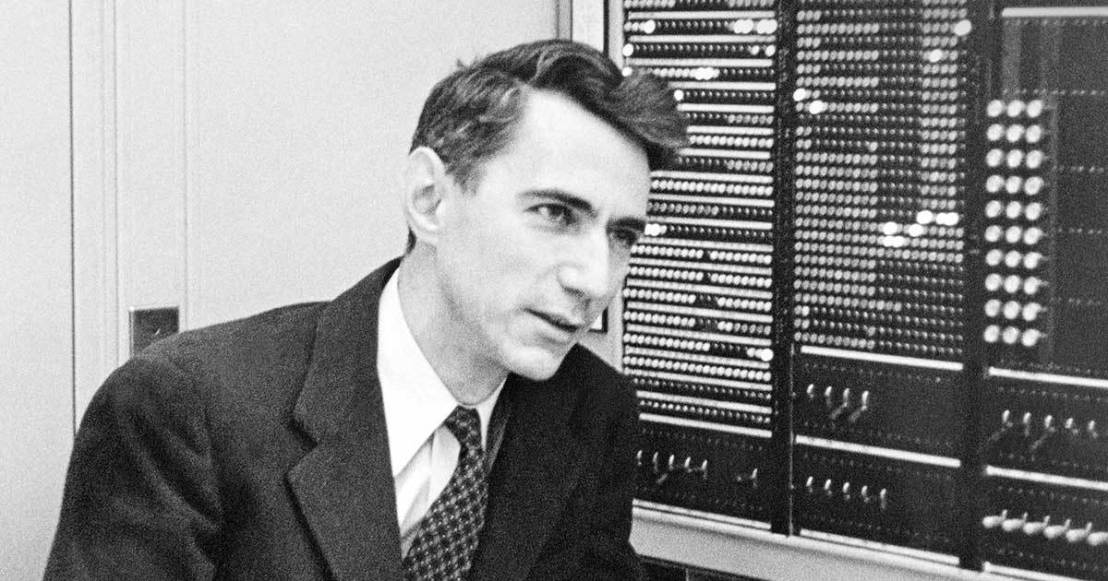
How Claude Shannon’s Information Theory Invented the Future

Science seeks the basic laws of nature. Mathematics searches for new theorems to build upon the old. Engineering builds systems to solve human needs. The three disciplines are interdependent but distinct. Very rarely does one individual simultaneously make central contributions to all three — but Claude Shannon was a rare individual.

Read the full article at: www.quantamagazine.org

Public Discourse and Social Network Echo Chambers Driven by Socio-Cognitive Biases

In recent years, social media has become an important platform for political discourse, being a site of both political conversations between voters and political advertisements from campaigns. While their individual influences on public discourse are well documented, the interplay between individual-level cognitive biases, social influence processes, dueling campaign efforts, and social media platforms remains unexamined. We introduce an agent-based model that integrates these dynamics and illustrates how their combination can lead to the formation of echo chambers. We find that the range of political viewpoints that individuals are willing to consider is a key determinant in the formation of polarized networks and the emergence of echo chambers and show that aggressive political campaigns can have counterproductive outcomes by radicalizing supporters and alienating moderates. Our model results demonstrate how certain elements of public discourse and political polarization can be understood as the result of an interactive process of shifting individual opinions, evolving social networks, and political campaigns. We also introduce a dynamic empirical case, retweet networks from the final stage of the 2016 U.S. presidential election, to show how our proposed model can be calibrated with real-world behavior.

Public Discourse and Social Network Echo Chambers Driven by Socio-Cognitive Biases
Xin Wang, Antonio D. Sirianni, Shaoting Tang, Zhiming Zheng, and Feng Fu
Phys. Rev. X 10, 041042

Read the full article at: link.aps.org

The dynamics of injunctive social norms | Evolutionary Human Sciences

Injunctive social norms are behaviours that one is expected to follow and expects others to follow in a given social situation; they are maintained by the threat of disapproval or punishment and by the process of internalization. Injunctive norms govern all aspects of our social life but the understanding of their effects on individual and group behaviour is currently rather incomplete. Here I develop a general mathematical approach describing the dynamics of injunctive norms in heterogeneous groups. My approach captures various costs and benefits, both material and normative, associated with norm-related behaviours including punishment and disapproval by others. It also allows for errors in decision-making and explicitly accounts for differences between individuals in their values, beliefs about the population state, and sensitivity to the actions of others. In addition, it enables one to study the consequences of mixing populations with different normative values and the effects of persuasive interventions. I describe how interactions of these factors affect individual and group behaviour. As an illustration, I consider policies developed by practitioners to abolish the norms of footbinding and female genital cutting, to decrease college students’ drinking, and to increase pro-environmental behaviours. The theory developed here can be used for achieving a better understanding of historical and current social processes as well as for developing practical policies better accounting for human social behaviour.

The dynamics of injunctive social norms

Sergey Gavrilets

Evolutionary Human Sciences

Read the full article at: www.cambridge.org