
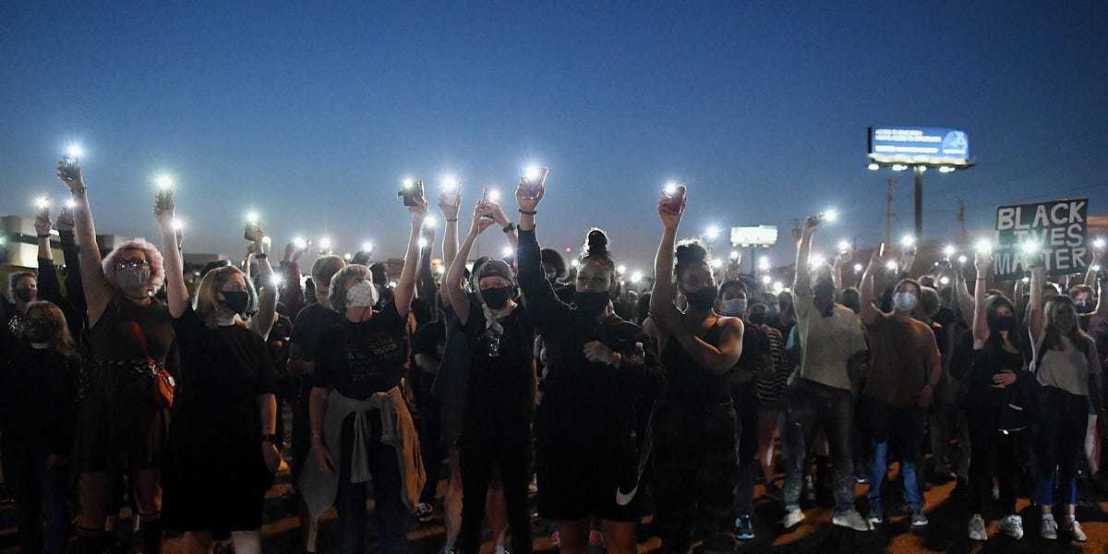
Our online lives are making us hate the other side. Experts on everything from conspiracies to digital ethnography to psychology explain why.
Read the full article at: www.businessinsider.com
Networking the complexity community since 1999
Category: Papers
Our online lives are making us hate the other side. Experts on everything from conspiracies to digital ethnography to psychology explain why.
Read the full article at: www.businessinsider.com
Dealing with traffic congestion is one of the most pressing challenges for cities. Transport authorities have implemented several strategies to reduce traffic jams with varying degrees of success. The use of reversible lanes is a common approach to improve traffic congestion during rush hours. A reversible lane can change its direction during a time interval to the more congested direction. This strategy can improve traffic congestion in specific scenarios. Most reversible lanes in urban roads are fixed in time and number; however, traffic patterns in cities are highly variable and unpredictable due to this phenomenon’s complex nature. Therefore, reversible lanes may not improve traffic flow under certain circumstances; moreover, they could worsen it because of traffic fluctuations. In this paper, we use cellular automata to model adaptive reversible lanes(aka dynamic reversible lanes). Adaptive reversible lanes can change their direction using real-time information to respond to traffic demand fluctuations. Using real traffic data, our model shows that adaptive reversible lanes can improve traffic flow up to 40% compared to conventional reversible lanes. Our results show that there are significant fluctuations in traffic flow even during rush hours, and thus cities would benefit from implementing adaptive reversible lanes.
Pérez-Méndez D, Gershenson C, Lárraga ME, Mateos JL (2021) Modeling adaptive reversible lanes: A cellular automata approach. PLoS ONE 16(1): e0244326. https://doi.org/10.1371/journal.pone.0244326
Nihat Ay
Theory in Biosciences volume 139, pages309–318 (2020)
A core property of robust systems is given by the invariance of their function against the removal of some of their structural components. This intuition has been formalised in the context of input–output maps, thereby introducing the notion of exclusion independence. We review work on how this formalisation allows us to derive characterisation theorems that provide a basis for the design of robust systems.
Read the full article at: link.springer.com
Rodrigo Dorantes-Gilardi, Diana García-Cortés, Hiram Hernández-Ramos & Jesús Espinal-Enríquez
Scientific Reports volume 10, Article number: 21564 (2020)
Homicide is without doubt one of Mexico’s most important security problems, with data showing that this dismal kind of violence sky-rocketed shortly after the war on drugs was declared in 2007. Since then, violent war-like zones have appeared and disappeared throughout Mexico, causing unfathomable human, social and economic losses. One of the most emblematic of these zones is the Monterrey metropolitan area (MMA), a central scenario in the narco-war. Being an important metropolitan area in Mexico and a business hub, MMA has counted hundreds to thousands of casualties. In spite of several approaches being developed to understand and analyze crime in general, and homicide in particular, the lack of accurate spatio-temporal homicide data results in incomplete descriptions. In order to describe the manner in which violence has evolved and spread in time and space through the city, here we propose a network-based approach. For this purpose, we define a homicide network where nodes are geographical entities that are connected through spatial and temporal relationships. We analyzed the time series of homicides in different municipalities and neighborhoods of the MMA, to observe whether or not a global correlation appeared. We studied the spatial correlation between neighborhoods where homicides took place, to observe whether distance is a factor of influence in the frequency of homicides. We constructed yearly co-occurrence networks, by correlating neighborhoods with homicides happening within a same week, and counting the co-occurrences of these neighborhood pairs in 1 year. We also constructed a crime network by aggregating all data of homicides, eliminating the temporal correlation, in order to observe whether homicide clusters appeared, and what those clusters were distributed geographically. Finally, we correlated the location and frequency of homicides with roads, freeways and highways, to observe if a trend in the homicidal violence appeared. Our network approach in the homicide evolution of MMA allows us to identify that (1) analyzing the whole 86-month period, we observed a correlation between close cities, which decreases in distant places. (2) at neighborhood level, correlations are not distance-dependent, on the contrary, highest co-occurrences appeared between distant neighborhoods and a polygon formed by close neighborhoods in downtown Monterrey. Moreover, (3) An elevated number of homicides occur close to the 85th freeway, which connects MMA with the US border. (4) Some socioeconomic barriers determine the presence of homicide violence. Finally, (5) we show a relation between homicidal crime and the urban landscape by studying the distance of safe and violent neighborhoods to the closest highway and by studying the evolution of highway and crime distance over the cartel-related years and the following period. With this approach, we are able to describe the spatial and temporal evolution of homicidal crime in a metropolitan area.
Read the full article at: www.nature.com
Jürgen Jost
Theory in Biosciences volume 139, pages361–370(2020)
In computer science, we can theoretically neatly separate transmission and processing of information, hardware and software, and programs and their inputs. This is much more intricate in biology. Nevertheless, I argue that Shannon’s concept of information is useful in biology, although its application is not as straightforward as many people think. In fact, the recently developed theory of information decomposition can shed much light on the complementarity between coding and regulatory, or internal and environmental information. The key challenge that we formulate in this contribution is to understand how genetic information and external factors combine to create an organism, and conversely how the genome has learned in the course of evolution how to harness the environment, and analogously how coding, regulation and spatial organization interact in cellular processes.
Read the full article at: link.springer.com

