Category: Papers

Is Every Cognitive Phenomenon Computable?

Fernando Rodriguez-Vergara and Phil Husbands

Mathematics 2026, 14(3), 535

According to the Church–Turing thesis, the limit of what is computable is bounded by Turing machines. Following from this, given that general computable functions formally describe the notion of recursive mechanisms, it is sometimes argued that every organismic process that specifies consistent cognitive responses should be both limited to Turing machine capabilities and amenable to formalization. There is, however, a deep intuitive conviction permeating contemporary cognitive science, according to which mental phenomena, such as consciousness and agency, cannot be explained by resorting to this kind of framework. In spite of some exceptions, the overall tacit assumption is that whatever the mind is, it exceeds the reach of what is described by notions of computability. This issue, namely the nature of the relation between cognition and computation, becomes particularly pertinent and increasingly more relevant as a possible source of better understanding the inner workings of the mind, as well as the limits of artificial implementations thereof. Moreover, although it is often overlooked or omitted so as to simplify our models, it will probably define, or so we argue, the direction of future research on artificial life, cognitive science, artificial intelligence, and related fields.

Read the full article at: www.mdpi.com

Discovering network dynamics with neural symbolic regression

Zihan Yu, Jingtao Ding & Yong Li 
Nature Computational Science (2025)

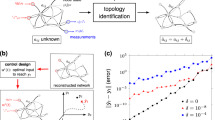
Network dynamics are fundamental to analyzing the properties of high-dimensional complex systems and understanding their behavior. Despite the accumulation of observational data across many domains, mathematical models exist in only a few areas with clear underlying principles. Here we show that a neural symbolic regression approach can bridge this gap by automatically deriving formulas from data. Our method reduces searches on high-dimensional networks to equivalent one-dimensional systems and uses pretrained neural networks to guide accurate formula discovery. Applied to ten benchmark systems, it recovers the correct forms and parameters of underlying dynamics. In two empirical natural systems, it corrects existing models of gene regulation and microbial communities, reducing prediction error by 59.98% and 55.94%, respectively. In epidemic transmission across human mobility networks of various scales, it discovers dynamics that exhibit the same power-law distribution of node correlations across scales and reveal country-level differences in intervention effects. These results demonstrate that machine-driven discovery of network dynamics can enhance understandings of complex systems and advance the development of complexity science.

Read the full article at: www.nature.com

Interplay of sync and swarm: Theory and application of swarmalators

Gourab Kumar Sar, Kevin O’Keeffe, Joao U.F. Lizárraga, Marcus A.M. de Aguiar, Christian Bettstetter, Dibakar Ghosh

Physics Reports Volume 1167, 14 April 2026, Pages 1-52

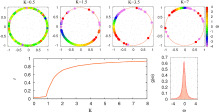
Swarmalators, entities that combine the properties of swarming particles with synchronized oscillations, represent a novel and growing area of research in the study of collective behavior. This review provides a comprehensive overview of the current state of swarmalator research, focusing on the interplay between spatial organization and temporal synchronization. After a brief introduction to synchronization and swarming as separate phenomena, we discuss the various mathematical models that have been developed to describe swarmalator systems, highlighting the key parameters that govern their dynamics. The review also discusses the emergence of complex patterns, such as clustering, phase waves, and synchronized states, and how these patterns are influenced by factors such as interaction range, coupling strength, and frequency distribution. Recently, some minimal models were proposed that are solvable and mimic real-world phenomena. The effect of predators in the swarmalator dynamics is also discussed. Finally, we explore potential applications in fields ranging from robotics to biological systems, where understanding the dual nature of swarming and synchronization could lead to innovative solutions. By synthesizing recent advances and identifying open challenges, this review aims to provide a foundation for future research in this interdisciplinary field.

Read the full article at: www.sciencedirect.com

From Statistical Mechanics to Nonlinear Dynamics and into Complex Systems

Alberto Robledo

Complexities 2026, 2(1), 3

We detail a procedure to transform the current empirical stage in the study of complex systems into a predictive phenomenological one. Our approach starts with the statistical-mechanical Landau-Ginzburg equation for dissipative processes, such as kinetics of phase change. Then, it imposes discrete time evolution to explicit back feeding, and adopts a power-law driving force to incorporate the onset of chaos, or, alternatively, criticality, the guiding principles of complexity. One obtains, in closed analytical form, a nonlinear renormalization-group (RG) fixed-point map descriptive of any of the three known (one-dimensional) transitions to or out of chaos. Furthermore, its Lyapunov function is shown to be the thermodynamic potential in q-statistics, because the regular or multifractal attractors at the transitions to chaos impose a severe impediment to access the system’s built-in configurations, leaving only a subset of vanishing measure available. To test the pertinence of our approach, we refer to the following complex systems issues: (i) Basic questions, such as demonstration of paradigms equivalence, illustration of self-organization, thermodynamic viewpoint of diversity, biological or other. (ii) Derivation of empirical laws, e.g., ranked data distributions (Zipf law), biological regularities (Kleiber law), river and cosmological structures (Hack law). (iii) Complex systems methods, for example, evolutionary game theory, self-similar networks, central-limit theorem questions. (iv) Condensed-matter physics complex problems (and their analogs in other disciplines), like, critical fluctuations (catastrophes), glass formation (traffic jams), localization transition (foraging, collective motion).

Read the full article at: www.mdpi.com