Category: Papers

To find the best parking spot, do the math

The next time you’re hunting for a parking spot, mathematics could help you identify the most efficient strategy, according to a recent paper in the Journal of Statistical Mechanics. It’s basically an optimization problem: weighing different variables and crunching the numbers to find the optimal combination of those factors. In the case of where to put your car, the goal is to strike the optimal balance of parking close to the target—a building entrance, for example—without having to waste too much time circling the lot hunting for the closest space.

Source: arstechnica.com

Measuring complexity

Complexity is heterogenous, involving nonlinearity, self-organisation, diversity, adaptive behaviour, among other things. It is therefore obviously worth asking whether purported measures of complexity measure aggregate phenomena, or individual aspects of complexity and if so which. This paper uses a recently developed rigorous framework for understanding complexity to answer this question about measurement. The approach is two-fold: find measures of individual aspects of complexity on the one hand, and explain measures of complexity on the other. We illustrate the conceptual framework of complexity science and how it links the foundations to the practised science with examples from different scientific fields and of various aspects of complexity. Furthermore, we analyse a selection of purported measures of complexity that have found wide application and explain why and how they measure aspects of complexity. This work gives the reader a tool to take any existing measure of complexity and analyse it, and to take any feature of complexity and find the right measure for it.


Measuring complexity

Karoline Wiesner, James Ladyman

Source: arxiv.org

Collective Irrationality and Positive Feedback

Recent experiments on ants and slime moulds have assessed the degree to which they make rational decisions when presented with a number of alternative food sources or shelter. Ants and slime moulds are just two examples of a wide range of species and biological processes that use positive feedback mechanisms to reach decisions. Here we use a generic, experimentally validated model of positive feedback between group members to show that the probability of taking the best of options depends crucially on the strength of feedback. We show how the probability of choosing the best option can be maximized by applying an optimal feedback strength. Importantly, this optimal value depends on the number of options, so that when we change the number of options the preference of the group changes, producing apparent “irrationalities”. We thus reinterpret the idea that collectives show "rational" or "irrational" preferences as being a necessary consequence of the use of positive feedback. We argue that positive feedback is a heuristic which often produces fast and accurate group decision-making, but is always susceptible to apparent irrationality when studied under particular experimental conditions.


Nicolis SC, Zabzina N, Latty T, Sumpter DJT (2011) Collective Irrationality and Positive Feedback. PLoS ONE 6(4): e18901. https://doi.org/10.1371/journal.pone.0018901

Source: journals.plos.org

From classical to modern opinion dynamics

In this age of Facebook, Instagram and Twitter, there is rapidly growing interest in understanding network-enabled opinion dynamics in large groups of autonomous agents. The phenomena of opinion polarization, the spread of propaganda and fake news, and the manipulation of sentiment are of interest to large numbers of organizations and people, some of whom are resource rich. Whether it is the more nefarious players such as foreign governments that are attempting to sway elections or large corporations that are trying to bend sentiment — often quite surreptitiously, or it is more open and above board, like researchers that want to spread the news of some finding or some business interest that wants to make a large group of people aware of genuinely helpful innovations that they are marketing, what is at stake is often significant. In this paper we review many of the classical, and some of the new, social interaction models aimed at understanding opinion dynamics. While the first papers studying opinion dynamics appeared over 60 years ago, there is still a great deal of room for innovation and exploration. We believe that the political climate and the extraordinary (even unprecedented) events in the sphere of politics in the last few years will inspire new interest and new ideas. It is our aim to help those interested researchers understand what has already been explored in a significant portion of the field of opinion dynamics. We believe that in doing this, it will become clear that there is still much to be done.


From classical to modern opinion dynamics

Hossein Noorazar, Kevin R. Vixie, Arghavan Talebanpour, Yunfeng Hu

Source: arxiv.org

Neutral and niche forces as drivers of species selection

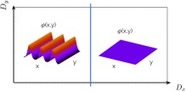
The evolutionary and ecological processes behind the origin of species are among the most fundamental problems in biology. In fact, many theoretical hypothesis on different type of speciation have been proposed. In particular, models of sympatric speciation leading to the formation of new species without geographical isolation, are based on the niche hypothesis: the diversification of the population is induced by the competition for a limited set of available resources. Interestingly, neutral models of evolution have shown that stochastic forces are sufficient to generate coexistence of different species. In this work, we put forward this dichotomy within the context of species formation, studying how neutral and niche forces contribute to sympatric speciation in a model ecosystem. In particular, we study the evolution of a population of individuals with asexual reproduction whose inherited characters or phenotypes are specified by both niche-based and neutral traits. We analyze the stationary state of the dynamics, and study the distribution of individuals in the whole phenotypic space. We show, both numerically and analytically, that there is a non-trivial coupling between neutral and niche forces induced by stochastic effects in the evolution of the population allowing the formation of clusters, that is, species in the phenotypic space. Remarkably, our framework can be generalized also to sexual reproduction or other type of population dynamics.

Source: www.sciencedirect.com