

The epidemics of the early 21st century revealed a world unprepared, even as the risks continue to multiply. Much worse is coming.
Source: www.theatlantic.com
Networking the complexity community since 1999
Category: Papers
The epidemics of the early 21st century revealed a world unprepared, even as the risks continue to multiply. Much worse is coming.
Source: www.theatlantic.com
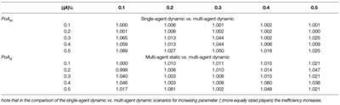
In this paper we study space debris removal from a game-theoretic perspective. In particular we focus on the question whether and how self-interested agents can cooperate in this dilemma, which resembles a tragedy of the commons scenario. We compare centralised and decentralised solutions and the corresponding price of anarchy, which measures the extent to which competition approximates cooperation. In addition we investigate whether agents can learn optimal strategies by reinforcement learning. To this end, we improve on an existing high fidelity orbital simulator, and use this simulator to obtain a computationally efficient surrogate model that can be used for our subsequent game-theoretic analysis. We study both single- and multi-agent approaches using stochastic (Markov) games and reinforcement learning. The main finding is that the cost of a decentralised, competitive solution can be significant, which should be taken into consideration when forming debris removal strategies.
Space Debris Removal: Learning to Cooperate and the Price of Anarchy
Richard Klima, Daan Bloembergen, Rahul Savani, Karl Tuyls, Alexander Wittig, Andrei Sapera and Dario Izzo
Front. Robot. AI, 04 June 2018 | https://doi.org/10.3389/frobt.2018.00054
Source: www.frontiersin.org
The workshop was motivated by the observation that many processes in natural, engineered, and social contexts exhibit emergent collective behavior and are thus governed by complex systems. Because challenges in understanding, predicting, designing, and controlling complex systems are often common to many domains, a central objective of the workshop was to facilitate the exchange of ideas across different fields and circumvent disciplinary boundaries typical of many traditional scientific meetings. The workshop participants included experts in both theory and applications, as well as a selection of postdoctoral researchers and graduate students from various domains. Because of the cross-disciplinary nature of the workshop, the participants themselves had the opportunity to become aware of the latest developments in fields related to, but different from, their own. The inclusion of early-career researchers will help promote the transfer of this expertise to The environment fostered discussions on the state of the art, potential issues, and most promising directions in multidisciplinary complex systems research.
This report includes outcomes of the workshop that can help inform the scientific community at large of the current status and challenges as well as future opportunities in multidisciplinary complex systems research as perceived by the participants of the workshop.
Multidisciplinary Complex Systems Research: Report from an NSF Workshop in May 2017,
Released May 2018, K.A. Gray and A.E. Motter (co-chairs).
Source: dyn.phys.northwestern.edu
Soaring migrant birds exploit columns of rising air (thermals) to cover large distances with minimal energy. Using social information while locating thermals may benefit such birds, but examining collective movements in wild migrants has been a major challenge for researchers. We investigated the group movements of a flock of 27 naturally migrating juvenile white storks by using high-resolution GPS and accelerometers. Analyzing individual and group movements on multiple scales revealed that a small number of leaders navigated to and explored thermals, whereas followers benefited from their movements. Despite this benefit, followers often left thermals earlier and at lower height, and consequently they had to flap considerably more. Followers also migrated less far annually than did leaders. We provide insights into the interactions between freely flying social migrants and the costs and benefits of collective movement in natural populations.
From local collective behavior to global migratory patterns in white storks
Andrea Flack, Máté Nagy, Wolfgang Fiedle, Iain D. Couzin, Martin Wikelski
Science 25 May 2018:
Vol. 360, Issue 6391, pp. 911-914
DOI: 10.1126/science.aap7781
Source: science.sciencemag.org
A multi-modal transportation system of a city can be modeled as a multiplex network with different layers corresponding to different transportation modes. These layers include, but are not limited to, bus network, metro network, and road network. Formally, a multiplex network is a multilayer graph in which the same set of nodes are connected by different types of relationships. Intra-layer relationships denote the road segments connecting stations of the same transportation mode, whereas inter-layer relationships represent connections between different transportation modes within the same station. Given a multi-modal transportation system of a city, we are interested in assessing its quality or efficiency by estimating the coverage i.e., a portion of the city that can be covered by a random walker who navigates through it within a given time budget, or steps. We are also interested in the robustness of the whole transportation system which denotes the degree to which the system is able to withstand a random or targeted failure affecting one or more parts of it. Previous approaches proposed a mathematical framework to numerically compute the coverage in multiplex networks. However solutions are usually based on eigenvalue decomposition, known to be time consuming and hard to obtain in the case of large systems. In this work, we propose MUME, an efficient algorithm for Multi-modal Urban Mobility Estimation, that takes advantage of the special structure of the supra-Laplacian matrix of the transportation multiplex, to compute the coverage of the system. We conduct a comprehensive series of experiments to demonstrate the effectiveness and efficiency of MUME on both synthetic and real transportation networks of various cities such as Paris, London, New York and Chicago. A future goal is to use this experience to make projections for a fast growing city like Doha.
Resilience analytics: coverage and robustness in multi-modal transportation networks
Abdelkader Baggag, Sofiane Abbar, Tahar Zanouda and Jaideep Srivastava
EPJ Data Science 2018 7:14
https://doi.org/10.1140/epjds/s13688-018-0139-7
Source: epjdatascience.springeropen.com

