
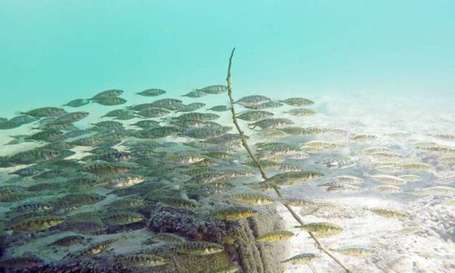
New research sheds light on how “animal personalities” – inter-individual differences in animal behaviour – can drive the collective behaviour and functioning of animal groups such as schools of fish, including their cohesion
Source: phys.org
Networking the complexity community since 1999
Category: Papers
New research sheds light on how “animal personalities” – inter-individual differences in animal behaviour – can drive the collective behaviour and functioning of animal groups such as schools of fish, including their cohesion
Source: phys.org
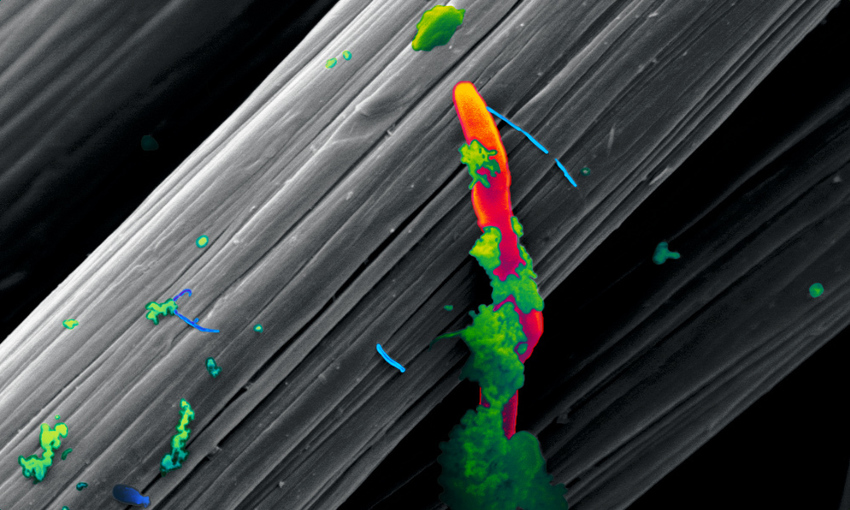
The electricity-eating microbes that the researchers were hunting for belong to a larger class of organisms that scientists are only beginning to understand. They inhabit largely uncharted worlds: the bubbling cauldrons of deep sea vents; mineral-rich veins deep beneath the planet’s surface; ocean sediments just a few inches below the deep seafloor. The microbes represent a segment of life that has been largely ignored, in part because their strange habitats make them incredibly difficult to grow in the lab.
Source: www.quantamagazine.org
Network neuroscience is the emerging discipline concerned with investigating the complex patterns of interconnections found in neural systems, and to identify principles with which to understand them. Within this discipline, one particularly powerful approach is network generative modeling, in which wiring rules are algorithmically implemented to produce synthetic network architectures with the same properties as observed in empirical network data. Successful models can highlight the principles by which a network is organized and potentially uncover the mechanisms by which it grows and develops. Here we review the prospects and promise of generative models for network neuroscience. We begin with a primer on network generative models, with a discussion of compressibility and predictability, utility in intuiting mechanisms, and a short history on their use in network science broadly. We then discuss generative models in practice and application, paying particular attention to the critical need for cross-validation. Next, we review generative models of biological neural networks, both at the cellular and large-scale level, and across a variety of species including \emph{C. elegans}, \emph{Drosophila}, mouse, rat, cat, macaque, and human. We offer a careful treatment of a few relevant distinctions, including differences between generative models and null models, sufficiency and redundancy, inferring and claiming mechanism, and functional and structural connectivity. We close with a discussion of future directions, outlining exciting frontiers both in empirical data collection efforts as well as in method and theory development that, together, further the utility of the generative network modeling approach for network neuroscience.
Generative Models for Network Neuroscience: Prospects and Promise
Richard F. Betzel, Danielle S. Bassett
Source: arxiv.org
Computationalism aspires to provide a comprehensive theory of life and mind. It fails in this task because it lacks the conceptual tools to address the problem of meaning. I argue that a meaningful perspective is enacted by an individual with a potential that is intrinsic to biological existence: death. Life matters to such an individual because it must constantly create the conditions of its own existence, which is unique and irreplaceable. For that individual to actively adapt, rather than to passively disintegrate, expresses a value inherent in its way of life, which is the ultimate source of more refined forms of normativity. This response to the problem of meaning will not satisfy those searching for a functionalist or logical solution, but on this view such a solution will not be forthcoming. As an intuition pump for this alternative perspective I introduce two ancient foreign worldviews that assign a constitutive role to death. Then I trace the emergence of a similar conception of mortality from the cybernetics era to the ongoing development of enactive cognitive science. Finally, I analyze why orthodox computationalism has failed to grasp the role of mortality in this constitutive way.
Life is Precious Because it is Precarious: Individuality, Mortality and the Problem of Meaning
Tom Froese
Representation and Reality in Humans, Other Living Organisms and Intelligent Machines pp 33-50
Part of the Studies in Applied Philosophy, Epistemology and Rational Ethics book series (SAPERE, volume 28)
Source: link.springer.com
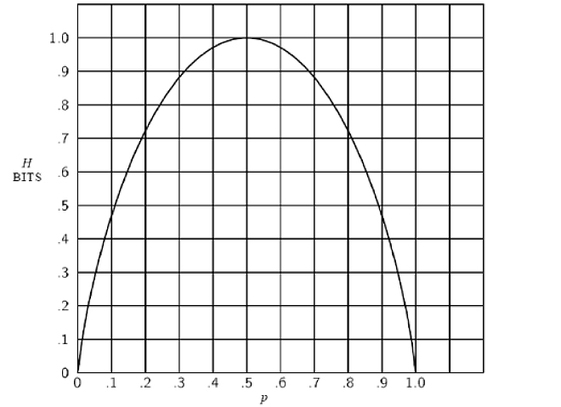
Just what is information? For such an intuitive idea, its precise nature proved remarkably hard to pin down. For centuries, it seemed to hover somewhere in a half-world between the visible and the unseen, the physical and the evanescent, the enduring medium and its fleeting message. It haunted the ancients as much as it did Claude Shannon and his Bell Labs colleagues in New York and New Jersey, who were trying to engirdle the world with wires and telecoms cables in the mid-20th century.
Source: aeon.co

