Category: Papers

The need for a translational science of democracy

The bitterly factious 2016 U.S. presidential election campaign was the culmination of several trends that, taken together, constitute a syndrome of chronic ailments in the body politic. Ironically, these destructive trends have accelerated just as science has rapidly improved our understanding of them and their underlying causes. But mere understanding is not sufficient to repair our politics. The challenge is to build a translational science of democracy that maintains scientific rigor while actively promoting the health of the body politic.


Michael A. Neblo, William Minozzi, Kevin M. Esterling, Jon Green, Jonathon Kingzette, David M. J. Lazer

Science  03 Mar 2017:
Vol. 355, Issue 6328, pp. 914-915
DOI: 10.1126/science.aal3900

Source: science.sciencemag.org

The mobility of elite life scientists: Professional and personal determinants

•We use a dataset of 10,051 elite life scientists to study the predictors of mobility.
•Scientists with more publications and NIH funding are more likely to move.
•Recent NIH funding is associated with a lower likelihood of moving.
•The quality of the peer environment is an important influencer of mobility.
•Scientists, especially mothers, are less likely to move when children are adolescent.


The mobility of elite life scientists: Professional and personal determinants

Pierre Azoulay, Ina Ganguli, Joshua Graff Zivin

Research Policy
Volume 46, Issue 3, April 2017, Pages 573–590

Source: www.sciencedirect.com

Disease Localization in Multilayer Networks

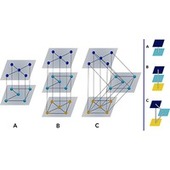
We present a continuous formulation of epidemic spreading on multilayer networks using a tensorial representation, extending the models of monoplex networks to this context. We derive analytical expressions for the epidemic threshold of the susceptible-infected-susceptible (SIS) and susceptible-infected-recovered dynamics, as well as upper and lower bounds for the disease prevalence in the steady state for the SIS scenario. Using the quasistationary state method, we numerically show the existence of disease localization and the emergence of two or more susceptibility peaks, which are characterized analytically and numerically through the inverse participation ratio. At variance with what is observed in single-layer networks, we show that disease localization takes place on the layers and not on the nodes of a given layer. Furthermore, when mapping the critical dynamics to an eigenvalue problem, we observe a characteristic transition in the eigenvalue spectra of the supra-contact tensor as a function of the ratio of two spreading rates: If the rate at which the disease spreads within a layer is comparable to the spreading rate across layers, the individual spectra of each layer merge with the coupling between layers. Finally, we report on an interesting phenomenon, the barrier effect; i.e., for a three-layer configuration, when the layer with the lowest eigenvalue is located at the center of the line, it can effectively act as a barrier to the disease. The formalism introduced here provides a unifying mathematical approach to disease contagion in multiplex systems, opening new possibilities for the study of spreading processes.


Disease Localization in Multilayer Networks
Guilherme Ferraz de Arruda, Emanuele Cozzo, Tiago P. Peixoto, Francisco A. Rodrigues, and Yamir Moreno
Phys. Rev. X 7, 011014

Source: journals.aps.org

Global Patterns of Synchronization in Human Communications

Social media are transforming global communication and coordination and provide unprecedented opportunities for studying socio-technical domains. Here we study global dynamical patterns of communication on Twitter across many scales. Underlying the observed patterns is both the diurnal rotation of the earth, day and night, and the synchrony required for contingency of actions between individuals. We find that urban areas show a cyclic contraction and expansion that resembles heartbeats linked to social rather than natural cycles. Different urban areas have characteristic signatures of daily collective activities. We show that the differences detected are consistent with a new emergent global synchrony that couples behavior in distant regions across the world. Although local synchrony is the major force that shapes the collective behavior in cities, a larger-scale synchronization is beginning to occur.


Alfredo J. Morales, Vaibhav Vavilala, Rosa M. Benito, Yaneer Bar-Yam, Global patterns of synchronization in human communications, Journal of the Royal Society (2017).

Source: www.necsi.edu

The role of the interaction network in the emergence of diversity of behavior

How can systems in which individuals’ inner workings are very similar to each other, as neural networks or ant colonies, produce so many qualitatively different behaviors, giving rise to roles and specialization? In this work, we bring new perspectives to this question by focusing on the underlying network that defines how individuals in these systems interact. We applied a genetic algorithm to optimize rules and connections of cellular automata in order to solve the density classification task, a classical problem used to study emergent behaviors in decentralized computational systems. The networks used were all generated by the introduction of shortcuts in an originally regular topology, following the small-world model. Even though all cells follow the exact same rules, we observed the existence of different classes of cells’ behaviors in the best cellular automata found—most cells were responsible for memory and others for integration of information. Through the analysis of structural measures and patterns of connections (motifs) in successful cellular automata, we observed that the distribution of shortcuts between distant regions and the speed in which a cell can gather information from different parts of the system seem to be the main factors for the specialization we observed, demonstrating how heterogeneity in a network can create heterogeneity of behavior.


Godoy A, Tabacof P, Von Zuben FJ (2017) The role of the interaction network in the emergence of diversity of behavior. PLoS ONE 12(2): e0172073. doi:10.1371/journal.pone.0172073

Source: journals.plos.org