
Category: Papers

The end of Moore’s law: Living without an exponential increase in the efficiency of computational facilities

Since more than 50 years scientific and nonscientific communities are accustomed to computational facilities, which increase steadily in speed and efficiency of calculations, in particular in processor performance, memory size, and storage capacity. Mitchell Waldrop analyzes the current situation in the chip producing industry and predicts the end of Moore’s prophecy of an exponential growth in computational capacities [1]. Here, an attempt is made to view with the eyes of a user the spectacular development of computers, its benefits for mathematics, science, and engineering as well as the possible consequences of its end.


The end of Moore’s law: Living without an exponential increase in the efficiency of computational facilities
Peter Schuster

Complexity

Source: onlinelibrary.wiley.com
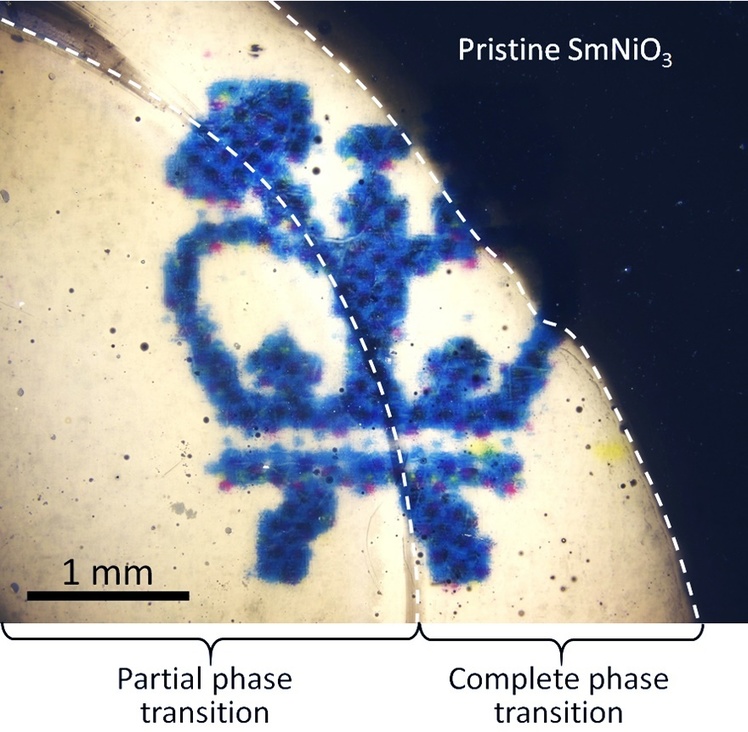
New optical material offers unprecedented control of light and thermal radiation

A team led by Nanfang Yu, assistant professor of applied physics at Columbia Engineering, has discovered a new phase-transition optical material and demonstrated novel devices that dynamically control light over a much broader wavelength range and with larger modulation amplitude than what has currently been possible. The team, including researchers from Purdue, Harvard, Drexel, and Brookhaven National Laboratory, found that samarium nickelate (SmNiO3) can be electrically tuned continuously between a transparent and an opaque state over an unprecedented broad range of spectrum from the blue in the visible (wavelength of 400 nm) to the thermal radiation spectrum in the mid-infrared (wavelength of a few tens of micrometers).

Source: phys.org

Self-organization of signal transduction.

We propose a model of parameter learning for signal transduction, where the objective function is defined by signal transmission efficiency. We apply this to learn kinetic rates as a form of evolutionary learning, and look for parameters which satisfy the objective. This is a novel approach compared to the usual technique of adjusting parameters only on the basis of experimental data. The resulting model is self-organizing, i.e. perturbations in protein concentrations or changes in extracellular signaling will automatically lead to adaptation. We systematically perturb protein concentrations and observe the response of the system. We find compensatory or co-regulation of protein expression levels. In a novel experiment, we alter the distribution of extracellular signaling, and observe adaptation based on optimizing signal transmission. We also discuss the relationship between signaling with and without transients. Signaling by transients may involve maximization of signal transmission efficiency for the peak response, but a minimization in steady-state responses. With an appropriate objective function, this can also be achieved by concentration adjustment. Self-organizing systems may be predictive of unwanted drug interference effects, since they aim to mimic complex cellular adaptation in a unified way.


Scheler G. Self-organization of signal transduction [version 1; referees: 2 approved]. F1000Research 2013, 2:116 (doi: 10.12688/f1000research.2-116.v1)

Source: f1000research.com

Computing Biology

Is Computational Biology increasingly—and steadily—progressing toward addressing the mammoth challenge of actually computing biology? That is, have we reached the stage where we do not support biological research but drive it? This question is vitally important for all—young and established computational biologists. Even though forecasting future research can be risky, we still venture to predict that the future will see considerably more research projects drifting toward this ambitious aspiration. Computational Biology is powerful for abstracting signatures of disease, for predicting it, and for proposing medications. It is effective in figuring out disease mechanisms and forceful in bridging experimental disciplines to obtain testable predictions. However, perhaps its biggest challenges lie in putting together the available broad and disparate information, devising tools to efficiently and effectively carry out these tasks while sifting through noise and recognizing cell specificity, and most importantly coming up with sound, coherent, and testable schemes.


Nussinov R, Papin JA (2016) Computing Biology. PLoS Comput Biol 12(7): e1005050. doi:10.1371/journal.pcbi.1005050

Source: journals.plos.org

The Evolutionary Origins of Hierarchy

Hierarchy is a ubiquitous organizing principle in biology, and a key reason evolution produces complex, evolvable organisms, yet its origins are poorly understood. Here we demonstrate for the first time that hierarchy evolves as a result of the costs of network connections. We confirm a previous finding that connection costs drive the evolution of modularity, and show that they also cause the evolution of hierarchy. We further confirm that hierarchy promotes evolvability in addition to evolvability caused by modularity. Because many biological and human-made phenomena can be represented as networks, and because hierarchy is a critical network property, this finding is immediately relevant to a wide array of fields, from biology, sociology, and medical research to harnessing evolution for engineering.


Mengistu H, Huizinga J, Mouret J-B, Clune J (2016) The Evolutionary Origins of Hierarchy. PLoS Comput Biol 12(6): e1004829. doi:10.1371/journal.pcbi.1004829

Source: journals.plos.org