
The Human Brain & Behavior Laboratory (HBBL) located in FAU’s Center for Complex Systems in the Charles E. Schmidt College of Science (Valery Forbes, Dean) seeks an excellent candidate to join our team to investigate the roots of biological agency (see recent article in PNAS). HBBL explores how sentient agency emerges through self-organizing, coordinative processes that span organisms and environments. The postdoctoral fellow will assist in developing next-generation interactive systems for empirical study, conducting experiments with human infants (involving 3D motion capture, EEG, eye tracking) and analyzing data. The post-holder will have freedom and capacity to develop their own scientific ideas through experimental design and preparing manuscripts and grant applications. This position offers opportunity to participate in HBBL’s active collaborations with world-leading teams in Artificial Intelligence analysis (Intelligent Systems Research Centre, Ulster University, The Institute for the Augmented Human, University of Bath), in mathematical modeling using Active Inference (Welcome Centre for Human Neuroimaging, Univ. College London) and Coordination Dynamics frameworks (Institut de Neurosciences des Systèmes, Aix Marseille University). Qualified candidates will possess advanced technical skills in relevant areas such as coding (Matlab, Python, etc.), machine learning, signal processing, mathematical modeling, EEG analysis, motion capture, and electrical engineering/robotics, as well as creativity, curiosity, and a collaborative spirit. HBBL is directed by Glenwood and Martha Creech Eminent Scholar in Science J.A. Scott Kelso. Prof. Kelso founded FAU’s Center for Complex Systems in 1985 with the goal of bringing scientists from different disciplines together in one place to understand the multiscale structure, function, and dynamics of complex biological systems, including human beings and their activities.
Please forward Letter of Interest to Dr Aliza Sloan (asloan2014@fau.edu) indicating qualifications, CV and names and contact information of 2 Referees as soon as possible. The expected salary will follow the current NIH postdoc salary scale plus benefits. The position will be for 2 years, assuming satisfactory progress in year one, and may be extended further depending on funding. Position start date is May to August 2024.
Making sense of chemical space network shows signs of criticality
Nicola Amoroso, Nicola Gambacorta, Fabrizio Mastrolorito, Maria Vittoria Togo, Daniela Trisciuzzi, Alfonso Monaco, Ester Pantaleo, Cosimo Damiano Altomare, Fulvio Ciriaco & Orazio Nicolotti
Scientific Reports volume 13, Article number: 21335 (2023)
Chemical space modelling has great importance in unveiling and visualising latent information, which is critical in predictive toxicology related to drug discovery process. While the use of traditional molecular descriptors and fingerprints may suffer from the so-called curse of dimensionality, complex networks are devoid of the typical drawbacks of coordinate-based representations. Herein, we use chemical space networks (CSNs) to analyse the case of the developmental toxicity (Dev Tox), which remains a challenging endpoint for the difficulty of gathering enough reliable data despite very important for the protection of the maternal and child health. Our study proved that the Dev Tox CSN has a complex non-random organisation and can thus provide a wealth of meaningful information also for predictive purposes. At a phase transition, chemical similarities highlight well-established toxicophores, such as aryl derivatives, mostly neurotoxic hydantoins, barbiturates and amino alcohols, steroids, and volatile organic compounds ether-like chemicals, which are strongly suspected of the Dev Tox onset and can thus be employed as effective alerts for prioritising chemicals before testing.
Read the full article at: www.nature.com
Systems Medicine: Physiological Circuits and the Dynamics of Disease, by Uri Alon
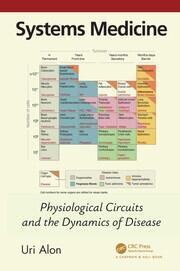
Why do we get certain diseases, whereas other diseases do not exist?
In this book, Alon, one of the founders of systems biology, builds a foundation for systems medicine.
Starting from basic laws, the book derives why physiological circuits are built the way they are. The circuits have fragilities that explain specific diseases and offer new strategies to treat them.
By the end, the reader will be able to use simple and powerful mathematical models to describe physiological circuits. The book explores, in three parts, hormone circuits, immune circuits, and aging and age-related disease. It culminates in a periodic table of diseases.
Alon writes in a style accessible to a broad range of readers – undergraduates, graduates, or researchers from computational or biological backgrounds. The level of math is friendly and the math can even be bypassed altogether. For instructors and readers who want to go deeper, the book includes dozens of exercises that have been rigorously tested in the classroom
More at: www.taylorfrancis.com
Algorithms for seeding social networks can enhance the adoption of a public health intervention in urban India
Marcus Alexander, Laura Forastiere, Swati Gupta, and Nicholas A. Christakis
PNAS
A deep understanding of social networks can be used to create an artificial tipping point, changing population behavior by fostering behavioral cascades. Here, we experimentally test this proposition. We show that network-based targeting substantially increases population-level adoption of new behaviors. In part, this works by driving indirect treatment effects among the nontargeted members of the population (among people who were not initially part of the treatment group but who were affected by treatment of others in their population). The techniques we demonstrate can be easily implemented in global health (and elsewhere), as they do not require knowledge of the whole network. The novel pair-targeting technique explored here is particularly powerful and easy to implement.
Read the full article at: www.pnas.org
Decentralized traffic management of autonomous drones
Boldizsár Balázs, Tamás Vicsek, Gergő Somorjai, Tamás Nepusz, Gábor Vásárhelyi
Coordination of local and global aerial traffic has become a legal and technological bottleneck as the number of unmanned vehicles in the common airspace continues to grow. To meet this challenge, automation and decentralization of control is an unavoidable requirement. In this paper, we present a solution that enables self-organization of cooperating autonomous agents into an effective traffic flow state in which the common aerial coordination task – filled with conflicts – is resolved. Using realistic simulations, we show that our algorithm is safe, efficient, and scalable regarding the number of drones and their speed range, while it can also handle heterogeneous agents and even pairwise priorities between them. The algorithm works in any sparse or dense traffic scenario in two dimensions and can be made increasingly efficient by a layered flight space structure in three dimensions. To support the feasibility of our solution, we experimentally demonstrate coordinated aerial traffic of 100 autonomous drones within a circular area with a radius of 125 meters.
Read the full article at: arxiv.org

