On the Salient Limitations of the Methods of Assembly Theory and their Classification of Molecular Biosignatures

Abicumaran Uthamacumaran, Felipe S. Abraão, Narsis A. Kiani, Hector Zenil
A recently introduced approach termed “Assembly Theory”, featuring a computable index based on basic principles of statistical compression has been claimed to be a novel and superior approach to classifying and distinguishing living from non-living systems and the complexity of molecular biosignatures. Here, we demonstrate that the assembly pathway method underlying this index is a suboptimal restricted version of Huffman’s encoding (Fano-type), widely adopted in computer science in the 1950s, that is comparable (or inferior) to other popular statistical compression schemes. We show how simple modular instructions can mislead the assembly index, leading to failure to capture subtleties beyond trivial statistical properties that are pervasive in biological systems. We present cases whose low complexities can arbitrarily diverge from the random-like appearance to which the assembly pathway method would assign arbitrarily high statistical significance, and show that it fails in simple cases (synthetic or natural). Our theoretical and empirical results imply that the assembly index, whose computable nature we show is not an advantage, does not offer any substantial advantage over existing concepts and methods. Alternatives are discussed.

Read the full article at: arxiv.org
The Nobel Prize in Chemistry 2022

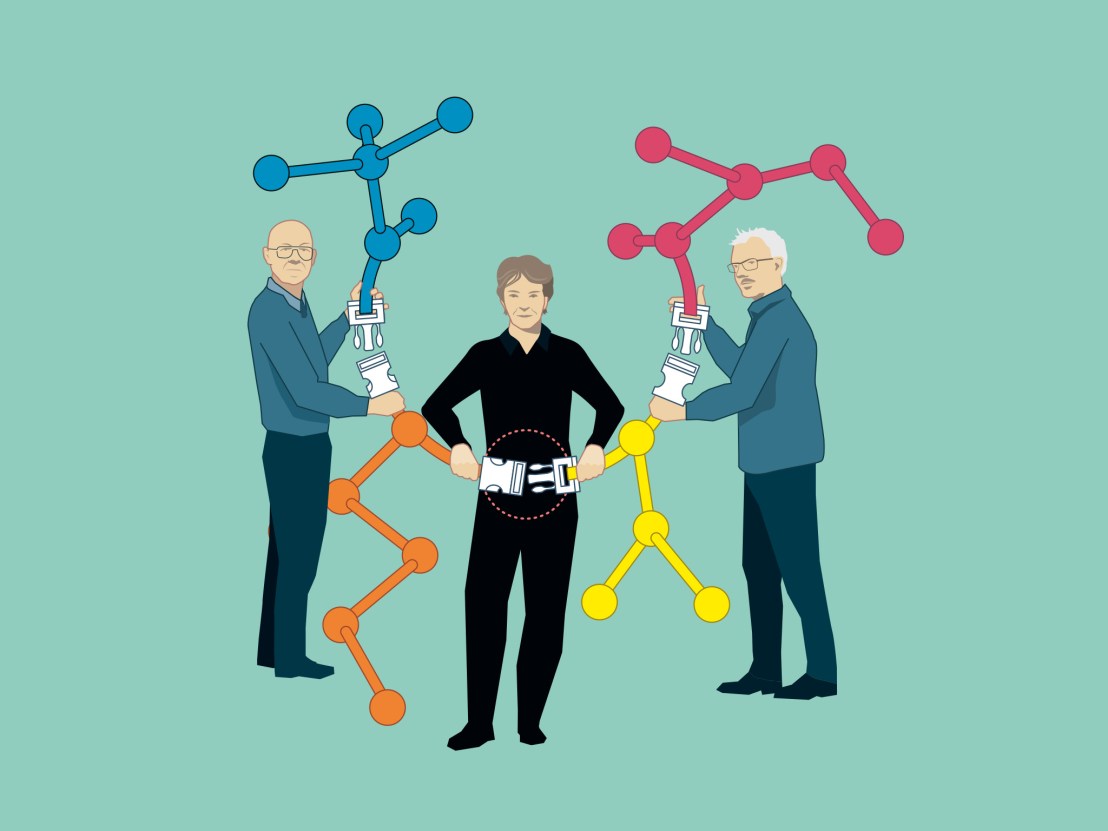
The Nobel Prize in Chemistry 2022 is about making difficult processes easier. Barry Sharpless and Morten Meldal have laid the foundation for a functional form of chemistry – click chemistry – in which molecular building blocks snap together quickly and efficiently. Carolyn Bertozzi has taken click chemistry to a new dimension and started utilising it in living organisms.

Read the full article at: www.nobelprize.org

The Nobel Prize in Physics 2022

Alain Aspect, John Clauser and Anton Zeilinger have each conducted groundbreaking experiments using entangled quantum states, where two particles behave like a single unit even when they are separated. Their results have cleared the way for new technology based upon quantum information.

Read the full article at: www.nobelprize.org

On the Criticality of Adaptive Boolean Network Robots

Michele Braccini, Andrea Roli, Edoardo Barbieri, and Stuart A. Kauffman

Entropy 2022, 24(10), 1368

Systems poised at a dynamical critical regime, between order and disorder, have been shown capable of exhibiting complex dynamics that balance robustness to external perturbations and rich repertoires of responses to inputs. This property has been exploited in artificial network classifiers, and preliminary results have also been attained in the context of robots controlled by Boolean networks. In this work, we investigate the role of dynamical criticality in robots undergoing online adaptation, i.e., robots that adapt some of their internal parameters to improve a performance metric over time during their activity. We study the behavior of robots controlled by random Boolean networks, which are either adapted in their coupling with robot sensors and actuators or in their structure or both. We observe that robots controlled by critical random Boolean networks have higher average and maximum performance than that of robots controlled by ordered and disordered nets. Notably, in general, adaptation by change of couplings produces robots with slightly higher performance than those adapted by changing their structure. Moreover, we observe that when adapted in their structure, ordered networks tend to move to the critical dynamical regime. These results provide further support to the conjecture that critical regimes favor adaptation and indicate the advantage of calibrating robot control systems at dynamical critical states.

Read the full article at: www.mdpi.com

The Nobel Prize in Physiology or Medicine 2022

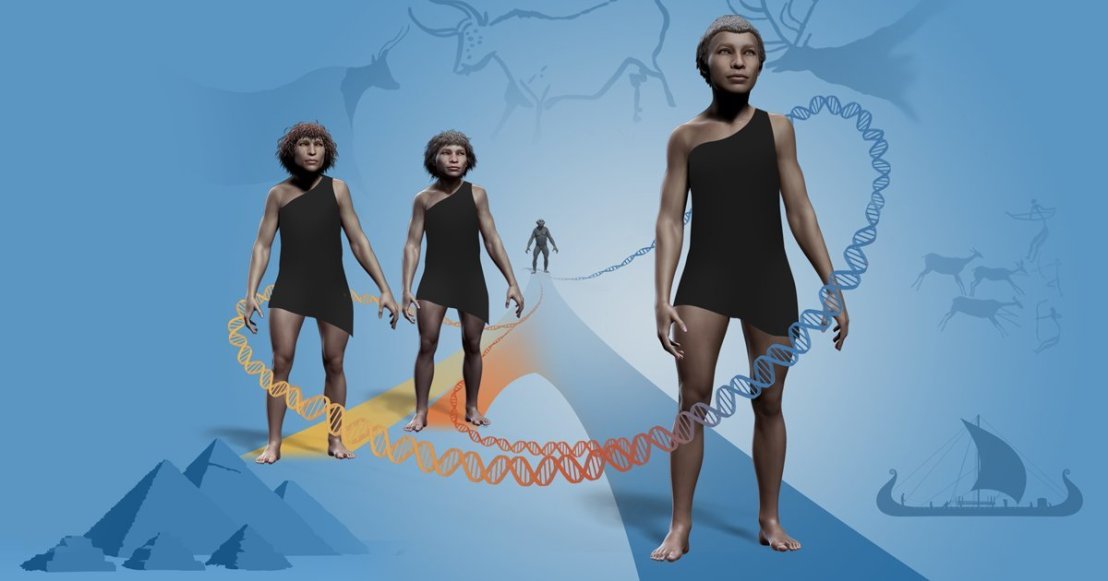
Humanity has always been intrigued by its origins. Where do we come from, and how are we related to those who came before us? What makes us, Homo sapiens, different from other hominins?

Through his pioneering research, Svante Pääbo accomplished something seemingly impossible: sequencing the genome of the Neanderthal, an extinct relative of present-day humans. He also made the sensational discovery of a previously unknown hominin, Denisova. Importantly, Pääbo also found that gene transfer had occurred from these now extinct hominins to Homo sapiens following the migration out of Africa around 70,000 years ago. This ancient flow of genes to present-day humans has physiological relevance today, for example affecting how our immune system reacts to infections.

Pääbo’s seminal research gave rise to an entirely new scientific discipline; paleogenomics. By revealing genetic differences that distinguish all living humans from extinct hominins, his discoveries provide the basis for exploring what makes us uniquely human.

Read the full article at: www.nobelprize.org