
Repair

This book propagates a new way of thinking about managing our resources by integrating the perspectives of complex systems theory and social psychology. By resources, the authors mean objects, such as cell phones and cars, and human resources, such as family members, friends, and the small and large communities they belong to. As we all face the “replace or repair” dichotomy, readers will understand how to repair themselves, their relationships, and communities, accept the “new normal,” and contribute to repairing the world. The book is offered to Zoomers, growing up in a world where it seems everything is falling apart; people in their 30s and 40s, who are thinking about how to live a fulfilling life; people from the Boomers generation, who are thinking back on life and how to repair relationships. The Reader will enjoy the intellectual adventure of connecting the natural and social worlds and understanding the transition’s pathways from a “throwaway society” to a “repair society.

More at: link.springer.com
The big idea: why relationships are the key to existence

from Helgoland: Making Sense of the Quantum Revolution by Carlo Rovelli

From subatomic particles to human beings, interaction is what shapes reality (…)

Perhaps this is precisely what “properties” are: the effects of interactions. A good scientific theory, then, should not be about how things “are”, or what they “do”: it should be about how they affect one another. (…)

Reality is not a collection of things, it’s a network of processes. If this is correct, I think it comes with a lesson. We understand reality better if we think of it in terms of interactions, not individuals. 

Read the full article at: www.theguardian.com

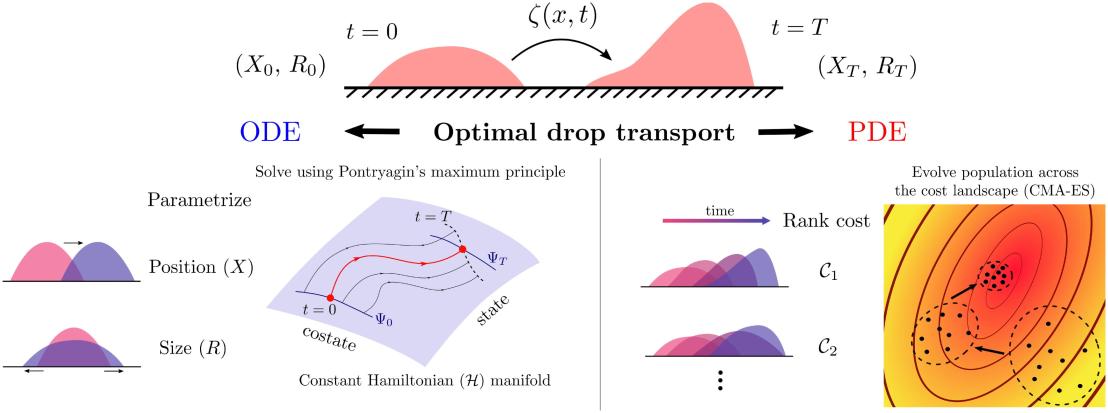
Optimal transport and control of active drops

Suraj Shankar, Vidya Raju, and L. Mahadevan

PNAS

Transportation, in its broadest sense, is an important task in many fields, including engineering, physics, biology, and economics, and a great deal is known about optimal and efficient strategies to move matter, energy, and information around. But can we craft similar optimal protocols to transport autonomously moving (active) matter, such as self-propelled drops or migrating cells? We develop an optimal control framework to transport active fluid drops with the least amount of energy dissipated, by manipulating the spatio-temporal profile of its internal active stresses. By combining numerical solutions and analytical insight, we uncover simple principles and characteristic trade-offs that govern the optimal policies, suggesting general strategies for optimal transportation in a wide variety of synthetic and biological active systems.

Read the full article at: www.pnas.org

Collective memory in the digital age

Taha Yasseri, Patrick Gildersleve, Lea David

Progress in Brain Research

The digital transformation of our societies particulary driven by information and communication technologies have revolutionized how we generate, communicate, and acquire information. Collective memory as a core and unifying force in our societies has not been an exception among many societal concepts which have been revolutionized through this digital transformation. In this chapter, we have distinguished between “digitalized collective memory” and “collective memory in the digital age”. In addition to discussing these two main concepts, we discuss how digital tools and trace data can open doorways into the study of collective memory that is formed inside and outside of the digital space.

Read the full article at: www.sciencedirect.com

Multilayer Network Science

Oriol Artime, Barbara Benigni, Giulia Bertagnolli, Valeria d’Andrea, Riccardo Gallotti, Arsham Ghavasieh, Sebastian Raimondo, and Manlio De Domenico

Networks are convenient mathematical models to represent the structure of complex systems, from cells to societies. In the last decade, multilayer network science – the branch of the field dealing with units interacting in multiple distinct ways, simultaneously – was demonstrated to be an effective modeling and analytical framework for a wide spectrum of empirical systems, from biopolymers networks (such as interactome and metabolomes) to neuronal networks (such as connectomes), from social networks to urban and transportation networks. In this Element, a decade after one of the most seminal papers on this topic, the authors review the most salient features of multilayer network science, covering both theoretical aspects and direct applications to real-world coupled/interdependent systems, from the point of view of multilayer structure, dynamics and function. The authors discuss potential frontiers for this topic and the corresponding challenges in the field for the next future.

More at: www.cambridge.org