

What’s a message, really? Claude Shannon recognized that the elemental ingredient is surprise.
Read the full article at: www.quantamagazine.org
Networking the complexity community since 1999
What’s a message, really? Claude Shannon recognized that the elemental ingredient is surprise.
Read the full article at: www.quantamagazine.org
Registration is open for the September 2022 Cohort!
“Learn Complexity by Doing” with a diverse cohort of global Participants. Guidance from world-class Facilitators, in a community of practice that meets monthly. Meet future collaborations from all countries, fields, domains, backgrounds, perspectives, and levels of familiarity with Complexity Science – everyone here shares a desire to learn about Complex System behavior by helping to solve the world’s toughest problems together. Your perspective is needed!
Read the full article at: www.complexityweekend.com
David H. Wolpert
In this essay I will consider a sequence of questions, ending with one about the breadth and depth of the epistemic limitations of our our science and mathematics. I will then suggest a possible way to circumvent such limitations. I begin by considering questions about the biological function of intelligence. This will lead into questions concerning human language, perhaps the most important cognitive prosthesis we have ever developed. While it is traditional to rhapsodize about the perceptual power provided by human language, I will emphasize how horribly limited – and therefore limiting – it is. This will lead to questions of whether human mathematics, being so deeply grounded in our language, is also deeply limited. I will then combine all of this into a partial, sort-of, sideways answer to the guiding question of this essay: what we can ever discern about all that we cannot even conceive of?
Read the full article at: arxiv.org
The field of complex systems, which is mathematically broad and interdisciplinary, concerns the study of individual entities that interact to produce collective dynamics.
Complex social systems include the spread of memes on Twitter, the adoption and evolution of opinions during political discourse, and the formation of social movements that can affect both norms and policy. In all of these examples, the interactions of individuals, as well as how they react to external forces and shape their environment, lead to emergent features. Uncovering these interactions and determining how behaviors affect group-level dynamics has important societal implications. Complex social systems also inspire the development of new methods and draw on many different areas, including computational social science, political science, economics, legal scholarship, mathematical and statistical modeling, data and network analysis, dynamical systems, probability, and scientific computation.
The intersection of society, data, and computation in complex social systems creates an inherently interdisciplinary problem space, with a need for community-building between experts from a variety of backgrounds (including many who may not traditionally participate in mathematics research). This MRC aims to introduce early-career researchers to complex social systems and to foster new collaborations among mathematical, computational, and social scientists. MRC participants will come from a wide variety of mathematical and computational subfields and disciplinary traditions. We will explore some of the key methods and applications in complex systems, and we will engage in interdisciplinary research to attack open questions ranging from theoretical problems that are inspired by complex systems to data-analysis projects in social justice.
Please note that you may apply to more than one MRC conference if they match your research interests. A separate application is needed for each one. However, you can only be selected as a participant in one conference.
Applications are being accepted on MathPrograms, with a deadline of February 15, 2023.
More at: www.ams.org
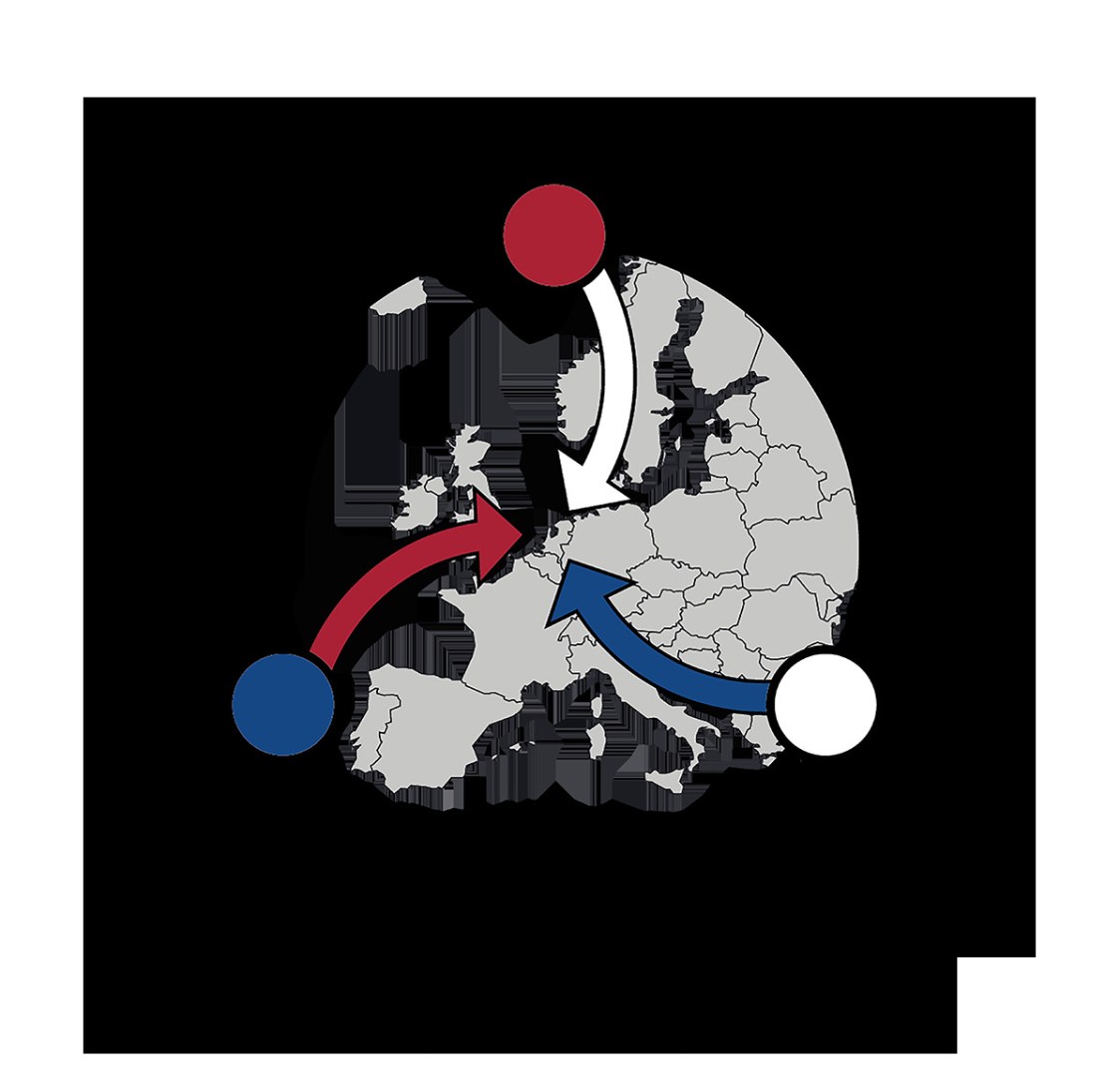
The Winter Workshop on Complex Systems is a one-week workshop where young researchers from all over the world gather together for discussing complex systems.
The primary focus of the workshop is for participants to engage into novel research projects.
This is the 8th edition of the WWCS and it will be held in Amsterdam from January 30th to Feb 3rd 2023.
More at: wwcs2023.github.io

