Relational agency: a new ontology for co-evolving systems

Francis Heylighen

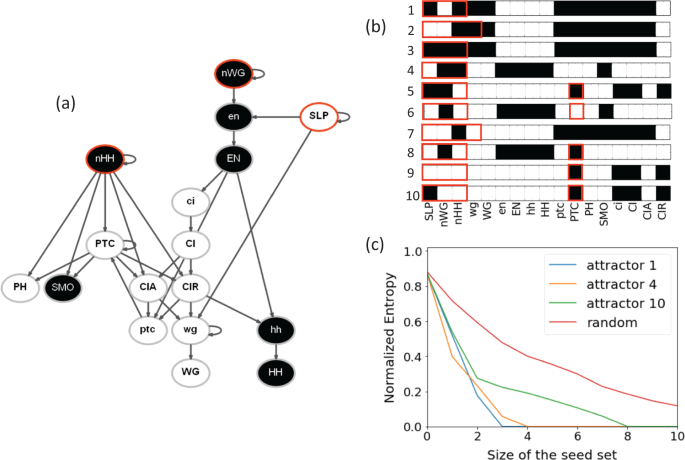
A wide variety of approaches and mechanisms have been proposed to “extend” the neo-Darwinist theory of evolution, including self-organization, symbiogenesis, teleonomy, systems biology and niche construction. These extensions share a focus on agents, networks and processes rather than on independent, static units, such as genes. To develop a new evolutionary synthesis, we therefore need to replace the traditional object-based ontology by one that is here called “relational agency”. The paper sketches the history of both object-based and relational worldviews, going back to their roots in animism and Greek philosophy. It then introduces the basic concepts of the relational agency model: condition-action rules, challenges, agents, reaction networks and chemical organizations. These are illustrated with examples of self-contained ecosystems, genes and cells. The fundamental evolutionary mechanism is that agencies and reactions mutually adapt so as to form a self- maintaining organization, in which everything consumed by one process is produced again by one or more other processes. Such autonomous organization defines a higher-level agency, which will similarly adapt, and thus become embedded in a network of relationships with other agencies.

Read the full article at: researchportal.vub.be

Adaptive Computing, open online course

Prof. Carlos Gershenson
Complex systems are characterized by interactions that may generate novel information. This information can change problems, so previous solutions become obsolete. To face complexity, we need adaptation. In this course, we will cover different methods for building systems that can adapt to unforeseen changes.
Tuesdays and Thursdays, 10:00-11:30 AM, Mexico City Time.

First Class: February 1st, 2022.
The class is open and free for all students worldwide. 
Those who deliver successfully coursework and final project will receive a certificate.

Details at: ac.gershenson.mx

Frontiers in Collective Intelligence: A Workshop Report

Tyler Millhouse, Melanie Moses, Melanie Mitchell
In August of 2021, the Santa Fe Institute hosted a workshop on collective intelligence as part of its Foundations of Intelligence project. This project seeks to advance the field of artificial intelligence by promoting interdisciplinary research on the nature of intelligence. The workshop brought together computer scientists, biologists, philosophers, social scientists, and others to share their insights about how intelligence can emerge from interactions among multiple agents–whether those agents be machines, animals, or human beings. In this report, we summarize each of the talks and the subsequent discussions. We also draw out a number of key themes and identify important frontiers for future research.

Read the full article at: arxiv.org

The synchronized dynamics of time-varying networks

Dibakar Ghosh, et al.

Physics Reports
Volume 949, 23 February 2022, Pages 1-63

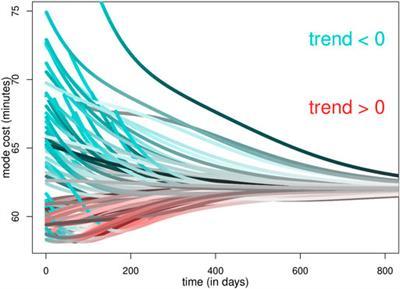
Over the past two decades, complex network theory provided the ideal framework for investigating the intimate relationships between the topological properties characterizing the wiring of connections among a system’s unitary components and its emergent synchronized functioning. An increased number of setups from the real world found therefore a representation in terms of graphs, while more and more sophisticated methods were developed with the aim of furnishing a realistic description of the connectivity patterns under study. In particular, a significant number of systems in physics, biology and social science features a time-varying nature of the interactions among their units. We here give a comprehensive review of the major results obtained by contemporary studies on the emergence of synchronization in time-varying networks. In particular, two paradigmatic frameworks will be described in detail. The first encompasses those systems where the time dependence of the nodes’ connections is due to adaptation, external forces, or any other process affecting each of the links of the network. The second framework, instead, corresponds to the case in which the structural evolution of the graph is due to the movement of the nodes, or agents, in physical spaces and to the fact that interactions may be ruled by space-dependent laws in a way that connections are continuously switched on and off in the course of the time. Finally, our report ends with a short discussion on promising directions and open problems for future studies.

Read the full article at: www.sciencedirect.com

Membrane rigidity regulates E. coli proliferation rates

Samuel Salinas-Almaguer, Michael Mell, Victor G. Almendro-Vedia, Macarena Calero, Kevin Carlo Martín Robledo-Sánchez, Carlos Ruiz-Suarez, Tomás Alarcón, Rafael A. Barrio, Aurora Hernández-Machado & Francisco Monroy 
Scientific Reports volume 12, Article number: 933 (2022)

Combining single cell experiments, population dynamics and theoretical methods of membrane mechanics, we put forward that the rate of cell proliferation in E. coli colonies can be regulated by modifiers of the mechanical properties of the bacterial membrane. Bacterial proliferation was modelled as mediated by cell division through a membrane constriction divisome based on FtsZ, a mechanically competent protein at elastic interaction against membrane rigidity. Using membrane fluctuation spectroscopy in the single cells, we revealed either membrane stiffening when considering hydrophobic long chain fatty substances, or membrane softening if short-chained hydrophilic molecules are used. Membrane stiffeners caused hindered growth under normal division in the microbial cultures, as expected for membrane rigidification. Membrane softeners, however, altered regular cell division causing persistent microbes that abnormally grow as long filamentous cells proliferating apparently faster. We invoke the concept of effective growth rate under the assumption of a heterogeneous population structure composed by distinguishable individuals with different FtsZ-content leading the possible forms of cell proliferation, from regular division in two normal daughters to continuous growing filamentation and budding. The results settle altogether into a master plot that captures a universal scaling between membrane rigidity and the divisional instability mediated by FtsZ at the onset of membrane constriction.

Read the full article at: www.nature.com