The effects of local homogeneity assumptions in metapopulation models of infectious disease

Cameron Zachreson, Sheryl Chang, Nathan Harding, Mikhail Prokopenko

Computational models of infectious disease can be broadly categorized into two types: individual-based (Agent-based), or compartmental models. While compartmental models can be structured to separate distinct sectors of a population, they are conceptually distinct from individual-based models in which population structure emerges from micro-scale interactions. While the conceptual distinction is straightforward, a fair comparison of the approaches is difficult to achieve. Here, we carry out such a comparison by building a set of compartmental metapopulation models from an agent-based representation of a real population. By adjusting the compartmental model to approximately match the dynamics of the Agent-based model, we identify two key qualitative properties of the individual-based dynamics which are lost upon aggregation into metapopulations. These are (1) the local depletion of susceptibility to infection, and (2) decoupling of different regional groups due to correlation between commuting behaviors and contact rates. The first of these effects is a general consequence of aggregating small, closely connected groups (i.e., families) into larger homogeneous metapopulations. The second can be interpreted as a consequence of aggregating two distinct types of individuals: school children, who travel short distances but have many potentially infectious contacts, and adults, who travel further but tend to have fewer contacts capable of transmitting infection. Our results could be generalised to other types of correlations between the characteristics of individuals and the behaviors that distinguish them.

Read the full article at: arxiv.org
How COVID-19 is reshaping supply chains

The coming months could turn out to be critical for supply-chain leaders. Some companies will build upon the momentum they gained during the pandemic, with decisive action to adapt their supply-chain footprint, modernize their technologies, and build their capabilities. Others may slip back, reverting to old ways of working that leave them struggling to compete with their more agile competitors on cost or service, and still vulnerable to shocks and disruptions.

Read the full article at: www.mckinsey.com

Introduction to the special issue: quantifying collectivity

Bryan C. Daniels, Manfred D. Laubichler & Jessica C. Flack 

Theory in Biosciences volume 140, pages 321–323 (2021)

Biological systems are diverse, ranging from tightly packed, highly integrated, many-body systems like eukaryotic cells to decentralized microbial biofilms, to relatively small primate groups with on the order of 100 behaviorally flexible individuals all the way to large, complex societies (both insects and human) and ecosystems. This range suggests there is variation in both how collective a system is as well as how it is collective.

Read the full article at: link.springer.com

Field Experiments on Social Media

Mohsen Mosleh, Gordon Pennycook, David G. Rand

Current Directions in Psychological Science

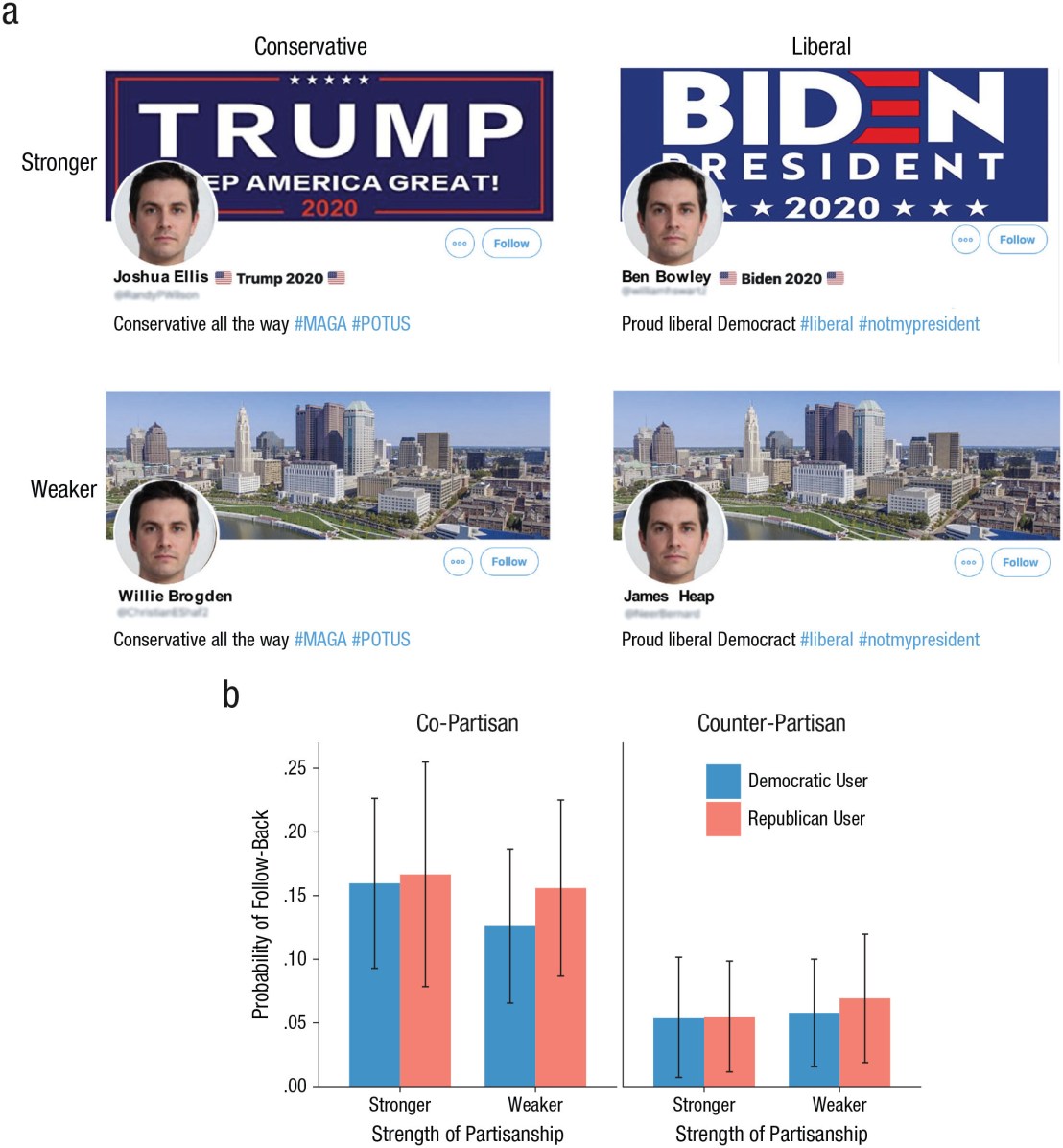
Online behavioral data, such as digital traces from social media, have the potential to allow researchers an unprecedented new window into human behavior in ecologically valid everyday contexts. However, research using such data is often purely observational, which limits its usefulness for identifying causal relationships. Here we review recent innovations in experimental approaches to studying online behavior, with a particular focus on research related to misinformation and political psychology. In hybrid lab-field studies, exposure to social-media content can be randomized, and the impact on attitudes and beliefs can be measured using surveys, or exposure to treatments can be randomized within survey experiments, and their impact on subsequent online behavior can be observed. In field experiments conducted on social media, randomized treatments can be administered directly to users in the online environment (e.g., via social-tie invitations, private messages, or public posts) without revealing that they are part of an experiment, and the effects on subsequent online behavior can then be observed. The strengths and weaknesses of each approach are discussed, along with practical advice and central ethical constraints on such studies.

Read the full article at: journals.sagepub.com

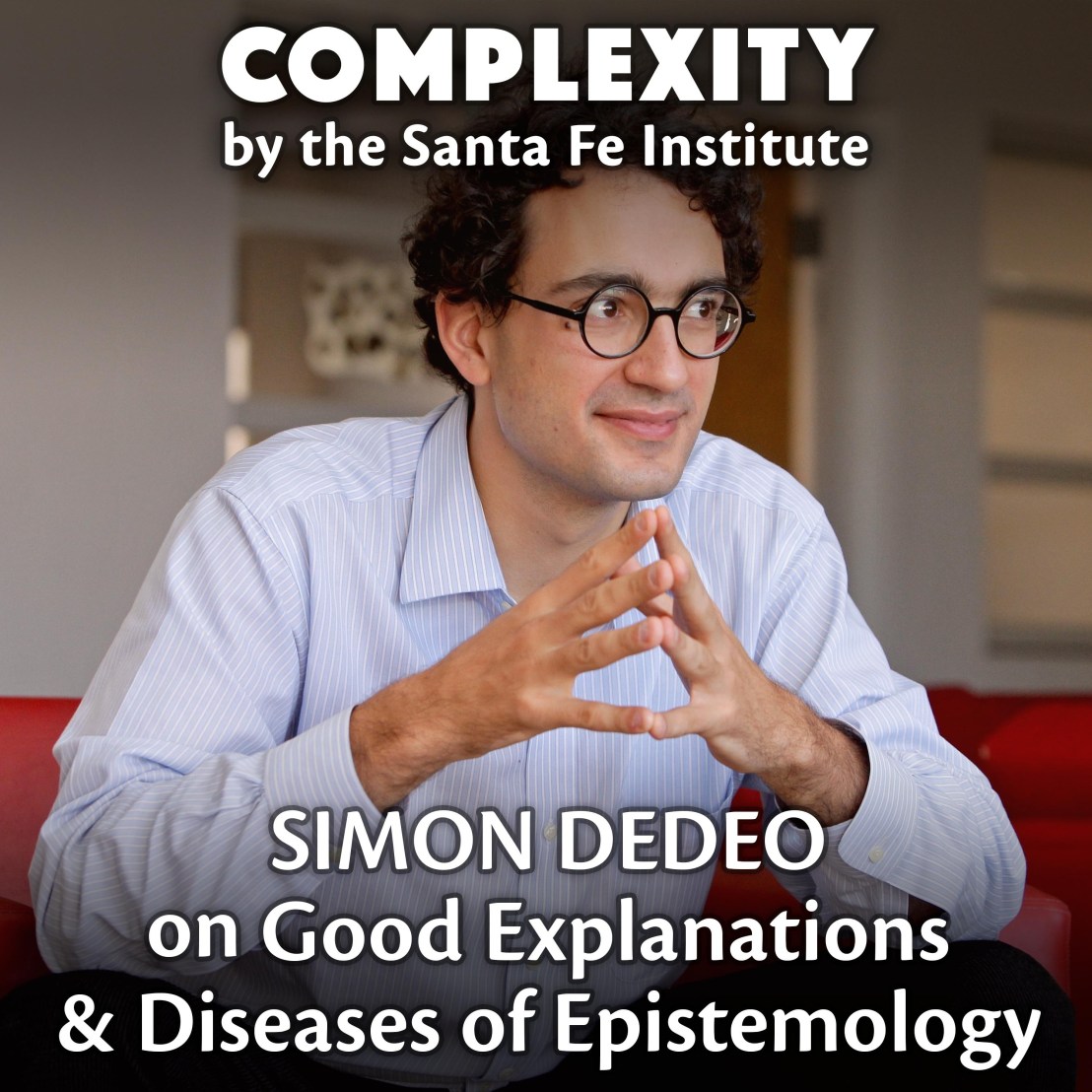
Simon DeDeo on Good Explanations & Diseases of Epistemology

What makes a satisfying explanation? Understanding and prediction are two different goals at odds with one another — think fundamental physics versus artificial neural networks — and even what defines a “simple” explanation varies from one person to another. Held in a kind of ecosystemic balance, these diverse approaches to seeking knowledge keep each other honest…but the use of one kind of knowledge to the exclusion of all others leads to disastrous results. And in the 21st Century, the difference between good and bad explanations determines how society adapts as rapid change transforms the world most people took for granted — and sends humankind into the epistemic wilds  to find new stories that will help us navigate this brave new world.

This week we dive deep with SFI External Professor Simon DeDeo at Carnegie Mellon University to explore his research into intelligence and the search for understanding, bringing computational techniques to bear on the history of science, information processing at the scale of society, and how digital technologies and the coronavirus pandemic challenge humankind to think more carefully about the meaning that we seek, here on the edge of chaos…

Read the full article at: complexity.simplecast.com