Early lock-in of structured and specialised information flows during neural development

David P. Shorten, Viola Priesemann, Michael Wibral, Joseph T. Lizier

The brains of many organisms are capable of complicated distributed computation underpinned by a highly advanced information processing capacity. Although substantial progress has been made towards characterising the information flow component of this capacity in mature brains, there is a distinct lack of work characterising its emergence during neural development. This lack of progress has been largely driven by the lack of effective estimators of information processing operations for the spiking data available for developing neural networks. Here, we leverage recent advances in this estimation task in order to quantify the changes in information flow during development. We find that the quantity of information flowing across these networks undergoes a dramatic increase across development. Moreover, the spatial structure of these flows is locked-in during early development, after which there is a substantial temporal correlation in the information flows across recording days. We analyse the flow of information during the crucial periods of population bursts. We find that, during these bursts, nodes undertake specialised computational roles as either transmitters, mediators or receivers of information, with these roles tending to align with their spike ordering either early, mid or late in the bursts. That the nodes identified as information flow mediators tend to spike mid burst aligns with conjecture that nodes spiking in this position play an important role as brokers of neuronal communication. Finally, it was found that the specialised computational roles occupied by nodes during bursts tend to be locked-in early.

Read the full article at: www.biorxiv.org
Genomic windows into ancient epidemics

Ornob Alam

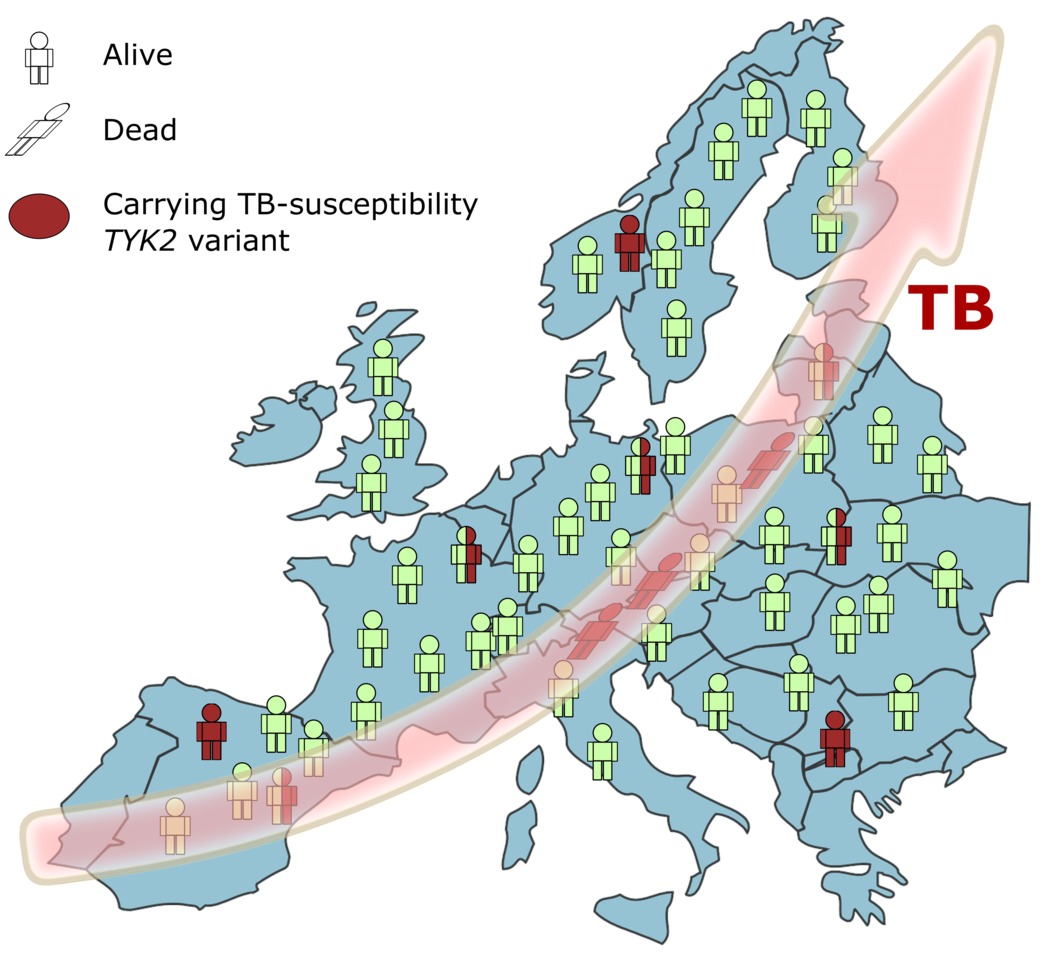
Population genomic analyses of ancient and modern individuals are providing unprecedented resolution in our view of past human demography and adaptive episodes. Here, I highlight three recent studies in the field that investigated ancient human encounters with major pathogens.

Read the full article at: natureecoevocommunity.nature.com

Synchronizing billion-scale automata

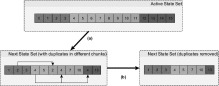
Mustafa Kemal Taş, Kamer Kaya, Hüsnü Yenigün

Information Sciences
Volume 574, October 2021, Pages 162-175

  • Existing synchronization heuristics do not scale due to quadratic space complexity.
  • We propose a simple approach to avoid memory usage thanks to massive parallelism.
  • We use different parallelization approaches on CPUs and GPUs, in a hybrid way.
  • A different treatment of parallelism is useful at different phases of the algorithm.
  • Our algorithms can synchronize a billion-state automaton in around 4 mins.

Read the full article at: www.sciencedirect.com

Decentralized Edge-to-Cloud Load Balancing: Service Placement for the Internet of Things

Zeinab Nezami; Kamran Zamanifar; Karim Djemame; Evangelos Pournaras

IEEE Access ( Volume: 9)

The Internet of Things (IoT) requires a new processing paradigm that inherits the scalability of the cloud while minimizing network latency using resources closer to the network edge. On the one hand, building up such flexibility within the edge-to-cloud continuum consisting of a distributed networked ecosystem of heterogeneous computing resources is challenging. On the other hand, IoT traffic dynamics and the rising demand for low-latency services foster the need for minimizing the response time and a balanced service placement. Load-balancing for fog computing becomes a cornerstone for cost-effective system management and operations. This paper studies two optimization objectives and formulates a decentralized load-balancing problem for IoT service placement: (global) IoT workload balance and (local) quality of service (QoS), in terms of minimizing the cost of deadline violation, service deployment, and unhosted services. The proposed solution, EPOS Fog, introduces a decentralized multi-agent system for collective learning that utilizes edge-to-cloud nodes to jointly balance the input workload across the network and minimize the costs involved in service execution. The agents locally generate possible assignments of requests to resources and then cooperatively select an assignment such that their combination maximizes edge utilization while minimizes service execution cost. Extensive experimental evaluation with realistic Google cluster workloads on various networks demonstrates the superior performance of EPOS Fog in terms of workload balance and QoS, compared to approaches such as First Fit and exclusively Cloud-based. The results confirm that EPOS Fog reduces service execution delay up to 25% and the load-balance of network nodes up to 90%. The findings also demonstrate how distributed computational resources on the edge can be utilized more cost-effectively by harvesting collective intelligence.

Read the full article at: ieeexplore.ieee.org

Stewardship of global collective behavior

Joseph B. Bak-Coleman, et al.

PNAS July 6, 2021 118 (27) e2025764118

Collective behavior provides a framework for understanding how the actions and properties of groups emerge from the way individuals generate and share information. In humans, information flows were initially shaped by natural selection yet are increasingly structured by emerging communication technologies. Our larger, more complex social networks now transfer high-fidelity information over vast distances at low cost. The digital age and the rise of social media have accelerated changes to our social systems, with poorly understood functional consequences. This gap in our knowledge represents a principal challenge to scientific progress, democracy, and actions to address global crises. We argue that the study of collective behavior must rise to a “crisis discipline” just as medicine, conservation, and climate science have, with a focus on providing actionable insight to policymakers and regulators for the stewardship of social systems.

Read the full article at: www.pnas.org