The impact of COVID-19 and strategies for mitigation and suppression in low- and middle-income countries

Patrick G. T. Walker, et al.

Science 12 Jun 2020:
eabc0035
DOI: 10.1126/science.abc0035


The ongoing COVID-19 pandemic poses a severe threat to public health worldwide. We combine data on demography, contact patterns, disease severity, and health care capacity and quality to understand its impact and inform strategies for its control. Younger populations in lower income countries may reduce overall risk but limited health system capacity coupled with closer inter-generational contact largely negates this benefit. Mitigation strategies that slow but do not interrupt transmission will still lead to COVID-19 epidemics rapidly overwhelming health systems, with substantial excess deaths in lower income countries due to the poorer health care available. Of countries that have undertaken suppression to date, lower income countries have acted earlier. However, this will need to be maintained or triggered more frequently in these settings to keep below available health capacity, with associated detrimental consequences for the wider health, well-being and economies of these countries.

Source: science.sciencemag.org
Reducing transmission of SARS-CoV-2

Kimberly A. Prather, Chia C. Wang, Robert T. Schooley

Science 26 Jun 2020:
Vol. 368, Issue 6498, pp. 1422-1424
DOI: 10.1126/science.abc6197


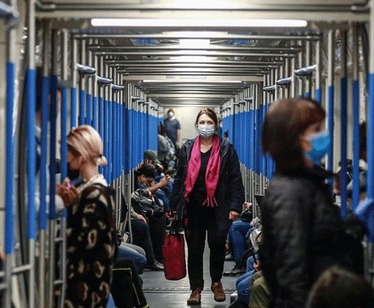
Respiratory infections occur through the transmission of virus-containing droplets (>5 to 10 µm) and aerosols (≤5 µm) exhaled from infected individuals during breathing, speaking, coughing, and sneezing. Traditional respiratory disease control measures are designed to reduce transmission by droplets produced in the sneezes and coughs of infected individuals. However, a large proportion of the spread of coronavirus disease 2019 (COVID-19) appears to be occurring through airborne transmission of aerosols produced by asymptomatic individuals during breathing and speaking (1—3). Aerosols can accumulate, remain infectious in indoor air for hours, and be easily inhaled deep into the lungs. For society to resume, measures designed to reduce aerosol transmission must be implemented, including universal masking and regular, widespread testing to identify and isolate infected asymptomatic individuals.

Source: science.sciencemag.org

Epidemics Dynamics & Control on Networks. Call for papers

Networks are ubiquitous in natural, technological and social systems. They offer a fertile framework for understanding and controlling the diffusion of ideas, rumors, and infectious diseases of plants, animals, and humans. Despite recent advances, many challenging scientific questions remain about the correct tools and their practical role in epidemics dynamics and effective strategies supporting public health decision making. The goal of this special issue is to offer a platform to the interdisciplinary community of scientists working on the diffusion process on networks and its plethora of applications. We hope for a broad range of topics to be covered, across theory, methodology, and application to empirical data with a special emphasis on epidemic spreading.


Important dates
Expression of interest and abstract submission: July 10, 2020
Abstract feedback notification: July 13, 2020
Paper submission deadline: September 21, 2020
Target publication: November 01, 2020

Source: appliednetsci.springeropen.com

Surveillance testing of SARS-CoV-2

Daniel B Larremore, Bryan Wilder, Evan Lester, Soraya Shehata, James M Burke, James A Hay, Milind Tambe, Michael J Mina, Roy Parker


The COVID-19 pandemic has created a public health crisis. Because SARS-CoV-2 can spread from individuals with pre-symptomatic, symptomatic, and asymptomatic infections, the re-opening of societies and the control of virus spread will be facilitated by robust surveillance, for which virus testing will often be central. After infection, individuals undergo a period of incubation during which viral titers are usually too low to detect, followed by an exponential growth of virus, leading to a peak viral load and infectiousness, and ending with declining viral levels and clearance. Given the pattern of viral load kinetics, we model surveillance effectiveness considering test sensitivities, frequency, and sample-to-answer reporting time. These results demonstrate that effective surveillance, including time to first detection and outbreak control, depends largely on frequency of testing and the speed of reporting, and is only marginally improved by high test sensitivity. We therefore conclude that surveillance should prioritize accessibility, frequency, and sample-to-answer time; analytical limits of detection should be secondary.

Source: www.medrxiv.org