
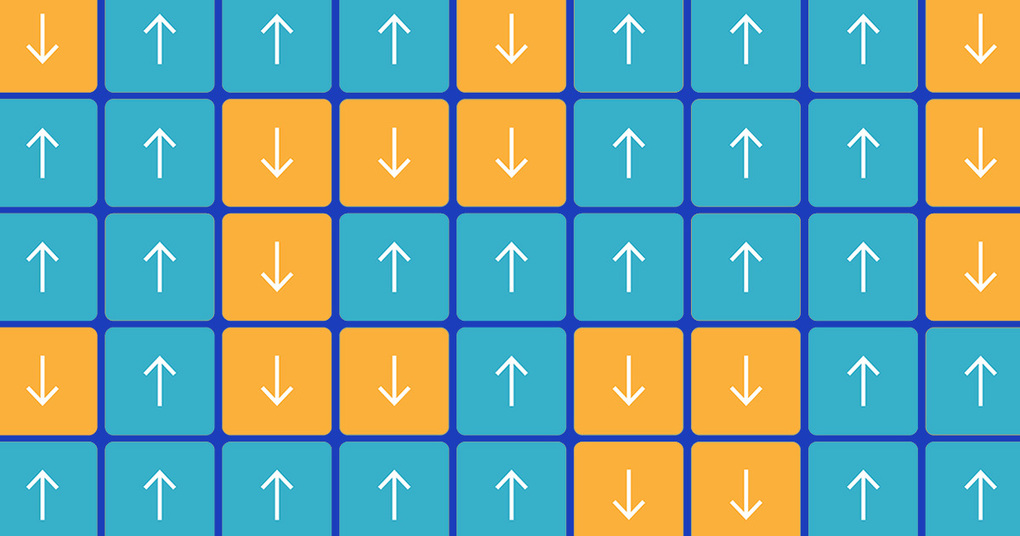
One hundred years after it was proposed, the Ising model is used to understand everything from magnets to brains.
Source: www.quantamagazine.org
Networking the complexity community since 1999
One hundred years after it was proposed, the Ising model is used to understand everything from magnets to brains.
Source: www.quantamagazine.org
The Observatory on Social Media (OSoMe, pronounced ‘awe•some’) at Indiana University is looking for a postdoctoral fellow to work at the intersection of computing, network, data, and media sciences with a focus on (mis/dis)information diffusion and the detection and countering of online manipulation.
Source: cnets.indiana.edu
This movie describes at least five different ways in which Cybernetics can change the world for the better. The plot: An effort is made to try to sabotage a meeting of beautiful minds fearing the effect that knowledge of Cybernetics can have on both Christians and Muslims, and the world economic system. A 100% educational film to teach the history and uses of Cybernetics, as for instance to redesign many pathological organizations.
Source: www.youtube.com
Call for papers for IEEE ALife 2020 (IEEE Symposium on Artificial Life) http://ieeessci2020.org/symposiums/alife.html as part of IEEE SSCI 2020 http://ieeessci2020.org – submissions due Aug 7, conference Dec 1-4 in Canberra, Australia (pending Covid-19 updates)
Source: www.ieeessci2020.org
Precise mapping, spatial structure and classification of all the human settlements on Earth
Emanuele Strano, Filippo Simini, Marco De Nadai, Thomas Esch, Mattia Marconcini
Human settlements (HSs) on Earth have a direct impact on all natural and societal systems but detailed and quantitative measurements of the locations and spatial structures of all HSs on Earth are still under debate. We provide here the World Settlement Footprint 2015, an unprecedented 10 m resolution global spatial inventory of HSs and a precise quantitative analysis and spatial model of their coverage, geography and morphology. HSs are estimated to cover 1.47% of the habitable global dry-land surface and can be classified, by means of their deviation from scaling structure, into four main pattern typologies. A minimal spatial model, based on dynamic interactions between dispersal and centralized urbanization, is able to reproduce all the settlement patterns across regions. Our dataset and settlement model can be used to improve the modelling of global land use changes and human land use cycles and interactions and can ultimately advance our understanding of global anthropization processes and human-induced environmental changes.
Source: arxiv.org
 Complexity Digest