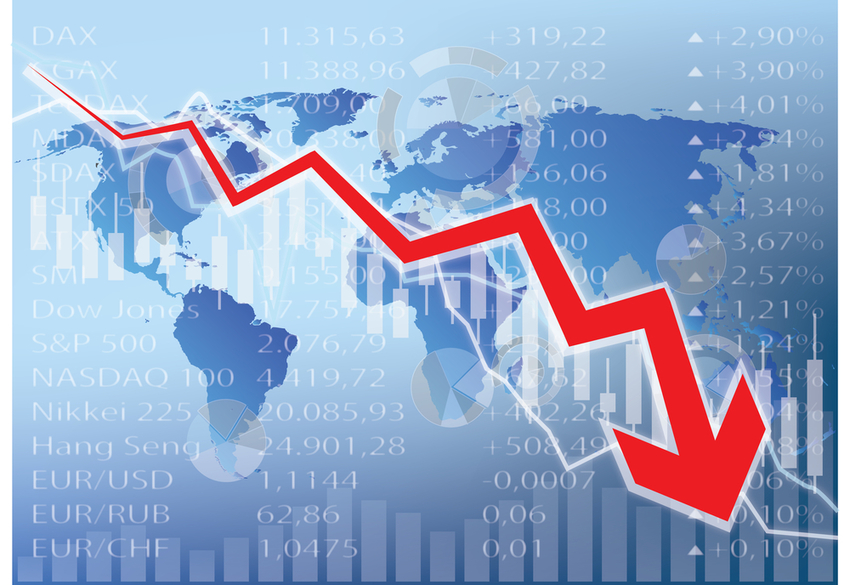
Complex Systems Collide, Markets Crash

At some point, systems flip from being complicated, which is a challenge to manage, to being complex. Complexity is more than a challenge because it opens the door to all kinds of unexpected crashes and events.

Their behavior cannot be reduced to their component parts. It’s as if they take on a life of their own.

Source: dailyreckoning.com

How the world’s collective attention is being paid to a pandemic: COVID-19 related 1-gram time series for 24 languages on Twitter

In confronting the global spread of the coronavirus disease COVID-19 pandemic we must have coordinated medical, operational, and political responses. In all efforts, data is crucial. Fundamentally, and in the possible absence of a vaccine for 12 to 18 months, we need universal, well-documented testing for both the presence of the disease as well as confirmed recovery through serological tests for antibodies, and we need to track major socioeconomic indices. But we also need auxiliary data of all kinds, including data related to how populations are talking about the unfolding pandemic through news and stories. To in part help on the social media side, we curate a set of 1000 day-scale time series of 1-grams across 24 languages on Twitter that are most `important’ for March 2020 with respect to March 2019. We determine importance through our allotaxonometric instrument, rank-turbulence divergence. We make some basic observations about some of the time series, including a comparison to numbers of confirmed deaths due to COVID-19 over time. We broadly observe across all languages a peak for the language-specific word for `virus’ in January followed by a decline through February and a recent surge through March. The world’s collective attention dropped away while the virus spread out from China. We host the time series on Gitlab, updating them on a daily basis while relevant. Our main intent is for other researchers to use these time series to enhance whatever analyses that may be of use during the pandemic as well as for retrospective investigations.

Source: arxiv.org

Stochastic Models and Experiments in Ecology and Biology 2020 Conference – Venice 21-24th September

SMEEB 2020 conference will be held in Venice, September 21-24, 2020, at the European Center of Living Technology (ECLT). 

 
 The aim of the workshop is to bring together scientists with different backgrounds (mathematics, biology, physics and computing) interested in microbial ecology and evolutionary biology (both theory and experiments). We will discuss important and recent research topics in these areas as well as methods and ideas. 
 
Topics will include stochastic population dynamics, quantitative and systemic biology, community ecology of microbes, statistical mechanics models in ecology, evolution in microbial communities, biodiversity coexistence and species interactions. The style of the workshop will purposely be informal to encourage discussions. 
 
Invited Speakers(*tbc): Otto X. Cordero, Eric Dykeman, Daniel Fisher, Nigel Goldenfeld*, Susan Holmes*, Terry Hwa, Eleni Katifori, David Nelson, Derek Tittensor, Amandine Veber. 
 
 The call of abstracts for contributed talks will close on May 24, 2020 (EasyChair submission link: https://easychair.org/conferences/?conf=smeeb2020 ). 
 

 Please bring this announcement to the attention of anyone who may be interested, especially students and post-docs who are not in this mailing list. There are 2 registration fee waivers for Ph.Ds / young Post-docs. Look in the website for all info. The attendance fee of the workshop will be 200 Euro, which includes coffee breaks and workshop material. However, owing to the current Covid-19 epidemic, the payment is not open at the moment. Once the workshop will eventually be confirmed, we will open the payment link and contact those who have pre-registered or submitted an abstract for the final registration.

High Contagiousness and Rapid Spread of Severe Acute Respiratory Syndrome Coronavirus 2

Steven Sanche, Yen Ting Lin, Chonggang Xu, Ethan Romero-Severson, Nick Hengartner, and Ruian Ke

Emerging Infectious Diseases journal – CDC, 26(7)


Severe acute respiratory syndrome coronavirus 2 is the causative agent of the 2019 novel coronavirus disease pandemic. Initial estimates of the early dynamics of the outbreak in Wuhan, China, suggested a doubling time of the number of infected persons of 6–7 days and a basic reproductive number (R0) of 2.2–2.7. We collected extensive individual case reports across China and estimated key epidemiologic parameters, including the incubation period. We then designed 2 mathematical modeling approaches to infer the outbreak dynamics in Wuhan by using high-resolution domestic travel and infection data. Results show that the doubling time early in the epidemic in Wuhan was 2.3–3.3 days. Assuming a serial interval of 6–9 days, we calculated a median R0 value of 5.7 (95% CI 3.8–8.9). We further show that active surveillance, contact tracing, quarantine, and early strong social distancing efforts are needed to stop transmission of the virus.

Source: wwwnc.cdc.gov