Strategies for controlling the medical and socio-economic costs of the Corona pandemic

Claudius Gros, Roser Valenti, Kilian Valenti, Daniel Gros


In response to the rapid spread of the Coronavirus (COVID-19), with ten thousands of deaths and intensive-care hospitalizations, a large number of regions and countries have been put under lockdown by their respective governments. Policy makers are confronted in this situation with the problem of balancing public health considerations, with the economic costs of a persistent lockdown. We introduce a modified epidemic model, the controlled-SIR model, in which the disease reproduction rates evolve dynamically in response to political and societal reactions. Social distancing measures are triggered by the number of infections, providing a dynamic feedback-loop which slows the spread of the virus. We estimate the total cost of several distinct containment policies incurring over the entire path of the endemic. Costs comprise direct medical cost for intensive care, the economic cost of social distancing, as well as the economic value of lives saved. Under plausible parameters, the total costs are highest at a medium level of reactivity when value of life costs are omitted. Very strict measures fare best, with a hands-off policy coming second. Our key findings are independent of the specific parameter estimates, which are to be adjusted with the COVID-19 research status. In addition to numerical simulations, an explicit analytical solution for the controlled continuous-time SIR model is presented. For an uncontrolled outbreak and a reproduction factor of three, an additional 28% of the population is infected beyond the herd immunity point, reached at an infection level of 66%, which adds up to a total of 94%.

Source: arxiv.org
Unsupervised Learning Facilitates Neural Coordination Across the Functional Clusters of the C. elegans Connectome

Alejandro Morales and Tom Froese

Front. Robot. AI, 02 April 2020


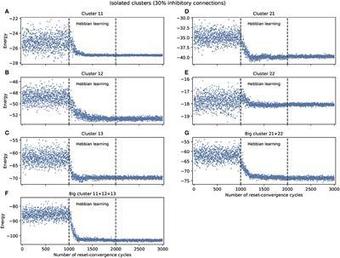
Modeling of complex adaptive systems has revealed a still poorly understood benefit of unsupervised learning: when neural networks are enabled to form an associative memory of a large set of their own attractor configurations, they begin to reorganize their connectivity in a direction that minimizes the coordination constraints posed by the initial network architecture. This self-optimization process has been replicated in various neural network formalisms, but it is still unclear whether it can be applied to biologically more realistic network topologies and scaled up to larger networks. Here we continue our efforts to respond to these challenges by demonstrating the process on the connectome of the widely studied nematode worm C. elegans. We extend our previous work by considering the contributions made by hierarchical partitions of the connectome that form functional clusters, and we explore possible beneficial effects of inter-cluster inhibitory connections. We conclude that the self-optimization process can be applied to neural network topologies characterized by greater biological realism, and that long-range inhibitory connections can facilitate the generalization capacity of the process.

Source: www.frontiersin.org

Swarm Robotic Behaviors and Current Applications

Melanie Schranz, Martina Umlauft, Micha Sende and Wilfried Elmenreich

Front. Robot. AI, 02 April 2020


In swarm robotics multiple robots collectively solve problems by forming advantageous structures and behaviors similar to the ones observed in natural systems, such as swarms of bees, birds, or fish. However, the step to industrial applications has not yet been made successfully. Literature is light on real-world swarm applications that apply actual swarm algorithms. Typically, only parts of swarm algorithms are used which we refer to as basic swarm behaviors. In this paper we collect and categorize these behaviors into spatial organization, navigation, decision making, and miscellaneous. This taxonomy is then applied to categorize a number of existing swarm robotic applications from research and industrial domains. Along with the classification, we give a comprehensive overview of research platforms that can be used for testing and evaluating swarm behavior, systems that are already on the market, and projects that target a specific market. Results from this survey show that swarm robotic applications are still rare today. Many industrial projects still rely on centralized control, and even though a solution with multiple robots is employed, the principal idea of swarm robotics of distributed decision making is neglected. We identified mainly following reasons: First of all, swarm behavior emerging from local interactions is hard to predict and a proof of its eligibility for applications in an industrial context is difficult to provide. Second, current communication architectures often do not match requirements for swarm communication, which often leads to a system with a centralized communication infrastructure. Finally, testing swarms for real industrial applications is an issue, since deployment in a productive environment is typically too risky and simulations of a target system may not be sufficiently accurate. In contrast, the research platforms present a means for transforming swarm robotics solutions from theory to prototype industrial systems.

Source: www.frontiersin.org

Relevance of temporal cores for epidemic spread in temporal networks

Martino Ciaperoni, Edoardo Galimberti, Francesco Bonchi, Ciro Cattuto, Francesco Gullo, Alain Barrat


Temporal networks are widely used to represent a vast diversity of systems, including in particular social interactions, and the spreading processes unfolding on top of them. The identification of structures playing important roles in such processes remain an open question, despite recent progresses in the case of static networks. Here, we consider as candidate structures the recently introduced concept of span-cores: the span-cores decompose a temporal network into subgraphs of controlled duration and increasing connectivity, generalizing the core-decomposition of static graphs. We explore the effectiveness of strategies aimed either at containing or maximizing the impact of a spread, based respectively on removing span-cores of high cohesiveness or duration to decrease the epidemic risk, or on seeding the process from such structures. The effectiveness of such strategies is assessed in a variety of empirical data sets and against a number of baselines that use only static information on the centrality of nodes and static concepts of coreness. Our results show that the removal of the most stable and cohesive temporal cores has a strong impact on epidemic processes on temporal networks, and that their nodes are likely to represent influential spreaders.

Source: arxiv.org

Real-time Epidemic Datathon

Real-time Epidemic Datathon is a collective open-source real-time forecasting challenge aimed at joining forces to push modeling limits further for real-time epidemic forecasting at large scale. Organized by ETH Zürich, UCLA, EU SoBigData++ project, NYU COURANT, and other partner organizations. The goal of this project is to bring together researchers and students from different disciplines (e.g., computer science, epidemiology, physics, statistics, applied math, …) and advance real-time epidemic modeling frameworks. We provide a platform for scientific exchange and discussion. Participating teams can submit predictions of COVID-19 case evolutions in different countries and evaluate/compare their modeling approaches.

Who can join? Everyone can join and contribute in various ways: (i) register as a developer (individual or with a team) of a real-time epidemic forecasting model, (ii) register and monitor scientific developments (see our disclaimer section), or (iii) share the news about this event and help us to reach more contributors.

Source: www.epidemicdatathon.com