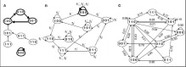
Concepts in Boolean network modeling: What do they all mean?

Julian D. Schwab, Silke D. Kühlwein, Nensi Ikonomi, Michael Kühl, Hans A. Kestler

Computational and Structural Biotechnology Journal


Boolean network models are one of the simplest models to study complex dynamic behavior in biological systems. They can be applied to unravel the mechanisms regulating the properties of the system or to identify promising intervention targets. Since its introduction by Stuart Kauffman in 1969 for describing gene regulatory networks, various biologically based networks and tools for their analysis were developed. Here, we summarize and explain the concepts for Boolean network modeling. We also present application examples and guidelines to work with and analyze Boolean network models.

Source: www.sciencedirect.com

Effect of non-pharmaceutical interventions for containing the COVID-19 outbreak: an observational and modelling study

Shengjie Lai, Nick W Ruktanonchai, Liangcai Zhou, Olivia Prosper, Wei Luo, Jessica R Floyd, Amy Wesolowski, Chi Zhang, Xiangjun Du, Hongjie Yu, Andrew J Tatem


Background: The COVID-19 outbreak containment strategies in China based on non-pharmaceutical interventions (NPIs) appear to be effective. Quantitative research is still needed however to assess the efficacy of different candidate NPIs and their timings to guide ongoing and future responses to epidemics of this emerging disease across the World. Methods: We built a travel network-based susceptible-exposed-infectious-removed (SEIR) model to simulate the outbreak across cities in mainland China. We used epidemiological parameters estimated for the early stage of outbreak in Wuhan to parameterise the transmission before NPIs were implemented. To quantify the relative effect of various NPIs, daily changes of delay from illness onset to the first reported case in each county were used as a proxy for the improvement of case identification and isolation across the outbreak. Historical and near-real time human movement data, obtained from Baidu location-based service, were used to derive the intensity of travel restrictions and contact reductions across China. The model and outputs were validated using daily reported case numbers, with a series of sensitivity analyses conducted. Findings: We estimated that there were a total of 114,325 COVID-19 cases (interquartile range [IQR] 76,776 – 164,576) in mainland China as of February 29, 2020, and these were highly correlated (p<0.001, R2=0.86) with reported incidence. Without NPIs, the number of COVID-19 cases would likely have shown a 67-fold increase (IQR: 44 – 94), with the effectiveness of different interventions varying. The early detection and isolation of cases was estimated to prevent more infections than travel restrictions and contact reductions, but integrated NPIs would achieve the strongest and most rapid effect. If NPIs could have been conducted one week, two weeks, or three weeks earlier in China, cases could have been reduced by 66%, 86%, and 95%, respectively, together with significantly reducing the number of affected areas. However, if NPIs were conducted one week, two weeks, or three weeks later, the number of cases could have shown a 3-fold, 7-fold, and 18-fold increase across China, respectively. Results also suggest that the social distancing intervention should be continued for the next few months in China to prevent case numbers increasing again after travel restrictions were lifted on February 17, 2020. Conclusion: The NPIs deployed in China appear to be effectively containing the COVID-19 outbreak, but the efficacy of the different interventions varied, with the early case detection and contact reduction being the most effective. Moreover, deploying the NPIs early is also important to prevent further spread. Early and integrated NPI strategies should be prepared, adopted and adjusted to minimize health, social and economic impacts in affected regions around the World.

Source: www.medrxiv.org

Landmark Computer Science Proof Cascades Through Physics and Math

In 1935, Albert Einstein, working with Boris Podolsky and Nathan Rosen, grappled with a possibility revealed by the new laws of quantum physics: that two particles could be entangled, or correlated, even across vast distances.

The very next year, Alan Turing formulated the first general theory of computing and proved that there exists a problem that computers will never be able to solve.

These two ideas revolutionized their respective disciplines. They also seemed to have nothing to do with each other. But now a landmark proof has combined them while solving a raft of open problems in computer science, physics and mathematics.

Source: www.quantamagazine.org

The effect of human mobility and control measures on the COVID-19 epidemic in China

Moritz U.G. Kraemer, Chia-Hung Yang, Bernardo Gutierrez, Chieh-Hsi Wu, Brennan Klein, David M. Pigott, open COVID-19 data working group, Louis du Plessis, Nuno R Faria, Ruoran Li, William P. Hanage, John S Brownstein, Maylis Layan, Alessandro Vespignani, Huaiyu Tian, Christopher Dye, Simon Cauchemez, Oliver Pybus, Samuel V Scarpino


The ongoing COVID-19 outbreak has expanded rapidly throughout China. Major behavioral, clinical, and state interventions are underway currently to mitigate the epidemic and prevent the persistence of the virus in human populations in China and worldwide. It remains unclear how these unprecedented interventions, including travel restrictions, have affected COVID-19 spread in China. We use real-time mobility data from Wuhan and detailed case data including travel history to elucidate the role of case importation on transmission in cities across China and ascertain the impact of control measures. Early on, the spatial distribution of COVID-19 cases in China was well explained by human mobility data. Following the implementation of control measures, this correlation dropped and growth rates became negative in most locations, although shifts in the demographics of reported cases are still indicative of local chains of transmission outside Wuhan. This study shows that the drastic control measures implemented in China have substantially mitigated the spread of COVID-19.

Source: www.medrxiv.org

Advanced Control and Optimization for Complex Energy Systems

Chun Wei, Xiaoqing Bai, and Taesic Kim

Editorial | Open Access

Complexity Volume 2020 |Article ID 5908102


The application of renewable energies such as wind and solar has become an inevitable choice for many countries in order to achieve sustainable and healthy economic development [1]. However, due to the intermittent characteristics of renewable energy, the issue with integrating a larger proportion of renewable energy into the grid becomes prominent. Currently, an energy system with weak coordination capability seriously affects the flexibility of power system operation [2]. As a result, this has led to the development of an effective way to integrate high-proportion renewable energy by developing multienergy systems including wind, solar, thermal, and energy storage to allow for the integration and coordination of different energy resources [3]. The major challenge of the multienergy system is its complexity with multispatial and multitemporal scales. Compared with the traditional power system, control and optimization of the complex energy system become more difficult in terms of modeling, operation, and planning [4, 5]. The main purpose of the complex energy system is to coordinate the operation with various distributed energy resources (DERs), energy storage systems, and power grids to ensure its reliability, while reducing the operating costs and achieving the optimal economic benefits.

Source: www.hindawi.com

See Also: Special Issue