Author: cxdig

Faculty Position in Statistical Physics of Complex Systems @EPFL

The School of Basic Sciences (Physics, Chemistry and Mathematics) at EPFL seeks to appoint a Professor in Statistical Physics of Complex Systems. This includes statistical physics of inference and learning, soft matter theory and theoretical biophysics. The appointment is offered at the Tenure Track Assistant Professor or tenured Associate Professor levels. We expect candidates to establish leadership and strengthen the EPFL endeavor in Statistical Physics of Complex Systems. Priority will be given to the overall originality and promise of the candidate’s work over any particular specialization area. Candidates should hold a PhD and have an excellent record of scientific accomplishments in the field. In addition, commitment to teaching at the undergraduate, master and doctoral levels is expected. Proficiency in French teaching is not required, but willingness to learn the language expected. EPFL, with its main campus located in Lausanne, Switzerland, on the shores of lake Geneva, is a dynamically growing and well-funded institution fostering excellence and diversity. It has a highly international campus with first-class infrastructure, including high performance computing As a technical university covering essentially the entire palette of engineering and science, EPFL offers a fertile environment for research cooperation between different disciplines. The EPFL environment is multi-lingual and multi-cultural, with English often serving as a common interface. Applications should include a cover letter, a CV with a list of publications, a concise statement of research (maximum 3 pages) and teaching interests (one page), and the names and addresses (including e-mail) of at least three references for a junior position or five references for a senior position. Applications should be uploaded (as PDFs) by November 15th, 2019 to https://facultyrecruiting.epfl.ch/position/18186240 Enquiries may be addressed to: Prof. Jan Hesthaven Dean of the School of Basic Sciences E-mail: fsbdean@epfl.ch Prof. Harald Brune Director of the Institute of Physics E-mail: IPHYSDirector@epfl.ch For additional information, please consult www.epfl.ch, sb.epfl.ch, iphys.epfl.ch EPFL is an equal opportunity employer and family friendly university. It is committed to increasing the diversity of its faculty. It strongly encourages women to Apply.

Source: www.epfl.ch
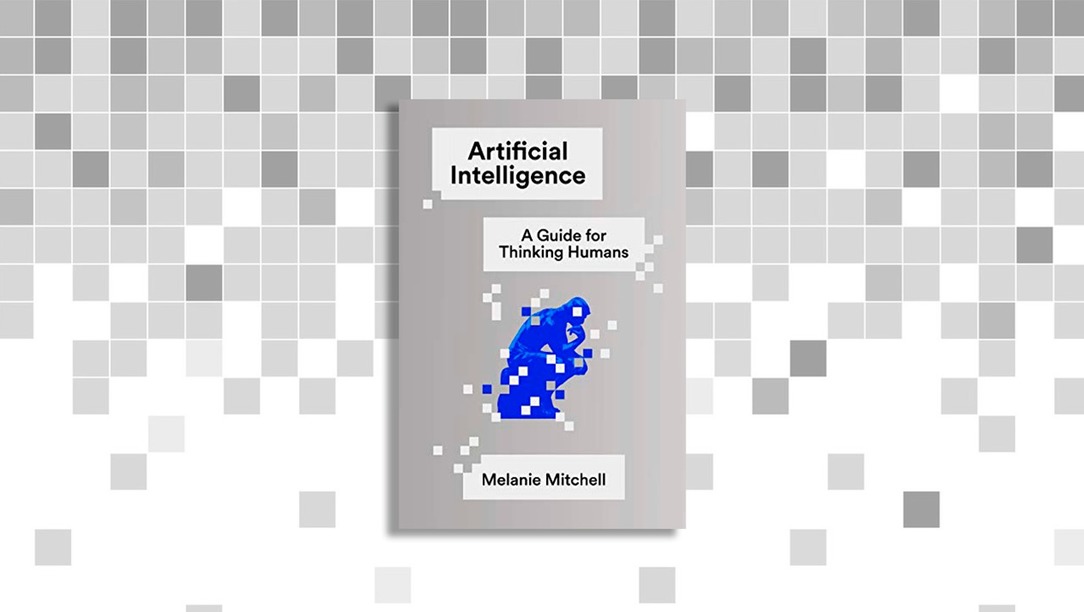
Melanie Mitchell’s ‘Artificial Intelligence’ exposes AI’s limits

Ever since its origin in post-war research, AI has been subject to profound hyperbole, rapturous prognostications, and projected nightmares. In 2019, things have once again reached fever pitch in what Science Board co-chair and External Professor Melanie Mitchell wryly notes is a hype cycle that routinely ripples through her fellow computer scientists and those who fund them. Her illuminating new book, Artificial Intelligence: A Guide for Thinking Humans, lays bare the inner workings of these potent tools, exposing their realistic limits and patiently detailing our deployment errors. It is a solid history of how we got from pocket calculators to facial recognition and self-driving cars, a lucid tour of how these systems operate, and a tempered read on just how far we have to go before we’re obsolete.

Source: www.santafe.edu

Complex Networks: Theory, Methods, and Applications – Lake Como School of Advanced Studies – May 18-21, 2020

Many real systems can be modeled as networks, where the elements of the system are nodes and interactions between elements are edges. An even larger set of systems can be modeled using dynamical processes on networks, which are in turn affected by the dynamics. Networks thus represent the backbone of many complex systems, and their theoretical and computational analysis makes it possible to gain insights into numerous applications. Networks permeate almost every conceivable discipline—including sociology, transportation, economics and finance, biology, and myriad others—and the study of "network science" has thus become a crucial component of modern scientific education.

The school "Complex Networks: Theory, Methods, and Applications" offers a succinct education in network science. It is open to all aspiring scholars in any area of science or engineering who wish to study networks of any kind (whether theoretical or applied), and it is especially addressed to doctoral students and young postdoctoral scholars. The aim of the school is to deepen into both theoretical developments and applications in targeted fields.

LECTURERS
— REKA ALBERT, Pennsylvania State University
— GUIDO CALDARELLI, IMT Lucca
— MARTON KARSAI, Central European University
— JOSE FERNANDO MENDES, University of Aveiro
— NATASA PRZULJ, Barcelona Supercomputing Center


Spring School
COMPLEX NETWORKS: THEORY, METHODS, AND APPLICATIONS
(6th edition)

Lake Como School of Advanced Studies
Villa del Grumello, Como, Italy, 18-21 May 2020

Source: ntmf.lakecomoschool.org

11th International Conference on Complex Networks

 The International Conference on Complex Networks (CompleNet) brings together researchers and practitioners from diverse disciplines working on areas related to complex networks. In its 11th year, we are delighted to have the next CompleNet in Exeter UK hosted by the University of Exeter.

​Over the past two decades we have witnessed an exponential increase in the number of publications and research centers dedicated to this field. From biological systems to computer science, from technical to informational networks, from economic to social systems, complex networks are becoming pervasive for dozens of applications. It is the interdisciplinary nature of complex networks that CompleNet aims to capture and celebrate.


11th International Conference on Complex Networks
COMPLENET 2020
​31 March-3 April 2020
EXETER, UK

Source: complenet.weebly.com