
Author: cxdig

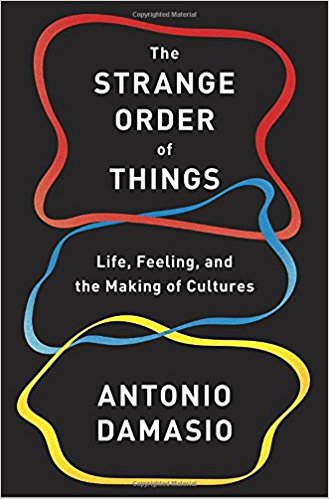
The Strange Order of Things: Life, Feeling, and the Making of Cultures (by Antonio Damasio)

From one of our preeminent neuroscientists: a landmark reflection that spans the biological and social sciences, offering a new way of understanding the origins of life, feeling, and culture.
 
The Strange Order of Things is a pathbreaking investigation into homeostasis, the condition of that regulates human physiology within the range that makes possible not only the survival but also the flourishing of life. Antonio Damasio makes clear that we descend biologically, psychologically, and even socially from a long lineage that begins with single living cells; that our minds and cultures are linked by an invisible thread to the ways and means of ancient unicellular life and other primitive life-forms; and that inherent in our very chemistry is a powerful force, a striving toward life maintenance that governs life in all its guises, including the development of genes that help regulate and transmit life. In The Strange Order of Things, Damasio gives us a new way of comprehending the world and our place in it.

Source: www.amazon.com
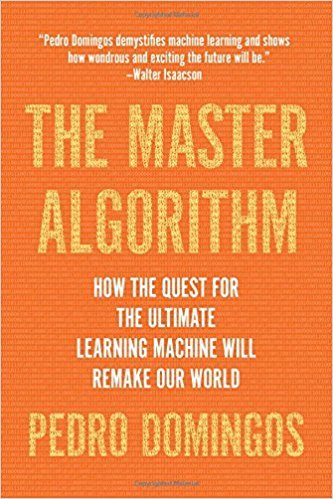
The Master Algorithm: How the Quest for the Ultimate Learning Machine Will Remake Our World (by Pedro Domingos)

In the world’s top research labs and universities, the race is on to invent the ultimate learning algorithm: one capable of discovering any knowledge from data, and doing anything we want, before we even ask. In The Master Algorithm, Pedro Domingos lifts the veil to give us a peek inside the learning machines that power Google, Amazon, and your smartphone. He assembles a blueprint for the future universal learner-the Master Algorithm-and discusses what it will mean for business, science, and society.

Source: www.amazon.com

A Review of Future and Ethical Perspectives of Robotics and AI

In recent years, there has been increased attention on the possible impact of future robotics and AI systems. Prominent thinkers have publicly warned about the risk of a dystopian future when the complexity of these systems progresses further. These warnings stand in contrast to the current state-of-the-art of the robotics and AI technology. This article reviews work considering both the future potential of robotics and AI systems, and ethical considerations that need to be taken in order to avoid a dystopian future. References to recent initiatives to outline ethical guidelines for both the design of systems and how they should operate are included.


A Review of Future and Ethical Perspectives of Robotics and AI

Jim Torresen

Front. Robot. AI, 15 January 2018 | https://doi.org/10.3389/frobt.2017.00075

Source: www.frontiersin.org

An interview based study of pioneering experiences in teaching and learning Complex Systems in Higher Education

Due to the interdisciplinary nature of complex systems as a field, students studying complex systems at University level have diverse disciplinary backgrounds. This brings challenges (e.g. wide range of computer programming skills) but also opportunities (e.g. facilitating interdisciplinary interactions and projects) for the classroom. However, there is little published regarding how these challenges and opportunities are handled in teaching and learning Complex Systems as an explicit subject in higher education, and how this differs in comparison to other subject areas. We seek to explore these particular challenges and opportunities via an interview-based study of pioneering teachers and learners (conducted amongst the authors) regarding their experiences. We compare and contrast those experiences, and analyse them with respect to the educational literature. Our discussions explored: approaches to curriculum design, how theories/models/frameworks of teaching and learning informed decisions and experience, how diversity in student backgrounds was addressed, and assessment task design. We found a striking level of commonality in the issues expressed as well as the strategies to handle them, for example a significant focus on problem-based learning, and the use of major student-led creative projects for both achieving and assessing learning outcomes.


J.T. Lizier, M.S. Harré, M. Mitchell, S. DeDeo, C. Finn, K. Lindgren, A.L. Lizier, H. Sayama

“An interview based study of pioneering experiences in teaching and learning Complex Systems in Higher Education”

arXiv:1802.02707, 2018

Source: arxiv.org

9th International Conference on Complex Systems

The International Conference on Complex Systems is a unique interdisciplinary forum that unifies and bridges the traditional domains of science and a multitude of real world systems. Participants will contribute and be exposed to mind expanding concepts and methods from across the diverse field of complex systems science. The conference will be held July 22-27, 2018, in Cambridge, MA, USA.

Special Topic – Artificial Intelligence: This year’s conference will include a day on AI, including its development and potential future. This session will be chaired by Iyad Rahwan of MIT’s Media Lab.


Workshop proposal & Abstract submission deadlines: February 16, 2018


Invited Speakers:

  • Albert-László Barabási
  • Cameron Kerry
  • Nassim Nicholas Taleb
  • Stuart Kauffman
  • Peter Turchin
  • Olaf Sporns
  • Iyad Rahwan
  • Sandy Pentland
  • Irving Epstein
  • Simon DeDeo
  • H. Eugene Stanley
  • Stephen Wolfram
  • César Hidalgo
  • More Speakers TBA


Source: www.necsi.edu