Category: Announcements

2 Prof. Positions on Mathematical Modeling of Complex Biosystems, UC Riverside

Applications are invited for two 9-month, tenure-track or tenure positions at the Assistant or Associate levels beginning July 1, 2017, as a part of the cluster hiring initiative in Mathematical Modeling of Complex Biosystems at the University of California, Riverside (UCR). 


The University of California at Riverside (UCR) is implementing a major expansion of our faculty and investing in state-of-the-art research facilities to support their work. This expansion will build critical mass in 34 vital and emerging fields of scholarship, foster truly cross-disciplinary work, and further diversify the faculty at one of America’s most diverse research universities. We encourage applications from scholars committed to excellence and seeking to help define the research university for the next generation. For more information about our hiring initiative or to submit an application, please visit clusterhiring.ucr.edu or academicpersonnel.ucr.edu .


https://aprecruit.ucr.edu/apply/JPF00675
https://aprecruit.ucr.edu/apply/JPF00676

Source: aprecruit.ucr.edu
WaveNet: A Generative Model for Raw Audio | DeepMind

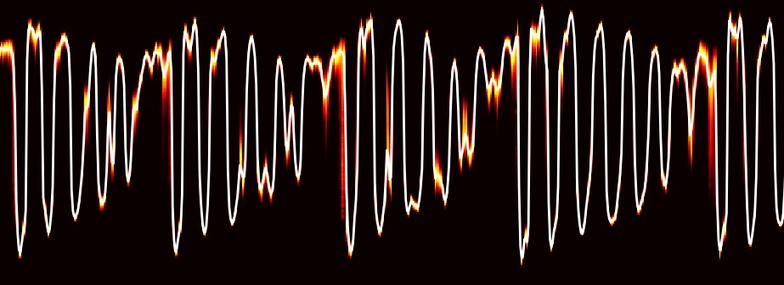
This post presents WaveNet, a deep generative model of raw audio waveforms. We show that WaveNets are able to generate speech which mimics any human voice and which sounds more natural than the best existing Text-to-Speech systems, reducing the gap with human performance by over 50%.
We also demonstrate that the same network can be used to synthesize other audio signals such as music, and present some striking samples of automatically generated piano pieces.

Source: deepmind.com

Four Tenure-Track Positions in Computer Science & Complex Systems

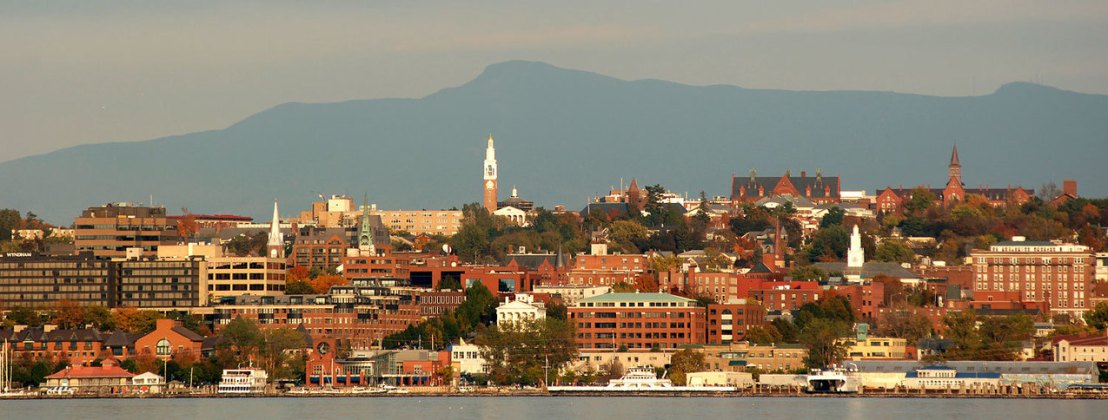
The College of Engineering and Mathematical Sciences (CEMS) at the University of Vermont (UVM) is seeking applications for four tenure-track faculty positions in Computer Science and Complex Systems, with a Fall 2017 start date. These positions will be at the rank of Assistant Professor, or Associate Professor with tenure for outstanding candidates already at that rank. We seek candidates with active research in one or more of the following areas:
• Cybersecurity, especially in languages and verification, or applications of machine learning or complex systems approaches to cybersecurity.
• Computational Intelligence, broadly defined to include data mining, machine learning, data science, bio-inspired approaches, and Deep Learning, with broad potential for applications to Big Data in areas such as biology, medicine, cybersecurity, social science, sociotechnical systems, and/or environmental science.
• Complex Systems, modeling and/or analysis of emergent phenomena allied with data-driven empirical work, ideally with applications in biology, medicine, cybersecurity, the social sciences, sociotechnical systems, and/or environmental science.
• Computational Biology, computational approaches to the study of biological systems such as in genomics, proteomics, phylogenetics, biological pathways or networks, etc.

Source: www.uvm.edu

The 2016 Nobel Prize in Chemistry

The Royal Swedish Academy of Sciences has decided to award the Nobel Prize in Chemistry 2016 to Jean-Pierre Sauvage University of Strasbourg, France, Sir J. Fraser Stoddart Northwestern University, Evanston, IL, USA, and Bernard L. Feringa University of Groningen, the Netherlands “for the design and synthesis of molecular machines“

They developed the world’s smallest machines
A tiny lift, artificial muscles and miniscule motors. The Nobel Prize in Chemistry 2016 is awarded to Jean-Pierre Sauvage, Sir J. Fraser Stoddart and Bernard L. Feringa for their design and production of molecular machines. They have developed molecules with controllable movements, which can perform a task when energy is added.

The development of computing demonstrates how the miniaturisation of technology can lead to a revolution. The 2016 Nobel Laureates in Chemistry have miniaturised machines and taken chemistry to a new dimension.

Source: www.nobelprize.org

The 2016 Nobel Prize in Physics

The Royal Swedish Academy of Sciences has decided to award the Nobel Prize in Physics 2016 with one half to David J. Thouless
University of Washington, Seattle, WA, USA and the other half to
F. Duncan M. Haldane Princeton University, NJ, USA and J. Michael Kosterlitz Brown University, Providence, RI, USA ”for theoretical discoveries of topological phase transitions and topological phases of matter”


They revealed the secrets of exotic matter
This year’s Laureates opened the door on an unknown world where matter can assume strange states. They have used advanced mathematical methods to study unusual phases, or states, of matter, such as superconductors, superfluids or thin magnetic films. Thanks to their pioneering work, the hunt is now on for new and exotic phases of matter. Many people are hopeful of future applications in both materials science and electronics.

Source: www.nobelprize.org