
Category: Announcements

The 2016 Nobel Prize in Physiology or Medicine

The Nobel Assembly at Karolinska Institutet has today decided to award the 2016 Nobel Prize in Physiology or Medicine to Yoshinori Ohsumi for his discoveries of mechanisms for autophagy.

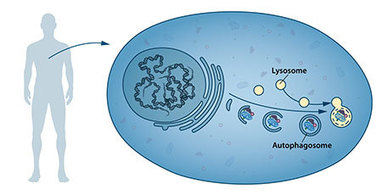
This year’s Nobel Laureate discovered and elucidated mechanisms underlying autophagy, a fundamental process for degrading and recycling cellular components.  

The word autophagy originates from the Greek words auto-, meaning “self”, and phagein, meaning “to eat”. Thus,autophagy denotes “self eating”. This concept emerged during the 1960’s, when researchers first observed that the cell could destroy its own contents by enclosing it in membranes, forming sack-like vesicles that were transported to a recycling compartment, called the lysosome, for degradation. Difficulties in studying the phenomenon meant that little was known until, in a series of brilliant experiments in the early 1990’s, Yoshinori Ohsumi used baker’s yeast to identify genes essential for autophagy. He then went on to elucidate the underlying mechanisms for autophagy in yeast and showed that similar sophisticated machinery is used in our cells.

Source: www.nobelprize.org

Live Tweetcast of the Conference on Complex Systems 2016

The Flagship Conference of the Complex Systems Society will take place on September 19-22 in Amsterdam. See details at http://www.ccs2016.org


Attendants are encouraged to tweet relevant moments using the hashtag #CCS17


If you cannot make it to Amsterdam, follow the live tweetcast from https://twitter.com/search?q=%23CCS16


We will also be tweeting and retweeting from https://twitter.com/cxdig

Source: mobile.twitter.com

Collective motion of groups of self-propelled particles following interacting leaders

In order to keep their cohesiveness during locomotion gregarious animals must make collective decisions. Many species boast complex societies with multiple levels of communities. A common case is when two dominant levels exist, one corresponding to leaders and the other consisting of followers. In this paper we study the collective motion of such two-level assemblies of self-propelled particles. We present a model adapted from one originally proposed to describe the movement of cells resulting in a smoothly varying coherent motion. We shall use the terminology corresponding to large groups of some mammals where leaders and followers form a group called a harem. We study the emergence (self-organization) of sub-groups within a herd during locomotion by computer simulations. The resulting processes are compared with our prior observations of a Przewalski horse herd (Hortob\’agy, Hungary) which we use as results from a published case study. We find that the model reproduces key features of a herd composed of harems moving on open ground, including fights for followers between leaders and bachelor groups (group of leaders without followers). One of our findings, however, does not agree with the observations. While in our model the emerging group size distribution is normal, the group size distribution of the observed herd based on historical data have been found to follow lognormal distribution. We argue that this indicates that the formation (and the size) of the harems must involve a more complex social topology than simple spatial-distance based interactions.


Collective motion of groups of self-propelled particles following interacting leaders
Bence Ferdinandy, Katalin Ozogány, Tamás Vicsek

http://arxiv.org/abs/1609.03212

Source: arxiv.org

3 Senior Researcher Positions at Lakeside Labs

  • Senior Researcher in UAV communications and coordination
  • Senior Researcher in Cyber-Physical Systems
  • Senior Researcher in Self-Organization and Swarming
  • Researcher in UAV Path Planning
  • PreDoc Scientist in Embedded Communication Systems (U Klagenfurt)

Source: www.lakeside-labs.com

Assistant Professor on Quantitative Models of Human Communication @UCDavis

Assistant Professor (Tenure Track) or Associate Professor, Quantitative Models of Human Communication. For this position, we seek a scholar with research interests focused on quantitative model building in communication. Human communication is an essential building block in the emergence of complex social systems. Models aimed at understanding and identifying the fundamental theoretical building blocks of human communication have the potential to inform all the social sciences, which includes areas such as cooperation and coordination, trust and goal manipulations, contagion and diffusion, technology adaption and technological change, organizational communication and team-building, community development, social network evolution, and democratic processes. Applicants are sought from scholars conducting theory-driven and theory-building research through modern modeling tools, such as agent-based models, computer simulations and other numerical solutions, which are informed by analytical approaches, such as game theory, dynamical systems theory, information theory, or statistical mechanics. The applicant must show evidence that developed models are grounded in empirical data from the social sciences. Applicants must be willing to teach undergraduate and graduate courses in model building, as well as additional courses from the Department’s offerings as needed. Applicants’ research program must be consistent with the Department’s affiliation with the Division of Social Sciences. A doctorate degree and publications and research work in the social sciences are required. Persons with Ph.D. pending will be considered only if the degree will be awarded prior to the beginning of instruction on September 19, 2016. Demonstrated research and teaching competence are required. Applicants must have the potential to secure external funding. Applications must be submitted by November 30, 2016 to receive consideration. Position to begin July 1, 2017.

Source: recruit.ucdavis.edu